EN
EN
 English
 中文简体
中文简体
.png)
Content
- 1 How to Use an Air Fryer: The Short Answer
- 2 How Does Air Frying Work
- 3 Getting Ready Before You Use the Air Fryer
- 4 Step by Step Guide to Using an Air Fryer
- 5 Common Temperature and Time Settings for Air Frying
- 6 Air Fryer Reference Charts
- 7 Common Mistakes to Avoid With an Air Fryer
- 8 What Does an Air Fryer Do Best
- 9 Cleaning and Caring for an Air Fryer
- 10 About Ningbo Yinyu Purification Technology
- 11 Frequently Asked Questions About Using an Air Fryer
- 11.1 Q1: How do you air fry food at home
- 11.2 Q2: How do you use an air fryer for the first time
- 11.3 Q3: What is air fryer cooking
- 11.4 Q4: How does air frying work
- 11.5 Q5: How does an air fryer work inside the unit
- 11.6 Q6: What does an air fryer do differently than a regular oven
- 11.7 Q7: How do you cook in an air fryer without drying out food
- 11.8 Q8: How do you clean an air fryer basket
- 11.9 Q9: Can you use foil or parchment paper in an air fryer
- 11.10 Q10: How do you air fry frozen food
How to Use an Air Fryer: The Short Answer
Using an air fryer comes down to four basic actions: preheat the unit for a few minutes, place food in a single layer inside the basket without overcrowding, set the temperature and time for that specific food, and shake or flip partway through cooking for even results. Air frying works by circulating hot air rapidly around the food using a built in fan and heating element, which creates a crisp outer layer similar to deep frying while using far less oil. Once these basics are understood, the same core process applies whether someone is reheating leftovers, cooking frozen snacks, or preparing a full meal in a stainless steel air fryer at home.
- Preheat the air fryer for three to five minutes before adding food
- Pat food dry and add a light coating of oil if a crisp texture is wanted
- Arrange food in a single layer, leaving space for air to circulate
- Set the temperature and timer according to the food type and thickness
- Shake the basket or flip the food halfway through the cooking cycle
- Check doneness near the end and add a few extra minutes if needed
- Let food rest briefly before serving for the best texture
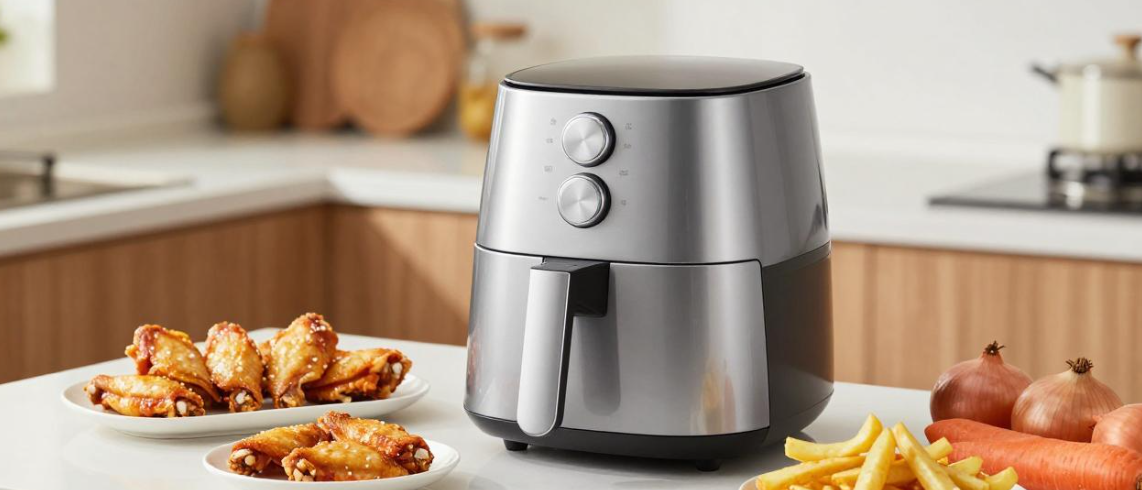
How Does Air Frying Work
An air fryer is essentially a compact convection oven built around a heating element and a high speed fan positioned above the cooking chamber. As the fan pulls hot air downward and circulates it around the food from every direction, moisture on the surface evaporates quickly and the exterior browns and crisps, which is why many people describe the result as close to deep frying without submerging food in oil. This is the core answer to how does an air fryer work and why the appliance has become common in kitchens looking for a faster, lighter alternative to traditional frying.
Air Fry Versus Deep Frying and Oven Baking
Traditional deep frying submerges food fully in hot oil, which cooks quickly but adds a significant amount of fat and requires careful oil management. Standard oven baking uses static or gently circulated heat, which is gentler but often takes longer and produces a softer exterior. Air frying sits between the two, using fast moving hot air to replicate a crisp texture in a shorter time than baking, while using a fraction of the oil needed for deep frying.
Getting Ready Before You Use the Air Fryer
A few simple preparation steps make a noticeable difference in how evenly food cooks and how crisp the final texture turns out.
Preparation Checklist
- Pat wet ingredients dry with a paper towel before seasoning
- Cut food into similar sized pieces so everything cooks at the same rate
- Use a small amount of oil or a light spray rather than a heavy coating
- Avoid wet batters, which tend to drip and create smoke inside the chamber
- Check the basket and tray are clean and dry before loading food
Step by Step Guide to Using an Air Fryer
- Place the air fryer on a flat, heat resistant surface with clear space around it
- Slide the basket in and set the temperature for preheating, usually a few minutes
- Open the basket and arrange the prepared food in a single, even layer
- Set the cooking temperature and timer based on the food type and portion size
- Pause partway through the cycle to shake the basket or flip larger pieces
- Check for doneness near the end of the timer and extend cooking if required
- Remove the basket carefully using the handle and let food rest briefly before serving
Common Temperature and Time Settings for Air Frying
Exact settings vary by model and portion size, but the reference points below reflect commonly used starting settings for popular foods, useful for anyone learning how to cook in air fryer appliances for the first time.
| Food | Temperature | Approximate Time |
|---|---|---|
| Frozen Fries | 200C / 400F | 15 to 18 minutes |
| Chicken Wings | 190C / 375F | 20 to 25 minutes |
| Vegetables | 180C / 355F | 10 to 15 minutes |
| Frozen Snacks | 200C / 400F | 10 to 14 minutes |
Air Fryer Reference Charts
The charts below summarize general reference points around air frying temperature, preheating behavior, session time allocation, and how air frying compares with other common cooking methods. These are general starting points many home cooks use, and actual results depend on the specific unit, portion size, and food type.
Typical Cooking Temperature Range by Food Type
General reference temperature ranges commonly used as starting points for popular foods
Basket Temperature Rise During Preheating
General trend of basket temperature climbing during a typical preheat cycle
Typical Time Allocation for an Air Frying Session
General share of session time spent on each stage of a typical air frying routine
Air Frying Compared With Deep Frying and Oven Baking
General comparison of common characteristics across cooking methods
Air Fryer Structure Overview
Simplified structural layout showing the main parts of an air fryer
Common Mistakes to Avoid With an Air Fryer
- Overcrowding the basket, which blocks airflow and leads to uneven cooking
- Skipping the preheat step for foods that need a crisp exterior
- Using too much oil, which can create excess smoke inside the chamber
- Not shaking or flipping food partway through the cycle
- Placing wet batter directly in the basket without a light coating first
- Ignoring the manufacturer guidance on maximum fill level for the basket
- Forgetting to check food near the end of the timer rather than only at the start
- Leaving crumbs or oil residue in the drawer after each use
What Does an Air Fryer Do Best
An air fryer handles a wide range of everyday cooking tasks, and understanding where it performs best helps set realistic expectations for what does an air fryer do compared with other kitchen appliances.
Reheating Leftovers
Air frying restores a crisp texture to leftover fried food, pizza, or roasted items far better than a microwave, since the circulating hot air dries out sogginess rather than adding moisture.
Frozen Snacks and Quick Meals
Frozen fries, nuggets, and similar snacks are a common starting point for people learning how to use the air fryer, since these foods are already portioned and pre seasoned, requiring only a temperature and time setting.
Roasting Vegetables and Proteins
Air fryer cooking works well for roasting vegetables, chicken pieces, and fish fillets, producing a browned exterior in less time than a full size oven while keeping the interior moist.
Everyday Electric Fryer Alternative
For households looking to reduce oil use compared with a traditional electric fryer, air frying offers a lighter approach to achieving a similarly crisp texture across many familiar dishes.
Cleaning and Caring for an Air Fryer
- Unplug the unit and allow it to cool completely before cleaning
- Remove the basket and tray and wash with warm water and mild dish soap
- Wipe the interior chamber and heating element area with a soft, damp cloth
- Dry all removable parts fully before placing them back into the unit
- Wipe the exterior surface and control panel with a dry or slightly damp cloth
- Check the basket regularly for any coating wear if it is a non stick style
About Ningbo Yinyu Purification Technology
Ningbo Yinyu Purification Technology Co., Ltd. was established in 2011 and is based in Cixi City, Ningbo, an area widely known for household appliance manufacturing, situated on the south bank of the Hangzhou Bay Cross Sea Bridge. The company operates two subsidiaries, Cixi Beilian Electric Appliance Co., Ltd. and Yinyu Medical Technology Zhejiang Co., Ltd.
Yinyu Corporation has grown into a comprehensive industrial and trade enterprise covering product research and development, mold development, filter manufacturing, plastic injection molding, and finished product assembly, bringing research, production, and sales together under one operation. The company has worked alongside a number of well known original equipment manufacturer brands, supporting air fryer and related household appliance production with consistent manufacturing capability.
Frequently Asked Questions About Using an Air Fryer
Q1: How do you air fry food at home
Preheat the unit, place food in a single layer in the basket, set the temperature and timer for that food, and shake or flip it partway through cooking.
Q2: How do you use an air fryer for the first time
Start with a simple food like frozen fries or vegetables, follow the temperature guide for that item, and check doneness a few minutes before the timer ends.
Q3: What is air fryer cooking
Air fryer cooking uses a fan and heating element to circulate hot air rapidly around food, producing a crisp exterior similar to frying with much less oil.
Q4: How does air frying work
Hot air is pulled in, heated, and circulated at high speed around the food from all directions, which evaporates surface moisture and browns the exterior quickly.
Q5: How does an air fryer work inside the unit
A heating element warms the air while a fan positioned above the basket continuously circulates that hot air through vents around the food.
Q6: What does an air fryer do differently than a regular oven
An air fryer circulates air at a higher speed in a smaller chamber, which usually cooks food faster and creates a crisper exterior than a standard oven.
Q7: How do you cook in an air fryer without drying out food
Avoid overcooking by checking food a few minutes early, use a light coating of oil where appropriate, and avoid setting the temperature higher than needed.
Q8: How do you clean an air fryer basket
Let the basket cool, then wash it with warm water and mild dish soap, using a soft sponge to avoid damaging any non stick coating.
Q9: Can you use foil or parchment paper in an air fryer
Many air fryers allow perforated parchment or foil in the basket as long as airflow is not blocked and it is weighed down by food, but checking the unit manual first is recommended.
Q10: How do you air fry frozen food
Place frozen food directly in the preheated basket without thawing, spread it in a single layer, and shake the basket partway through cooking for even results.