EN
 English
 中文简体


Four treatment rooms, one shared corridor, and a specification sheet that says nothing more than "HEPA filter included." That is the moment most clinic buyers and brand owners discover that "medical grade" is not a sticker on a carton — it is a chain of documented decisions about filter class, frame sealing, airflow, test method and after-sales support.
The short answer: a medical grade HEPA air purifier is defined by a class-certified H13 or H14 filter that has been leak-tested, mounted in a housing with no bypass path, matched to the room's air-change rate, and supported by the test data behind every claim. Displays, apps and colourways are secondary. The sections below cover the specifications that decide performance, the simple arithmetic behind sizing, and the questions worth asking before a purchase order is signed.
Content
- 1 What "Medical Grade" Actually Changes on the Spec Sheet
- 2 Matching Purifier Capacity to Room Volume: The Air-Change Calculation
- 3 Inside the Unit: Where Medical Grade Is Won or Lost
- 4 A Procurement Checklist for Clinics and OEM Buyers
- 5 Running Costs, Filter Life and the Ownership Picture
- 6 Frequently Asked Questions
What "Medical Grade" Actually Changes on the Spec Sheet
"HEPA" has no universal legal definition in consumer marketing — a point that matters when a buyer compares a clinic-grade unit against a retail appliance. In filtration standards, the number that counts is the class. Under EN 1822, and its international counterpart ISO 29463, H13 and H14 filters are rated at the most penetrating particle size (MPPS), usually between 0.1 and 0.3 µm, rather than at a single 0.3 µm test point.
Two practical consequences follow. First, H14 is not simply "a bit better" than H13 — the step from 99.95% to 99.995% at MPPS removes roughly ten times more of the hardest particles to catch. Second, medical-grade filters are normally scan-tested one by one for pinholes and frame leaks, a manufacturing step that consumer filter lines rarely perform or document.
| Filter class | Efficiency at MPPS | Where it is normally specified | What to request from a supplier |
|---|---|---|---|
| H11 | ≥ 95% | Economy home purification, pre-filtration stages | Batch efficiency report |
| H13 | ≥ 99.95% | Consulting rooms, waiting areas, general wards | Class certificate plus seal inspection record |
| H14 | ≥ 99.995% | Isolation rooms, dental suites, cleanrooms, aerosol-generating procedures | Individual leak-scan report per filter |
| Unclassified "HEPA-type" | Not stated | Consumer appliances with marketing claims only | Any third-party test evidence |
A supplier who cannot name the standard behind the efficiency figure — EN 1822, ISO 29463 or an equivalent national scheme — is usually quoting a marketing number rather than a tested one. Ask for the report, not the badge.
Matching Purifier Capacity to Room Volume: The Air-Change Calculation
Buy by clean-air delivery rate against room volume, not by the room-area figure printed on the box. The calculation is short:
Air changes per hour (ACH) = CADR in m³/h ÷ room volume in m³
A 4 × 5 m treatment room with a 2.7 m ceiling holds 54 m³. A unit rated at 300 m³/h CADR therefore delivers about 5.6 air changes per hour; a 500 m³/h unit delivers about 9.3. That difference matters, because US CDC ventilation guidance for healthcare settings cites roughly 6 ACH as a baseline for patient areas and around 12 ACH where aerosol-generating procedures take place. A 300 CADR unit is acceptable in a small consulting room and marginal in a room where aerosols are produced.
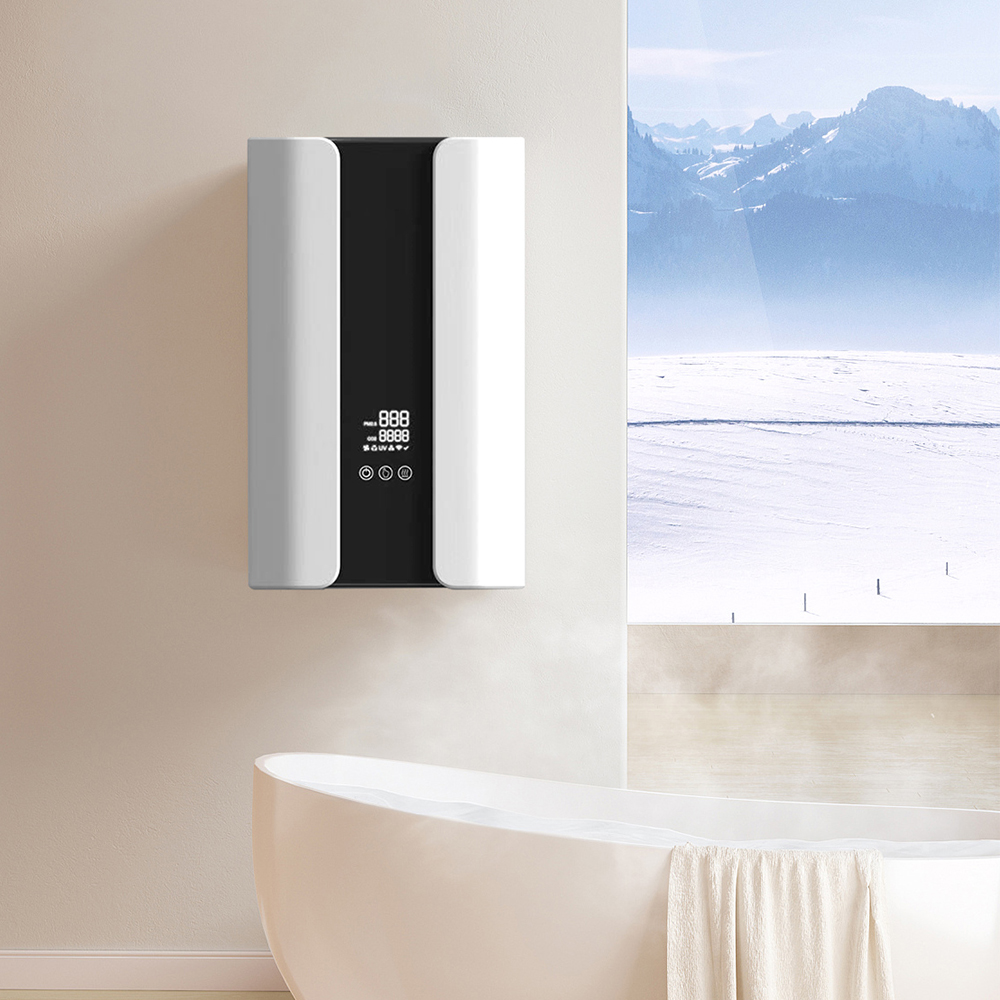
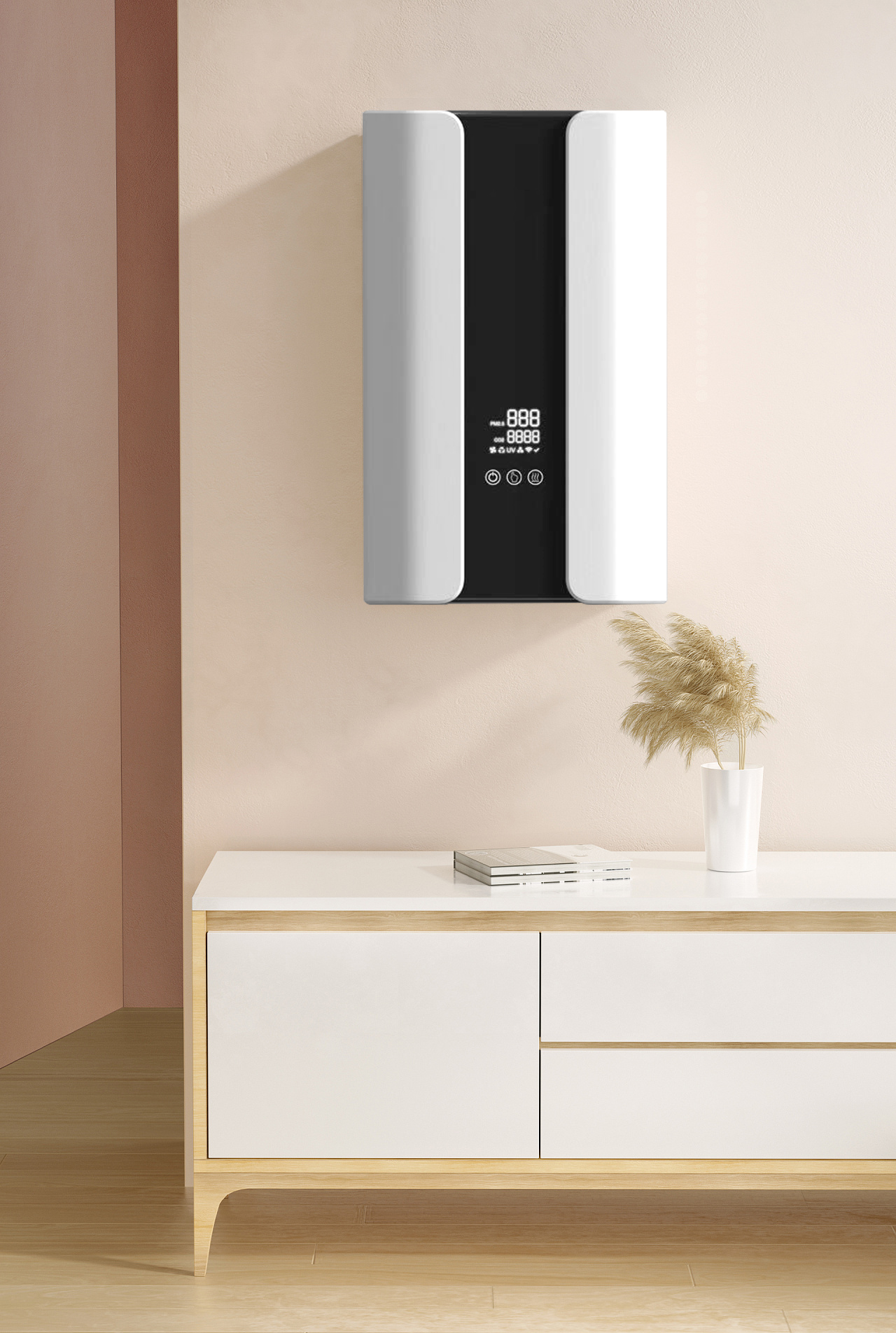
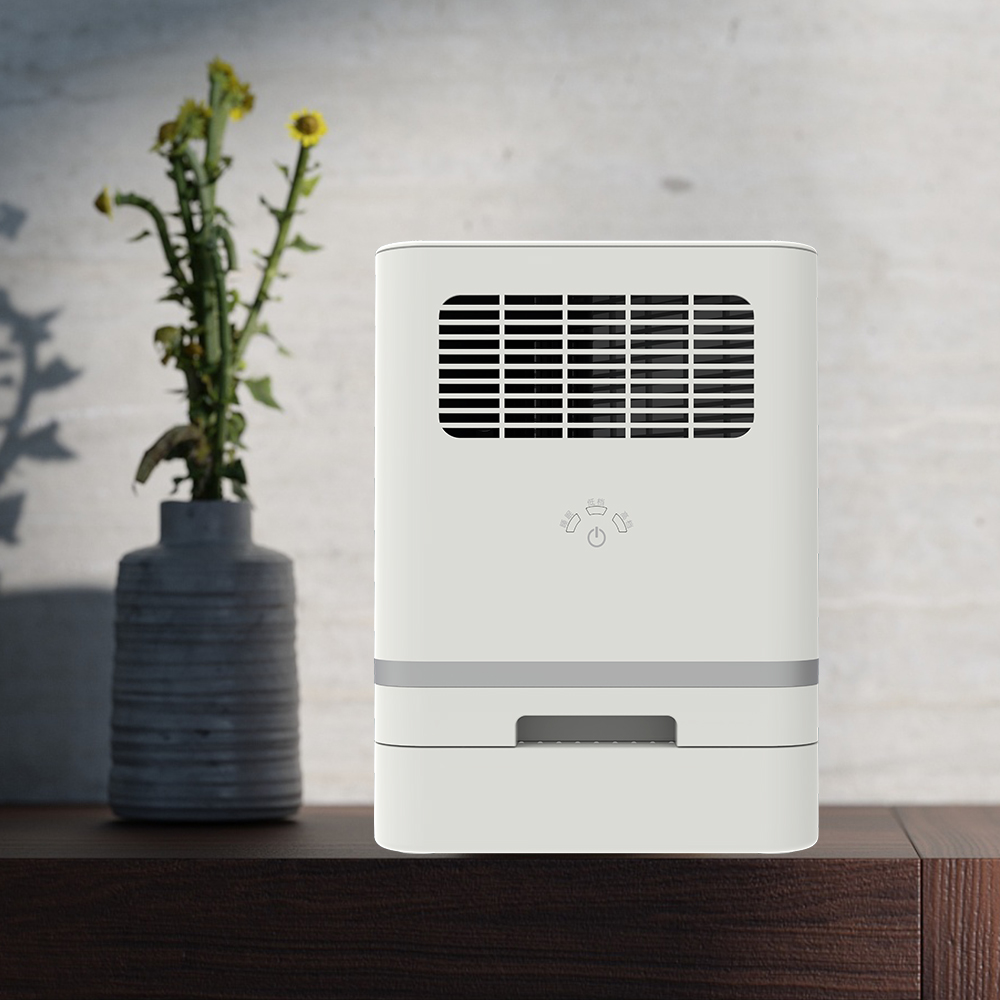
Oversizing is usually the quieter choice. A 1200 CADR cabinet running at 30% output delivers roughly the same clean air as a 400 CADR unit at full tilt, with a lower noise floor and slower filter loading. Within the site's medical grade air purifier range, wall-mounted models such as the 500 CADR fresh-air ventilation unit suit rooms where floor space is scarce and ducting is impossible.
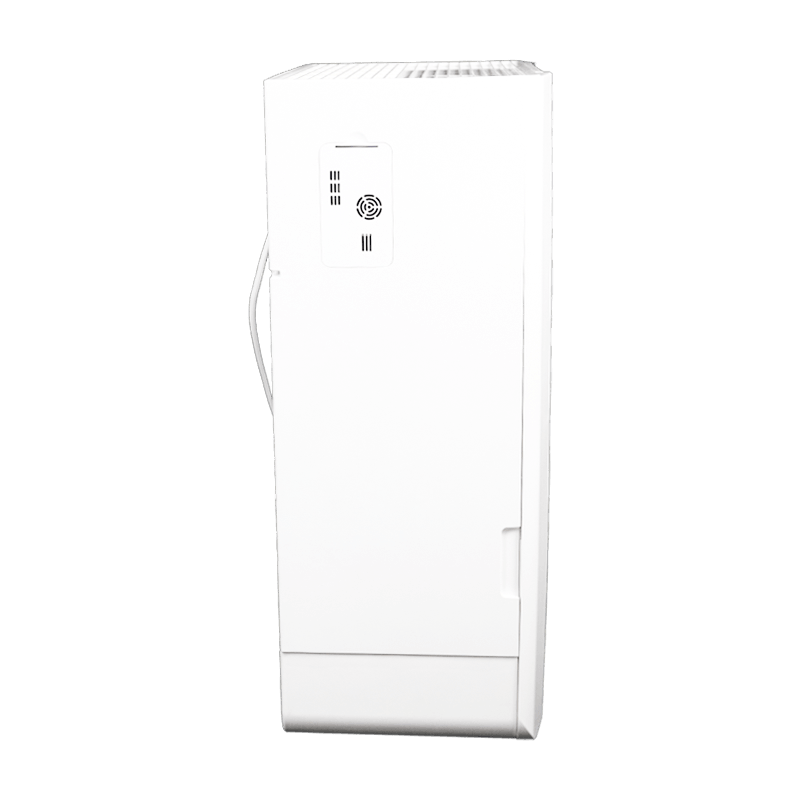 Wall-Mounted 500 CADR Medical Air PurifierWall-mounted 500 m³/h CADR medical purifier and ventilation unit for roughly 32–55 m², suited to rooms with limited floor space and no ducting.View Product →
Inside the Unit: Where Medical Grade Is Won or Lost
The filter is the headline, but the housing decides whether the filter ever sees the air it was rated for. A 2 mm gap around a filter frame, a compressed gasket, or a fan curve that pushes past the filter's rated pressure drop will pull unfiltered air straight through the cabinet. This is why medical-grade designs are judged as a system rather than a component list.
- Gasket compression and frame rigidity. Foam gaskets relax with heat cycles; a rigid frame plus a compressible seal keeps the bypass path closed for years, not weeks.
- Pressure drop headroom. A filter that starts at 180 Pa and ends at 400 Pa when loaded must still sit inside the fan curve at the end of its life, not just on day one.
- Ozone control. UVC and plasma stages are useful, but any high-voltage stage needs to be specified as ozone-free and verified — UL 867, for example, caps ozone at 0.05 ppm for electrostatic air cleaners.
- Service access. If a technician needs a screwdriver and 20 minutes to reach the filter, filter changes get postponed.
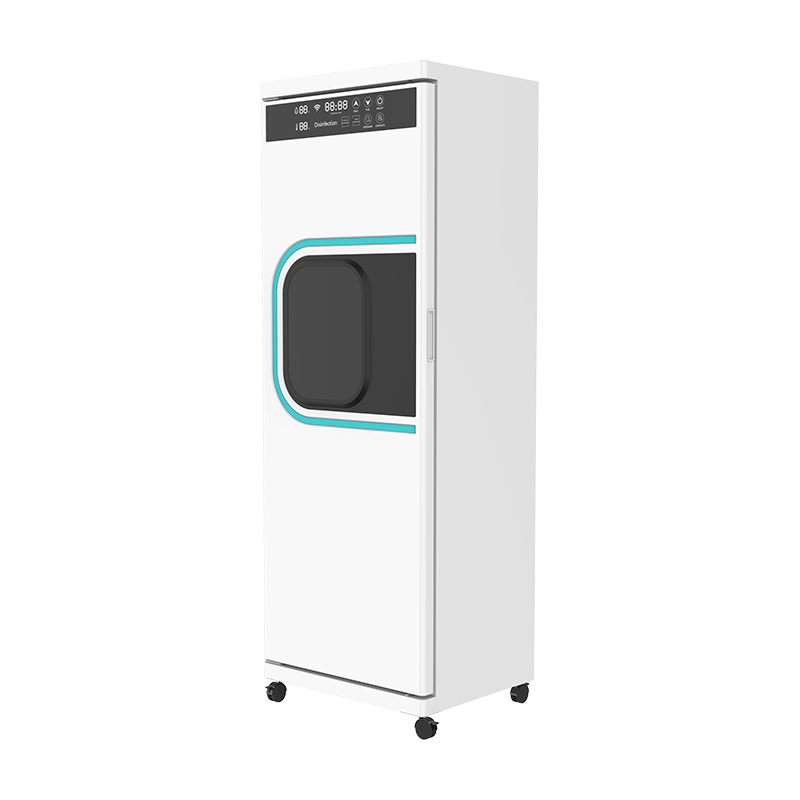
High-CADR cabinets for larger spaces follow the same logic at a bigger scale — more filter face area, dual intakes, and a housing that can be moved between rooms without losing seal integrity.
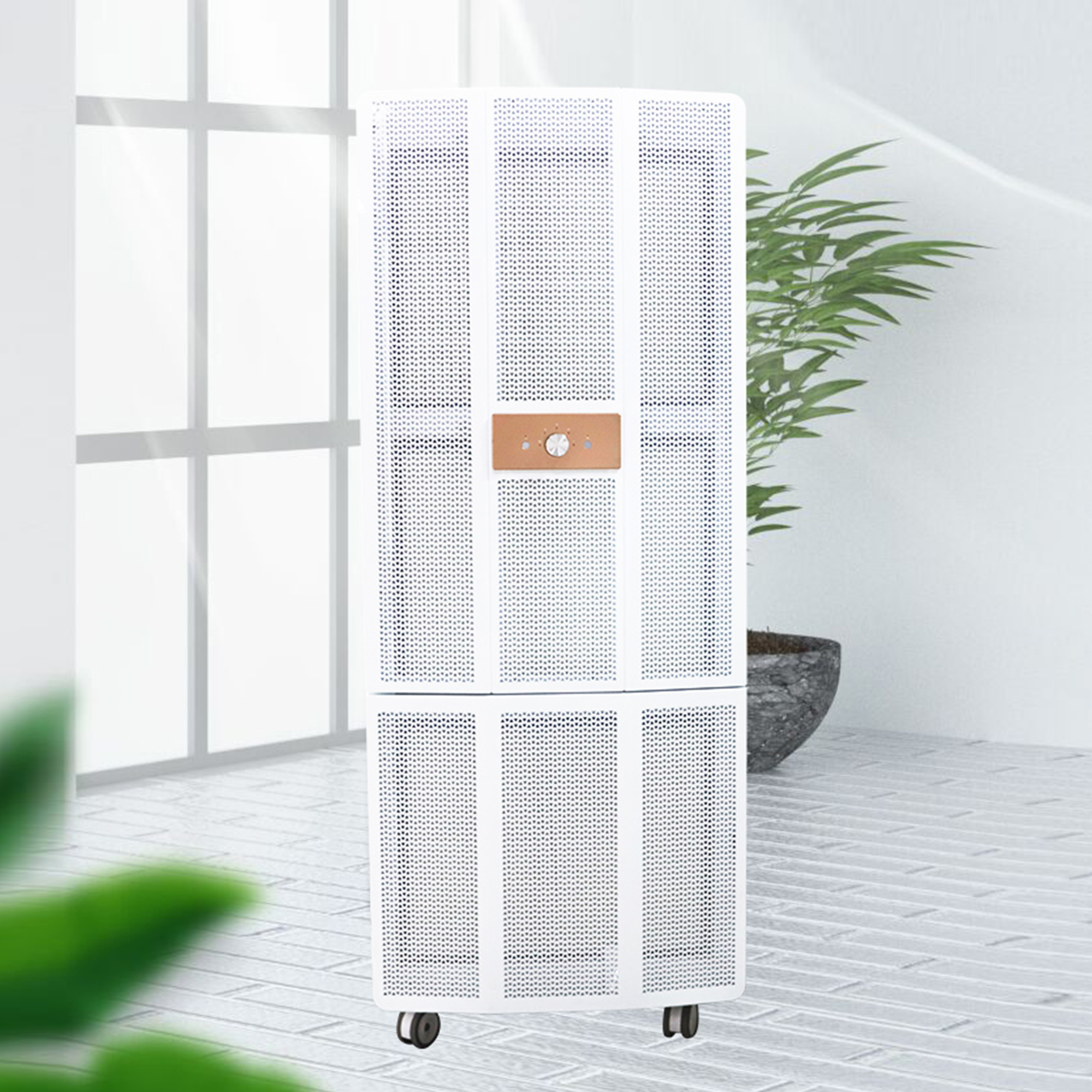
 Medical-Grade 1200 CADR Air PurifierMedical-grade 1200 CADR cabinet for larger spaces, with listed 1000 m³/h CADR, UV sterilization, PM2.5 display, Wi-Fi control, and 61 dB(A) maximum noise.View Product →
A Procurement Checklist for Clinics and OEM Buyers
Whether you are equipping a ward or developing a private-label line, the same six questions separate a workable specification from a brochure:
- Which standard defines the filter class? EN 1822 or ISO 29463, with a report per model — not a general "99.97%" statement.
- How was CADR measured? AHAM AC-1, GB/T 18801 or another named method, with the test report available.
- What is the ozone output? A measured figure, ideally below 0.05 ppm, if any ion or plasma stage is fitted.
- What is the noise at working speed? dB(A) at the airflow you actually plan to run, not at the lowest setting.
- Which certifications cover the factory? ISO 9001 for general manufacturing, ISO 13485 where the product is registered as a medical device.
- Can the supply chain scale with the project? Filter availability for 5–10 years, plus CKD/SKD options if local assembly is planned.
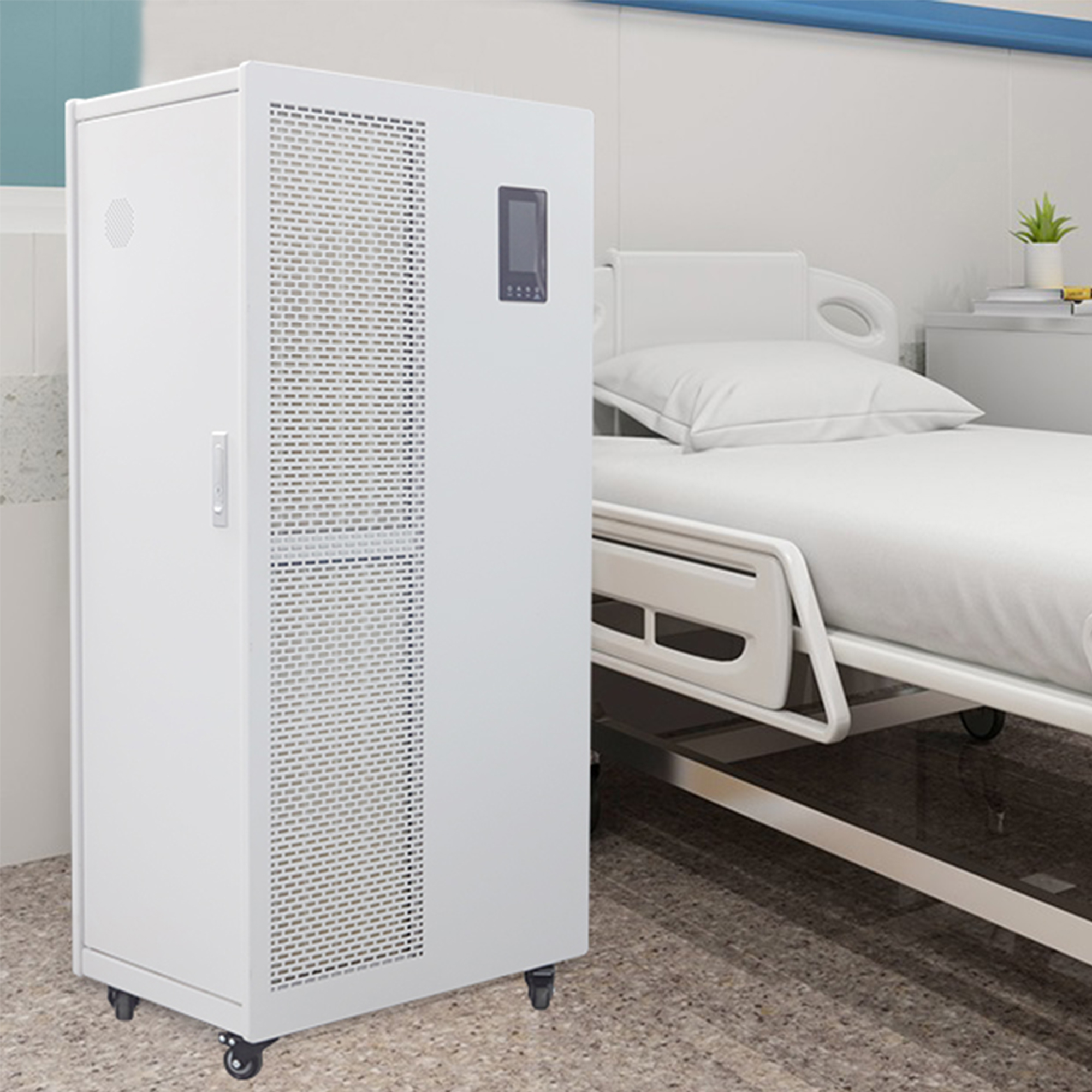
For hospital wards and dialysis units, mobility often ranks above raw CADR: a unit on castors can be repositioned between shifts, which raises real-world air changes far more than a marginally higher rating on a fixed cabinet.
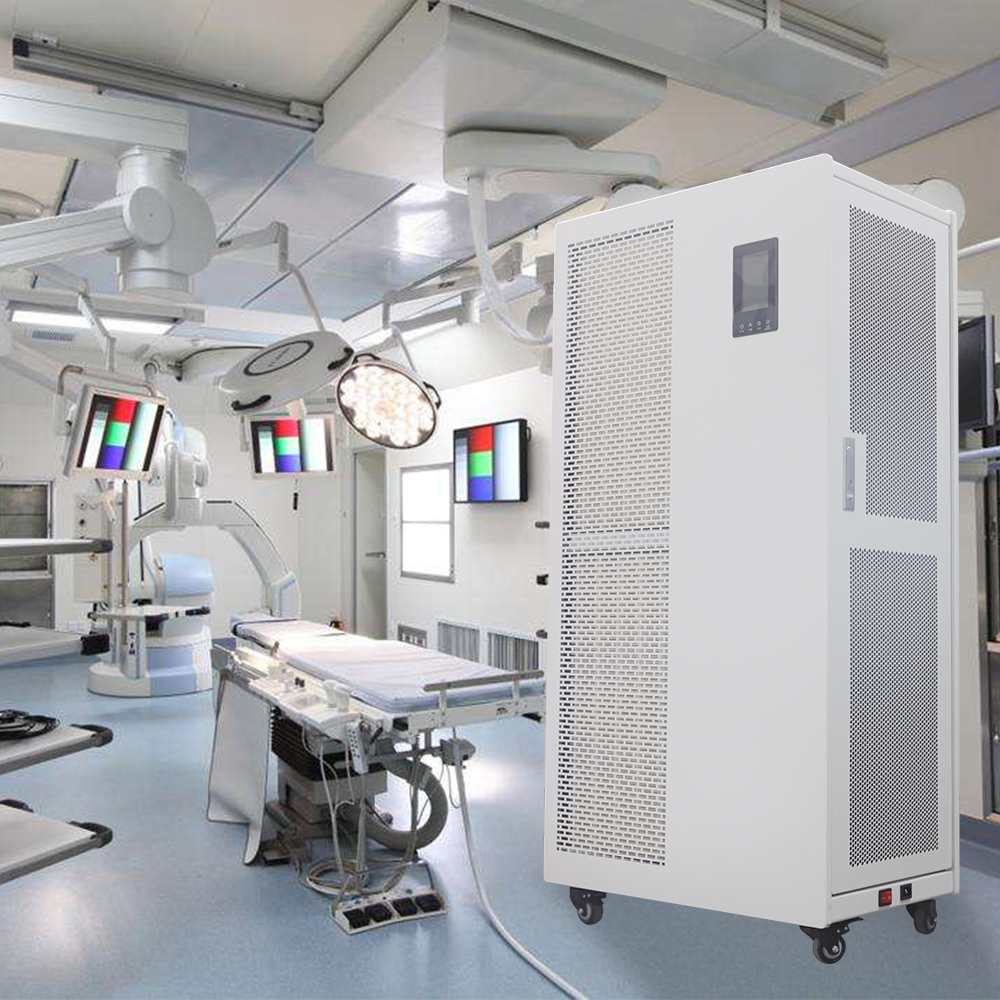
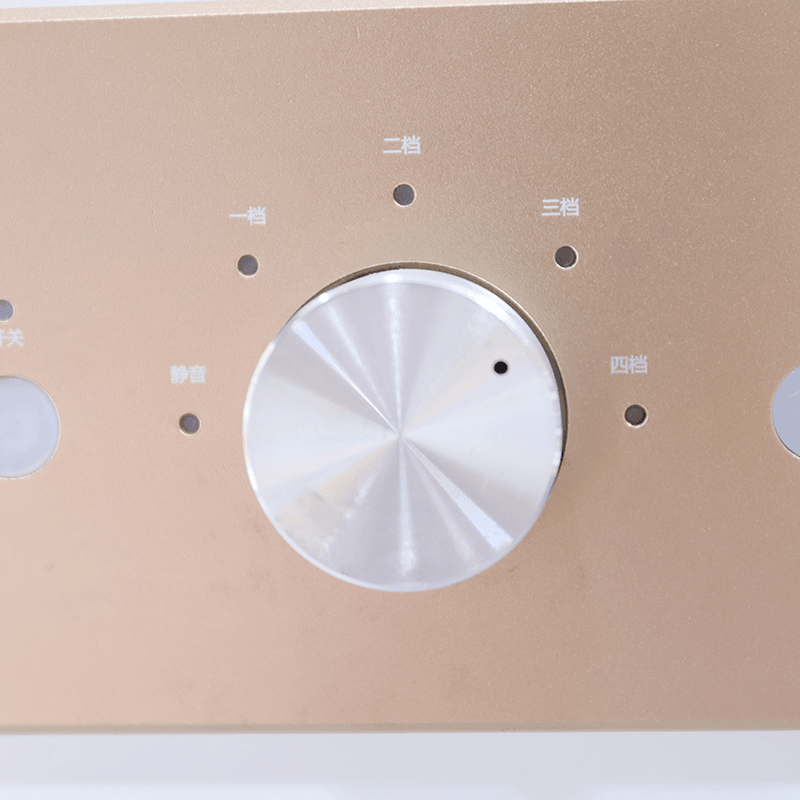 Wheeled Medical 2000 CADR Hospital Air PurifierWheeled hospital purifier with listed 1200 m³/h CADR, UV sterilization, formaldehyde and TVOC removal, and 60 dB(A) maximum noise for repositioning between shifts.View Product →
Running Costs, Filter Life and the Ownership Picture
Purchase price is rarely the largest line in a five-year budget. Filter replacement, energy draw and staff time for cleaning usually are, and all three are decided at specification stage. The table below reflects typical clinical operating practice rather than a fixed rule — a unit in a dusty renovation zone will load several times faster than one in a clean corridor.
| Service item | Typical interval | Signal that it is overdue |
|---|---|---|
| Pre-filter cleaning or replacement | 2–4 weeks | Visible dust load, rising noise, reduced airflow at the outlet |
| Gas-stage media (carbon, catalytic) | 6–12 months | Odour breakthrough in the treated space |
| H13 / H14 HEPA element | 6–18 months | Pressure drop up roughly 50% or airflow down noticeably |
| UVC lamp output check | 8,000–9,000 hours | Lamp still lit but disinfection dose no longer guaranteed |
| Gasket and seal inspection | Annual | Hardened or compressed seals, audible leak at the frame |
A differential pressure gauge costs far less than a premature filter change and turns maintenance from guesswork into a reading. Where filters are a recurring cost rather than a one-off, sourcing them from the same custom filter manufacturing line that produced the original element keeps the pressure-drop curve — and therefore the airflow — inside the validated envelope.
Frequently Asked Questions
Medical grade is a paper trail as much as a product: the class certificate, the leak-scan record, the CADR test report and the ozone measurement. Get those four documents before the purchase order, confirm the air-change arithmetic for each room, and the specification stops being a marketing word and becomes something a facility manager can defend at audit.