EN
 English
 中文简体


Two weeks after a kitchen refit, the new cabinets still give off a sharp, faintly pickled smell, and the client asks whether the room is safe to sit in. The answer to "is formaldehyde harmful" is yes — it is a recognised human carcinogen and a strong irritant of the eyes and airways. But harm is not automatic at every concentration. Risk is decided by three variables: how much formaldehyde is in the air, how long someone breathes it, and how sensitive that person is. An office at 0.02 ppm and a poorly ventilated production hall at 1.5 ppm contain the same chemical and represent completely different problems.
Content
- 1 The Short Answer: Harmful, and the Dose Decides How Much
- 2 Where the Guidelines Draw the Line
- 3 What It Does to the Body, Short and Long Term
- 4 Where the Exposure Actually Comes From
- 5 Why "Just Open a Window" Rarely Closes the Gap
- 6 What Actually Removes Formaldehyde From the Air
- 7 A Buyer's Checklist for Gas-Phase Air Cleaning
- 8 Frequently Asked Questions About Formaldehyde
The Short Answer: Harmful, and the Dose Decides How Much
Formaldehyde attacks the body at two different speeds. The fast effect is irritation. Controlled chamber studies of healthy adults put the onset of measurable eye, nose and throat irritation roughly in the 0.1 to 0.5 ppm band, with a wide spread between individuals; people with asthma and young children typically respond at the lower end. Above 1 to 2 ppm the irritation becomes unmistakable, and industrial overexposure in the tens of ppm can cause fluid accumulation in the lungs, a medical emergency documented in state health hazard sheets.
The slow effect is carcinogenic. The International Agency for Research on Cancer moved formaldehyde to Group 1, its highest hazard class, in 2004, and its 2012 review linked occupational exposure to nasopharyngeal cancer and leukaemia. That conclusion rests mainly on workers with years of high daily exposure. Residential concentrations are far lower, and researchers at the UNC Gillings School of Global Public Health have argued that low doses are unlikely to generate the DNA adducts needed to start a cancer. Both positions are consistent: the hazard is real, and the risk scales with cumulative dose.
Where the Guidelines Draw the Line
Because the dose matters, regulators publish numbers rather than adjectives. The most widely used residential reference is the WHO indoor air guideline of 0.1 mg/m³, equivalent to about 0.08 ppm averaged over 30 minutes. Occupational limits sit higher because they describe healthy adult workers over a working lifetime.
| Authority | Value | Averaging period | Population |
|---|---|---|---|
| WHO indoor air guideline | 0.1 mg/m³ (≈0.08 ppm) | 30 minutes | General indoor air |
| NIOSH recommended limit | 0.016 ppm | 8-hour TWA | Occupational |
| NIOSH ceiling | 0.1 ppm | 15 minutes | Occupational |
| ACGIH threshold limit value | 0.1 ppm | 8-hour TWA | Occupational |
| ACGIH short-term limit | 0.3 ppm | 15 minutes | Occupational |
| OSHA permissible limit | 0.75 ppm | 8-hour TWA | Occupational |
| California OEHHA chronic reference | 0.007 ppm | Long term | Sensitive public |
How far apart the reference values sit (logarithmic bar scale)
Bar lengths are proportional to log concentration, so that the smallest values remain visible.
One detail catches buyers out: the nose is a poor alarm. Most people only detect formaldehyde at around 0.5 to 1 ppm, well above the WHO figure, and the sense of smell adapts within minutes. A room can sit above the guideline for a whole afternoon without anyone describing it as smelly.
What It Does to the Body, Short and Long Term
Acute effects are concentrated where the gas dissolves: the eyes, the nasal lining and the throat. A clinical case series summarised in the US toxicological profile for formaldehyde recorded a consistent symptom pattern among exposed people, and the rank order tells you what to ask about during a site walk-through.
Reported symptoms among formaldehyde-exposed individuals
Source: clinical symptom data compiled in the US toxicological profile for formaldehyde.
Long-term, the concerns are cancer and airway disease. Beyond the IARC classification, formaldehyde is a recognised trigger for asthma symptoms and a cause of allergic contact dermatitis in people who handle resins and treated fabrics daily. Schools, clinics and newly furnished apartments deserve particular attention because they combine high surface area of pressed wood with occupants who are young, unwell, or both.
Where the Exposure Actually Comes From
Indoor concentrations of formaldehyde are typically two to five times higher than outdoor levels, according to the US Environmental Protection Agency, and the sources are ordinary objects rather than chemical laboratories.
- Pressed-wood products: particleboard, MDF and plywood bonded with urea-formaldehyde resin, found in cabinets, desks, flooring and doors.
- Furniture and finishes: lacquers, adhesives and some laminates that keep releasing for months after installation.
- Combustion: unvented gas hobs, candles, open fires and tobacco smoke all produce formaldehyde directly.
- Consumer products: certain cleaners, cosmetics, nail products and permanent-press textiles.
- Workplaces: plywood and resin manufacturing, foundries, anatomy laboratories, printing and hair salons.
- Older manufactured housing, where urea-formaldehyde foam and panel products were used more heavily before standards tightened.
Why "Just Open a Window" Rarely Closes the Gap
Ventilation is the first and cheapest tool, but it is dilution, not removal. Emission strength rises with both temperature and humidity, which is why a room that feels acceptable in February can be uncomfortable in July with the same furniture in it. Tight modern building envelopes exchange less air than older constructions, so natural leakage does less of the work than occupants assume.
The practical consequence is a two-step strategy: remove or seal the strongest sources where you can, then run air cleaning continuously in rooms where the source cannot be touched — a leased office, a clinic treatment room, a rented apartment. During the first six to twelve months after a fit-out, when emission rates are highest, that combination matters most.
What Actually Removes Formaldehyde From the Air
A particle filter alone is the wrong tool. HEPA media such as H14 HEPA filtration systems capture aerosols, and formaldehyde is a gas molecule roughly 0.25 nanometres across — it passes straight through the paper. Effective removal needs a gas-phase stage with enough media mass and contact time:
- Activated carbon: high surface area, physical adsorption, capacity limited by mass and by humidity competing for the same pores.
- Impregnated carbon: potassium permanganate or similar oxidants convert formaldehyde into formate and further oxidation products.
- Catalytic oxidation media: manganese-based catalysts break formaldehyde down to carbon dioxide and water at room temperature, with a longer service life than plain carbon.
- Zeolite molecular sieves: polar adsorption that performs well at low concentrations and in warm air.
Chemistry is only half the design. Filter depth, media weight in kilograms, face velocity and dwell time determine whether the gas actually meets the media. A five-millimetre carbon mat inside a 300 m³/h appliance gives the air milliseconds of contact and saturates within weeks. This is why suppliers who build for humid, high-occupancy markets pair activated carbon pellets for bulk loading with a polish layer of catalytic filter media that keeps working after the carbon has taken up its share.
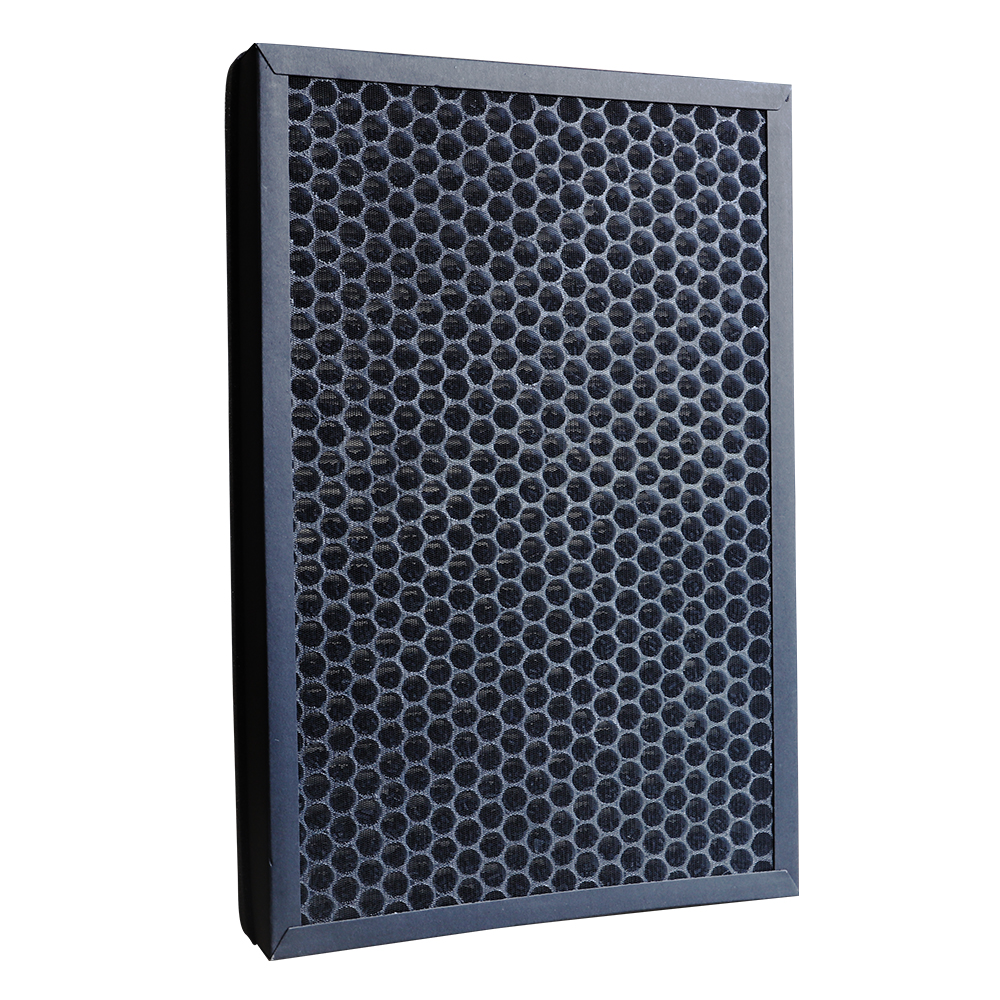 OEM Cold Catalyst Filter for Air PurifiersCustomizable pre-filter with cold catalyst media for formaldehyde and TVOC removal, suited to multi-stage air purification where gas-phase treatment follows particle capture.View Product →
Three-stage stack: particles are trapped first, gas-phase media handle formaldehyde afterwards.
A Buyer's Checklist for Gas-Phase Air Cleaning
Formaldehyde removal is one of the few air-quality claims that is easy to write on a spec sheet and hard to verify in the field. Ask suppliers for the following before signing off:
- Gas-removal test data with a stated inlet concentration, airflow and single-pass efficiency — not a particle CADR figure reused for gases.
- Media mass in kilograms and filter depth, plus the recommended replacement interval at a defined formaldehyde load.
- Humidity tolerance, because carbon adsorption falls away sharply in hot, damp rooms.
- Ozone by-product data if ionisation or plasma is part of the design; formaldehyde control must not trade one irritant for another.
- Certification and manufacturing evidence, such as ISO-certified production and a documented filter change schedule.
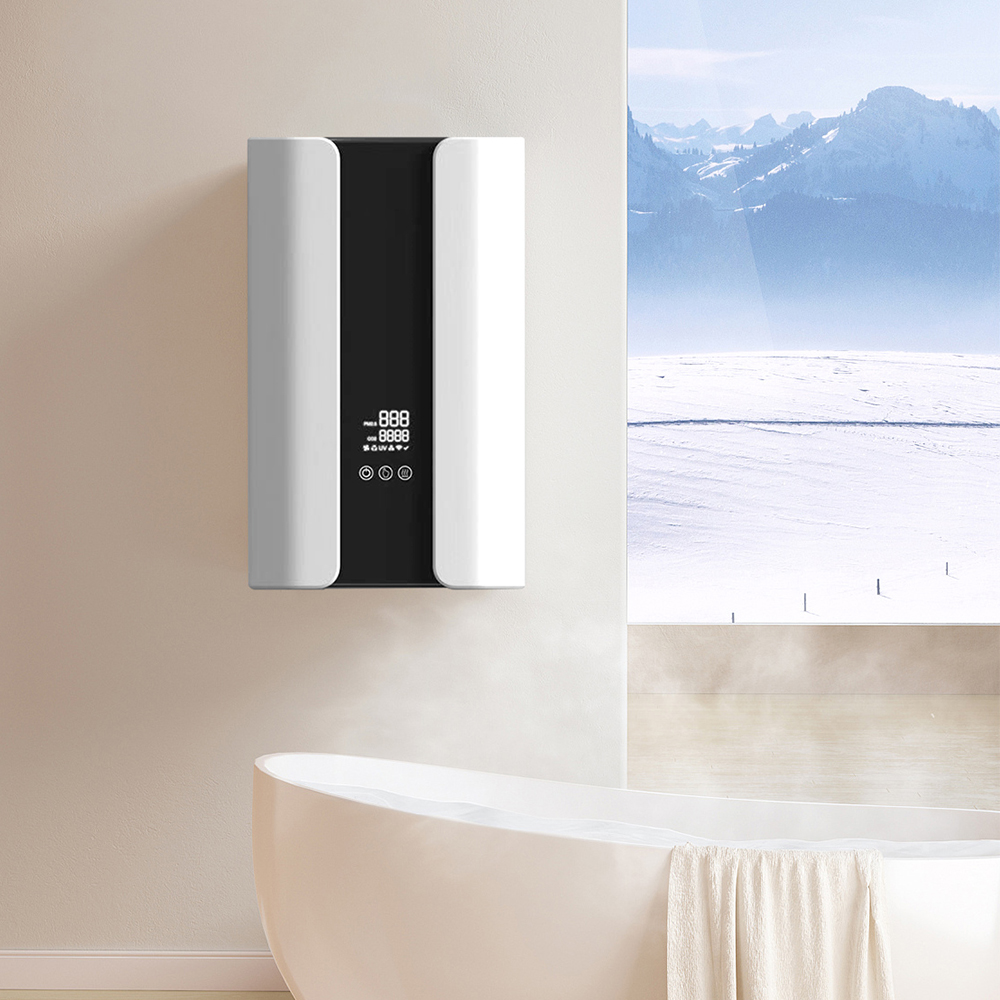
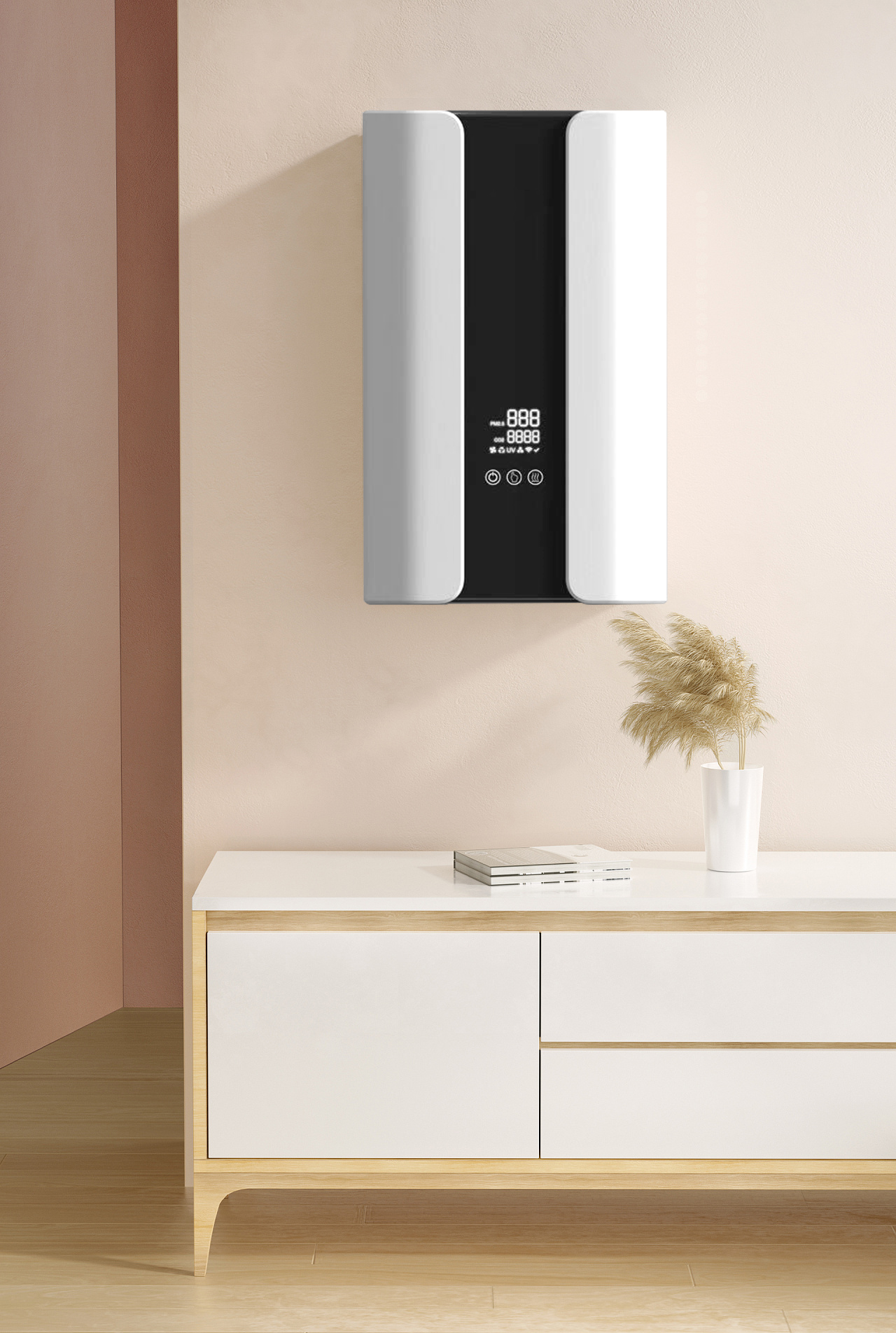
For clinics, laboratories and large open-plan floors, a wall-mounted unit with a dedicated gas stage is usually the more practical route than portable cabinets, because it keeps media volume high while staying out of the way.
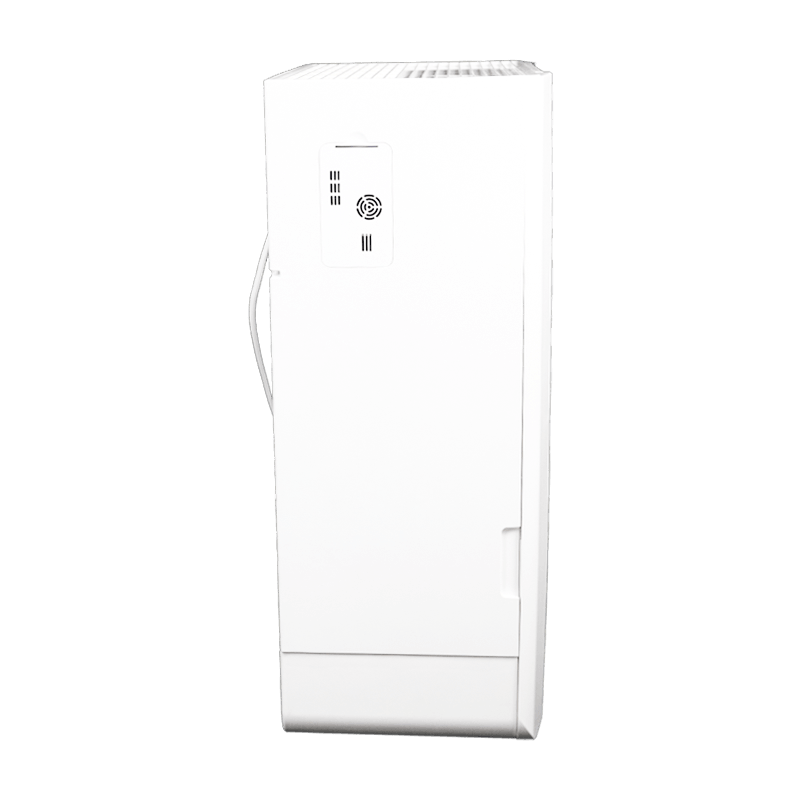 Wall-Mounted Medical Air Purifier YY-B-500500 m³/h CADR wall-mounted unit with gas-stage filtration and ventilation, suited to clinics, labs and open-plan spaces where media volume and floor space matter.View Product →
Frequently Asked Questions About Formaldehyde
Is formaldehyde harmful to humans at low levels?
Below roughly 0.1 ppm most healthy adults notice nothing, but guideline values exist because children, asthmatics and older occupants react at lower concentrations. Chronic low-level exposure is still the area regulators debate.
What level of formaldehyde in a home is dangerous?
The WHO 30-minute guideline of 0.1 mg/m³ (about 0.08 ppm) is the usual reference. Sustained readings above it call for source control, and anything approaching 0.3 ppm warrants immediate action.
Can an air purifier remove formaldehyde?
Only if it has a gas-phase stage — activated carbon, impregnated carbon or catalytic media. A HEPA-only purifier removes particles and leaves the gas untouched, so check media mass, not just CADR.
How long does formaldehyde off-gassing last?
Emissions from urea-formaldehyde resins peak in the first months and then decline slowly, but they can continue for years in warm, humid rooms. Studies of older manufactured housing still found elevated levels long after installation.
Does formaldehyde cause cancer?
IARC classifies it as Group 1, a known human carcinogen, based on nasopharyngeal cancer and leukaemia in occupationally exposed workers. Risk scales with cumulative exposure, which is why reduction matters most in high-exposure settings.
How do I test my home for formaldehyde?
Passive badges and handheld sensors are cheap but drift; pumped DNPH tube sampling analysed by an accredited laboratory is slower but defensible. For a school, clinic or new build, choose laboratory sampling over a sensor.