EN
 English
 中文简体

Put a single layer of frozen chips into a 5.5 L air fryer, set 200 °C for 14 minutes, and they come out evenly browned with a teaspoon of oil, or none at all. That one result answers the question most buyers are really asking: what does an air fryer do that a normal oven or a deep fryer does not?
Short answer: an air fryer is a compact convection oven with a fan strong enough to strip moisture from the food surface. It does not fry food in oil. It roasts, bakes, reheats, dehydrates and crisps by pushing hot air at speed through a small chamber, which is why it reaches temperature in two or three minutes and finishes a small portion faster than a full-size oven.
What that means in practice:
- Crisping without an oil bath: the surface browns through the same reactions you get in an oven, only faster because the air keeps moving.
- Fast preheat and recovery: a 4-6 L chamber hits 180-200 °C in a fraction of the time a 60 L oven needs.
- Less oil, not zero fat: food keeps its own fat; added oil is mainly for flavour, colour and stopping sticking.
- Small batches by design: one basket, one layer. Overfill it and you get steamed food instead of crisp food.
Content
- 1 How the Air Actually Cooks the Food
- 2 What It Cooks Well, and Where It Falls Short
- 3 Air Fryer, Oven or Deep Fryer: The Honest Comparison
- 4 Sizing an Air Fryer: Capacity, Power and Portions
- 5 The Health Question: Less Oil, Still Browning
- 6 Cleaning, Coating Care and Safe Daily Use
- 7 Frequently Asked Questions About Air Fryers
How the Air Actually Cooks the Food
Almost every air fryer is built from the same three parts: a heating element at the top, a fan directly behind or beside it, and a perforated basket that lets air pass through and around the food. The fan pulls air past the element, drives it down onto the food at 150-200 °C, and draws the cooled air back up around the basket walls to be reheated. The loop repeats for as long as the timer runs.
Two things happen at the food surface. Moisture leaves, and once that surface passes roughly 140-150 °C, browning reactions take over and create the colour and flavour people associate with frying. This is why surface preparation matters more than the machine: chicken patted dry and brushed with a little oil browns; the same piece going in wet will steam.
What an air fryer does not do
- It does not fry in oil, so it cannot reproduce the thin, blistered crust of a liquid oil bath.
- It does not build pressure, so it is not a pressure cooker and will not tenderise tough cuts in minutes.
- It cannot hold wet batter, which drips through the basket before it sets.
What It Cooks Well, and Where It Falls Short
Air fryers earn their counter space on a fairly narrow set of jobs done exceptionally well, and disappoint on a few others. The table below reflects the practical results most buyers report.
| Food | What the air fryer does | Watch out for |
|---|---|---|
| Frozen fries and wedges | Browns and crisps in 12-18 minutes at 190-200 °C | Single layer only; shake the basket halfway |
| Chicken wings and drumsticks | Renders fat and crisps the skin | Bone-in pieces need a core temperature check |
| Vegetables | Roasts with charred edges, similar to a hot oven | Cut evenly; small pieces scorch quickly |
| Fish fillets and salmon | Cooks through in 8-12 minutes, skin crisps | Thin fillets overcook within a minute or two |
| Reheating pizza and fried food | Restores crust that a microwave softens | Wrap delicate items in foil to stop burning |
| Wet batter (tempura, beer batter) | Fails; the batter runs through the basket | Use a dry starch coating instead |
| Whole chicken or large roast | Uneven; the outside browns before the centre cooks | Spatchcock it, or use a large-capacity model |
Air Fryer, Oven or Deep Fryer: The Honest Comparison
Against a deep fryer, the air fryer wins on convenience and fat pickup: no oil vat, no disposal, no splatter. It loses on texture for anything that genuinely needs a liquid oil bath.
Against a fan oven, the physics are identical; only the chamber size differs. Preheat time drops from 10-15 minutes to two or three, and a small portion finishes sooner. A full-size oven still wins for a whole chicken, a tray of biscuits, or anything that must not be moved mid-cook.
Against a microwave, the difference is fundamental. Microwaves heat water inside the food, so they reheat and soften. Air fryers heat air and dry the surface, so they reheat and crisp. Leftover fried chicken is the clearest test: a minute in a microwave makes it soggy, four minutes at 180 °C brings the crust back.
On energy, the small chamber is an advantage for a 400 g portion and a disadvantage if you must cook three batches for a family meal. Match the appliance to the batch size you actually cook, not to the best-case scenario.
Sizing an Air Fryer: Capacity, Power and Portions
Capacity is the specification that decides whether the appliance earns its space. The most common regret is buying small to save counter room, then cooking two rounds for a family of four. As a working guide, allow roughly 1.5-2 L of basket volume per person for side dishes, and closer to 2.5 L per person if the air fryer becomes your main cooking appliance.
Wattage matters as much as volume. A 1,400-1,800 W unit recovers heat faster after the drawer is opened, which shortens cooking and improves browning on dense food. Mechanical dials are cheaper and easier to repair; digital oil-free models add precise temperature and timer control, which helps with baking and delicate proteins.
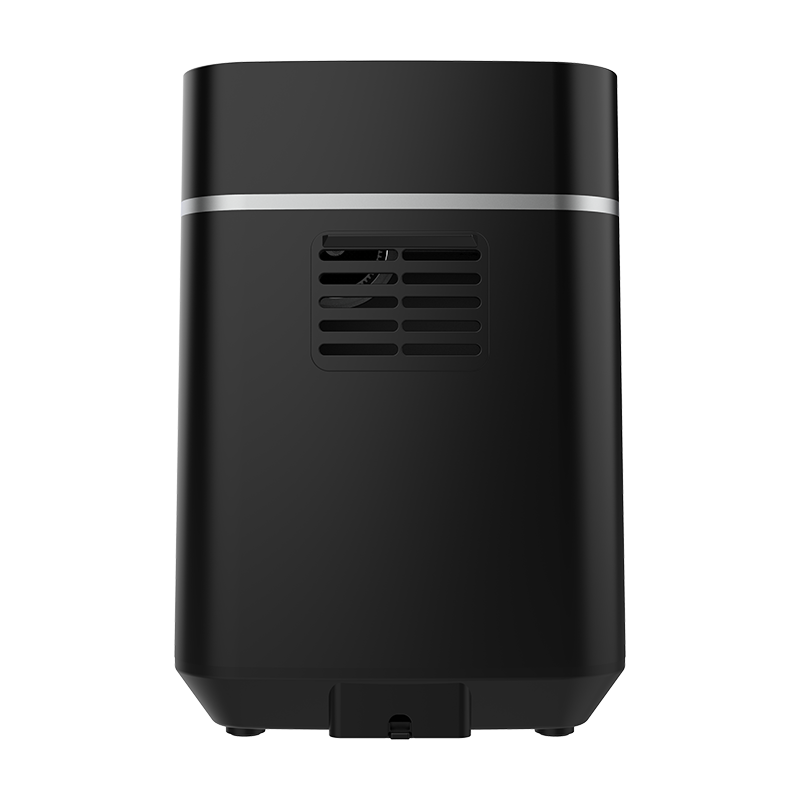 Compact 1.8 L Mini Air Fryer for Small KitchensA 1.8 L, 1200 W air fryer suited to single servings, reheating and small counters where space is limited.View Product →
A 1.8 L mechanical-panel unit suits single servings, reheating and small kitchens where counter space is the limiting factor.
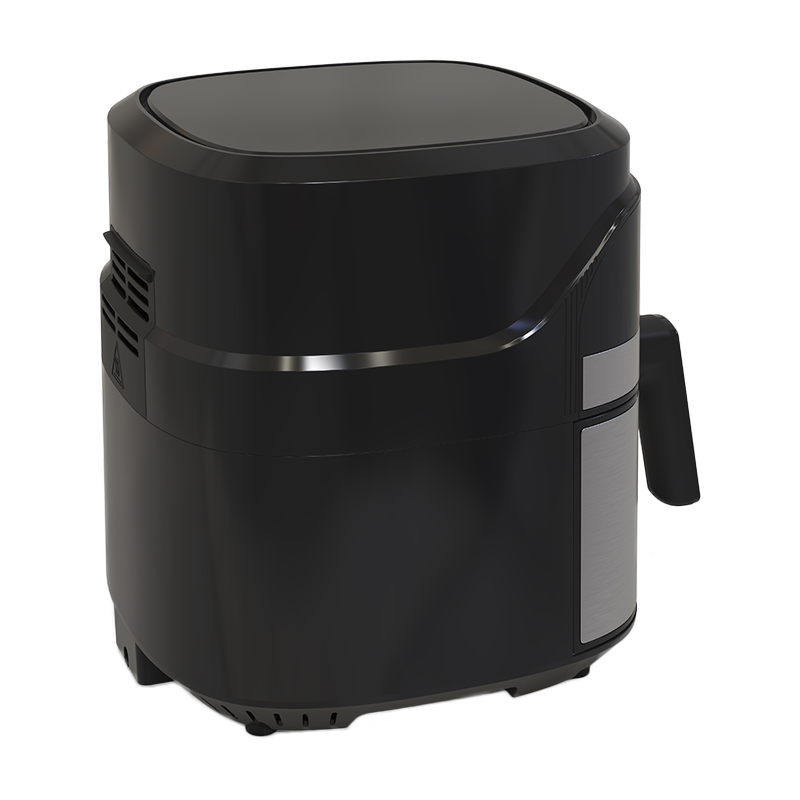 5.5 L Mechanical Air Fryer for Three to Four PeopleA 5.5 L, 1500 W air fryer with knob controls and non-stick cooking surface, sized for family portions without a second batch.View Product →
The 5.5 L class is the practical middle ground: one basket of wings or vegetables for three to four people without a second round.
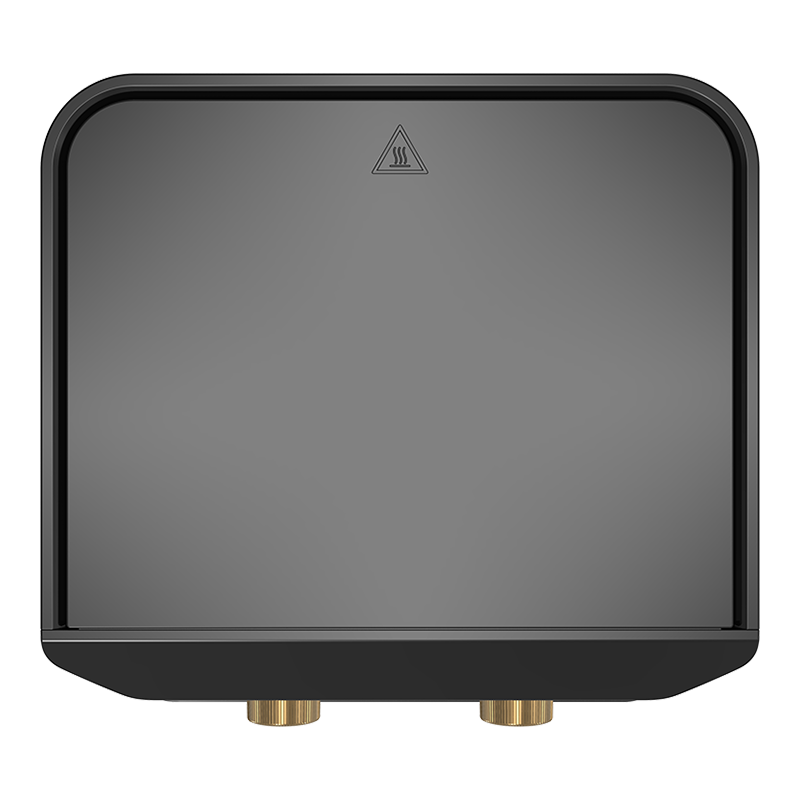 15 L Digital Air Fryer for Batch CookingA 15 L, 1800 W digital air fryer with sliding door and auto shut-off, suited to larger batches and entertaining when counter space allows.View Product →
A 15 L digital model is for batch cooking, entertaining or replacing the main oven for weekday dinners; it needs real counter depth, so measure first.
The Health Question: Less Oil, Still Browning
The fat reduction is real. Deep-fried food absorbs oil during cooking; air-fried food does not sit in a fat bath, so published food-science comparisons consistently report substantially lower fat content in air-fried potatoes than in deep-fried ones. What the air fryer does not do is remove fat already inside the food: wings, cheese and bacon stay fatty.
There is a second point most marketing skips. Browning starchy food at high heat produces acrylamide, and food safety authorities including the FDA and EFSA recommend aiming for a golden yellow colour rather than a dark brown crust. An air fryer makes over-browning easy, so the setting matters.
Used well, the appliance replaces two habits: deep frying at home, and reheating in a microwave. Both swaps usually improve the diet more than the fryer itself does.
Cleaning, Coating Care and Safe Daily Use
- Let the drawer cool before washing. Thermal shock warps baskets and dulls coatings.
- Use warm water, dish soap and a soft sponge. Abrasive scourers and metal utensils are the main cause of coating failure.
- Check the manual before dishwashing. Many baskets are dishwasher-safe; many are not.
- Avoid aerosol cooking sprays, which can leave a sticky film that bakes onto the surface. Brush or spray oil from a bottle instead.
- Keep the vents clear and never operate the unit under a low cabinet; exhaust air is hot and greasy.
- Do not overfill. Airflow, not contact heat, does the cooking, and a packed basket blocks it.
Coating type affects both cleaning and longevity. Non-stick ceramic air fryers handle high heat well but still need the same gentle treatment; stainless-steel interiors trade easier browning for a harder clean.