EN
EN
 English
 中文简体
中文简体
.png)
You wake up with a dry throat. By mid-afternoon a layer of dust has settled on your desk. Your nose feels stuffy even though you do not have a cold. These small clues are why so many people ask, "do you need an air purifier?"
The direct answer is: not every house needs one, but a large number of households would breathe better with one. The U.S. EPA estimates that indoor air can be two to five times more polluted than outdoor air and that people spend roughly 90 percent of their time indoors. Those numbers make an air purifier a valid health purchase, not a luxury.
Content
What an air purifier actually does
An air purifier uses a fan to pull room air through a series of filters. A pre-filter catches large lint and pet hair. A HEPA filter captures fine dust, pollen, mold spores, smoke, and bacterial particles. An activated carbon layer adsorbs gases, cooking smells, and volatile organic compounds. Some units add UV light or plasma for an extra microbial reduction step.
It is equally important to understand what a purifier does not do. A portable unit is not a ventilator. It does not pull fresh air in from outside and it does not control humidity. That is why you still need ventilation and a source-control plan.
Seven signs you need one
If you recognize more than one of the following, a HEPA-based purifier is worth buying.
- Indoor allergies are constant. Pollen, dust mites, and mold spores stay suspended in the air; a HEPA filter gives your nose a break.
- You have pets. Pet dander and the proteins in pet saliva are common allergy triggers that an air purifier can reduce.
- Smoke finds its way in. Wood smoke, wildfire smoke, or cooking smoke creates very fine particles that can travel deep into the lungs.
- You just renovated or bought new furniture. Fresh paint, adhesives, and particleboard emit VOCs; activated carbon helps remove part of that load.
- Rooms smell musty. A musty odor usually signals moisture and microbial growth. A purifier filters spores, but you still need to fix the leak.
- You live on a busy road. Traffic pollution raises indoor PM2.5 levels, especially near heavy traffic.
- You have asthma, COPD, or a weaker immune system. Reducing respirable particles can decrease irritation and the number of symptom days.
The pattern is simple: the more time you spend in a room and the more pollution sources it has, the more an air purifier helps.
Who benefits most?
| Situation | Main contaminant | Priority |
|---|---|---|
| Allergy season | Pollen, dust mites | High |
| Pet owner | Dander, odors | High |
| After renovation | VOCs, fine dust | High |
| Mold or dampness | Mold spores | Medium, plus leak repair |
| Healthy adult | General PM2.5 | Optional |
HEPA and CADR: two numbers that matter
When you compare purifiers, HEPA grade and CADR should drive the decision.
HEPA grade
A true HEPA filter is a mat of randomly arranged fibres. H13 and H14 are the grades used in medical-grade equipment. An H13 filter retains at least 99.95 percent of the most penetrating particle size, so it is a meaningful standard for allergy bedrooms and clinic spaces. If you are comparing what is available on the market, all H13-rated home purifiers begin from this same filter baseline.
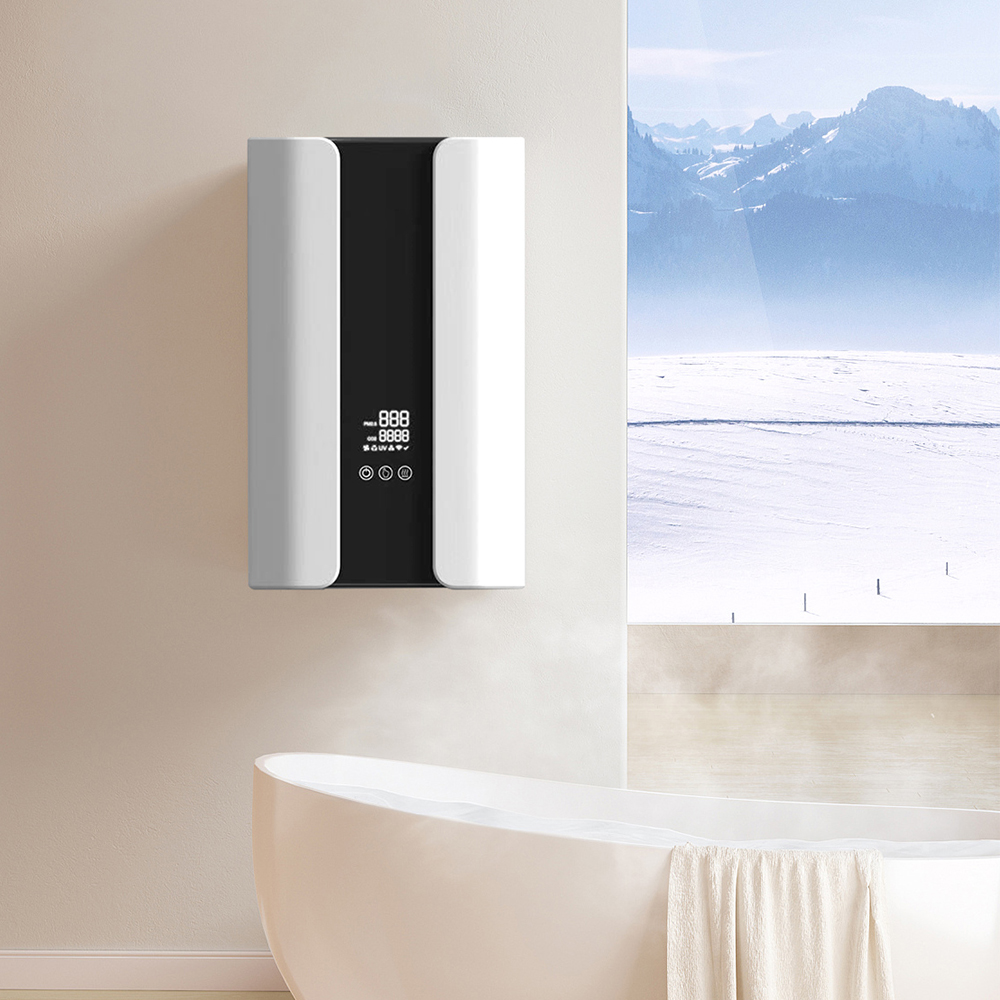
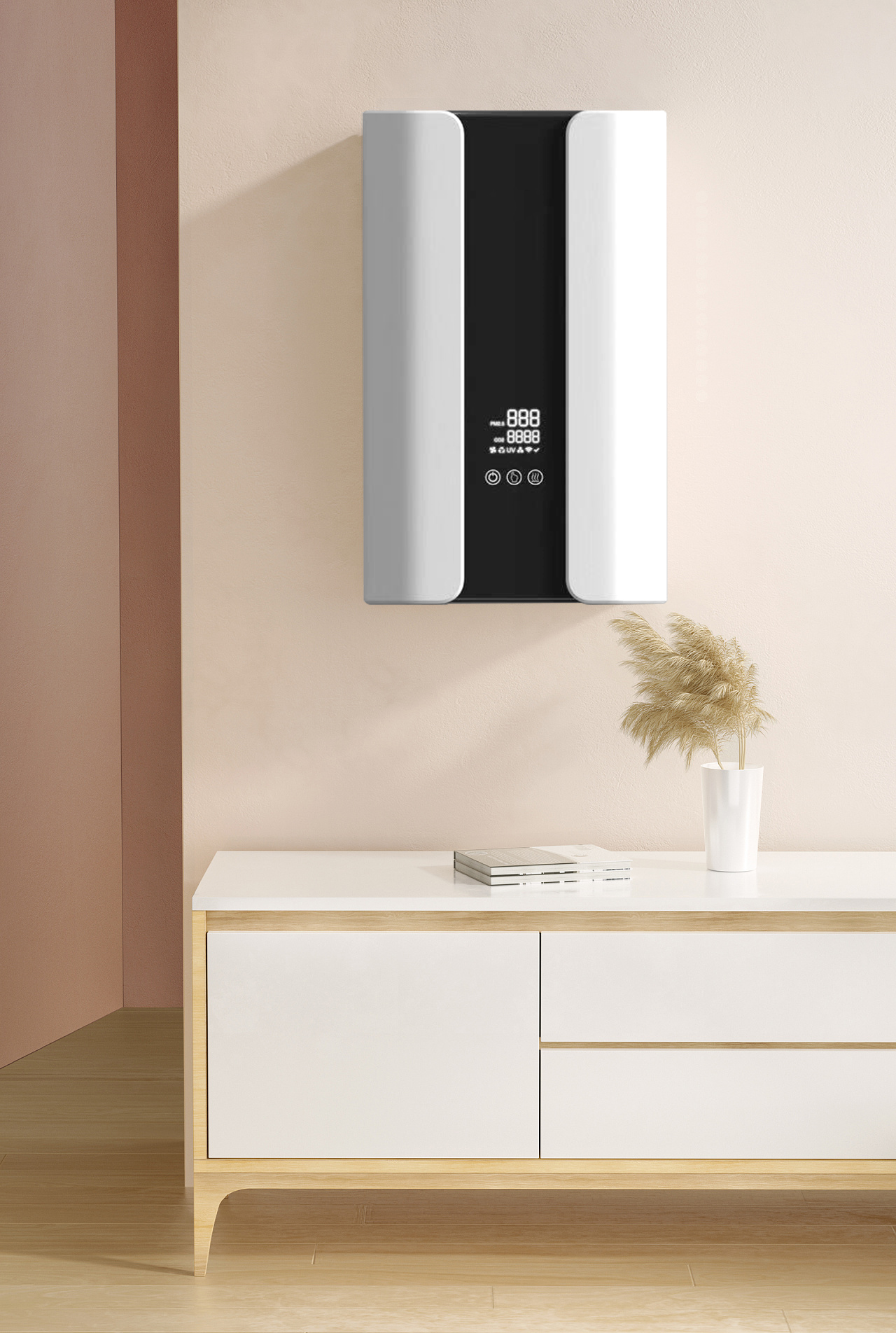
For tight spaces where a floor unit gets in the way, a low-profile option such as the wall-mounted medical air purifier BKJ-22M can deliver HEPA-grade filtration without sacrificing floor space.
CADR
CADR, or Clean Air Delivery Rate, is an AHAM industry measurement of how much clean air a unit delivers in cubic feet per minute. A common rule of thumb is to choose a CADR that is at least two-thirds of the room area in square feet. In metric terms, shoot for roughly five air changes per hour in a room with a normal ceiling height.
At our own factory, we make the filter media and assemble the finished unit, which lets us verify that a purifier delivers close to its rated CADR instead of relying on a generic filter insert.
What an air purifier will not fix
- Sources you leave running. If you smoke or burn candles indoors, stop that first.
- Surface dust. A purifier catches airborne particles; it does not dust your shelves for you.
- Mold colonies. Filtering spores is not enough; find and dry the moisture source.
- Low humidity or high humidity. A humidifier or dehumidifier is the right tool for that job.
Set expectations. An air purifier works with ventilation and housekeeping, not instead of them.
Choosing for your room and filter maintenance
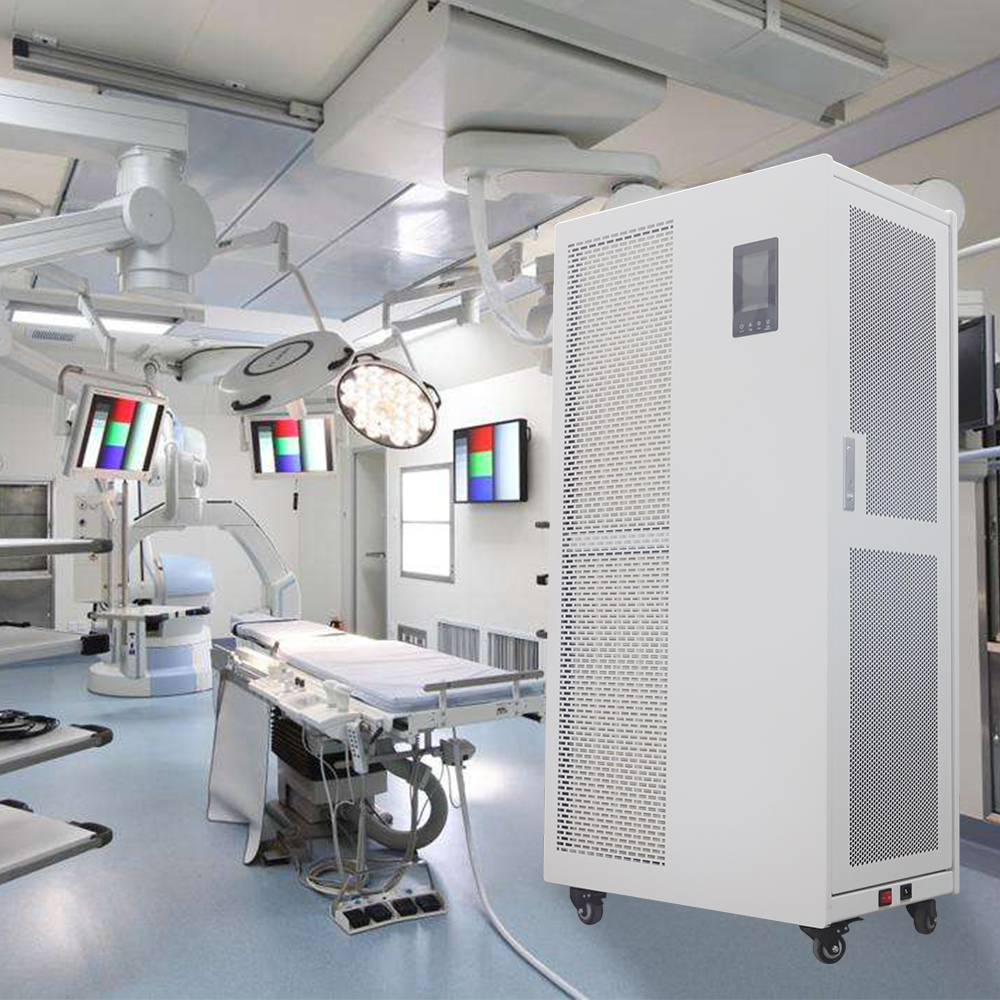
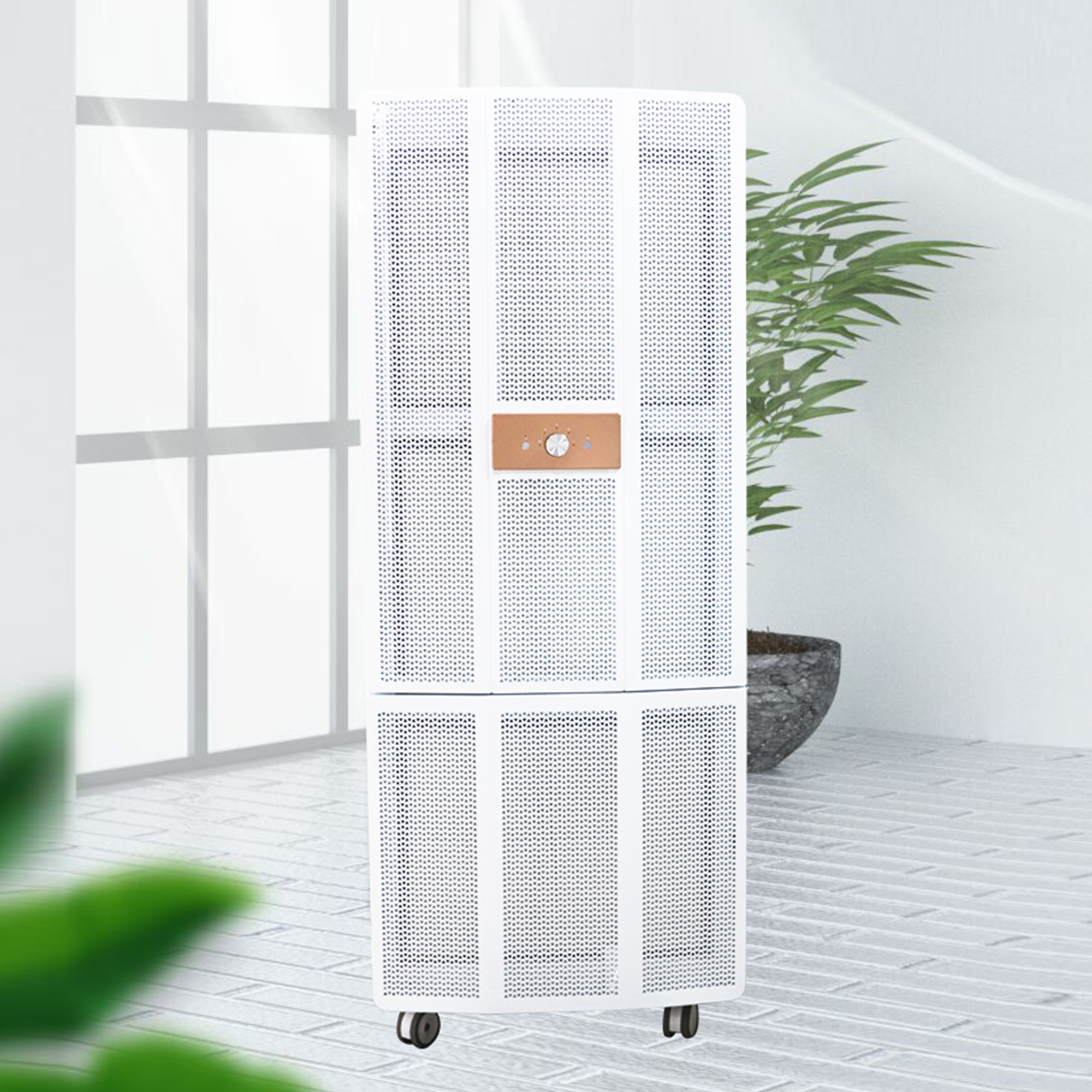
Measure the room in square metres. If you have a 20 m² bedroom, use the CADR chart above and pick a unit that reaches about 260 m³/h. For a large open-plan room, you need more airflow. A mobile high-CADR unit such as the 60C mobile air purifier is designed for that job.
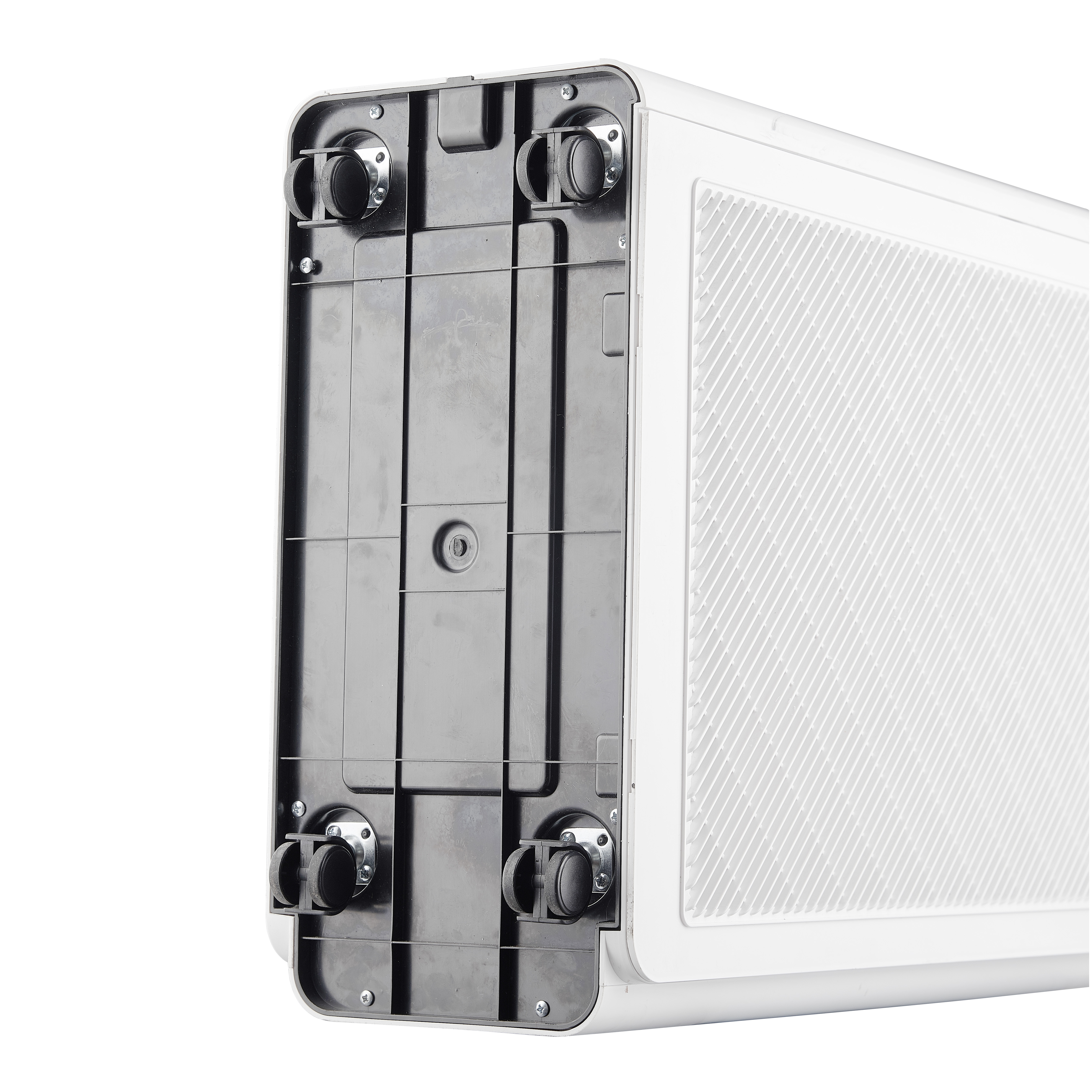 Custom REMOVE FORMALDEHYDE BEST,ENJOY FRESH AIR MOST BKJ-60C Suppliers, OEM CompNingbo Yinyu Purification Technology Co., Ltd is custom REMOVE FORMALDEHYDE BEST,ENJOY FRESH AIR MOST BKJ-60C suppliers and OEM REMOVE FO...View Product →
Filter maintenance is where most purifiers fail. A loaded pre-filter can be rinsed; a saturated HEPA pack must be replaced. In normal homes, HEPA filters often need swapping every six to twelve months, but smoke, pet dander, or heavy use shortens that interval. Since the filter element is the heart of an air purifier, keep a change schedule on your calendar. When it is time, choose genuine H13 HEPA replacement cartridges that match the unit's airflow path.
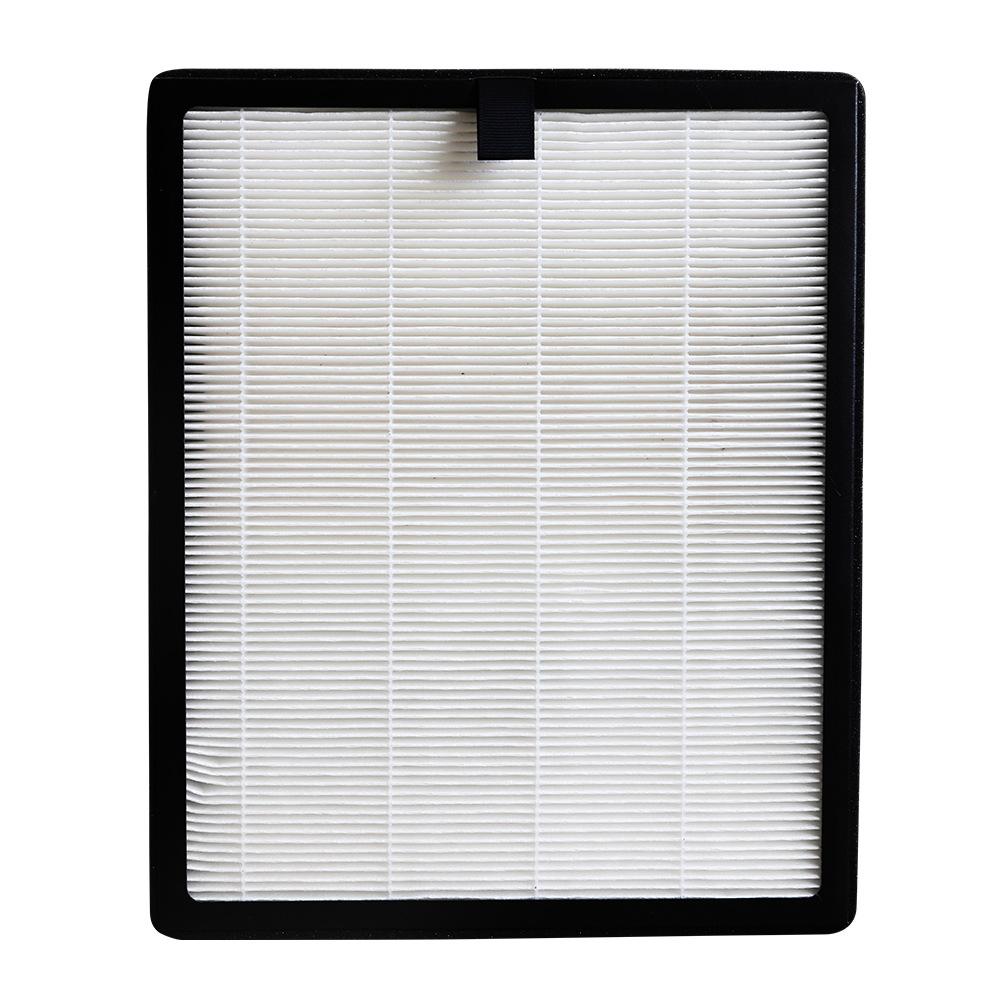 Custom HEPA H13 Replacement Filter Purification Effect Air Clean Filter Air PuriNingbo Yinyu Purification Technology Co., Ltd is custom HEPA H13 Replacement Filter Purification Effect Air Clean Filter Air Purifier Hep...View Product →
Inside a typical HEPA air purifier
The diagram above is a simplified isometric view of a filter stack. Room air enters through the pre-filter, then HEPA, then activated carbon, and a fan pushes the cleaned air out. The exact order can vary, but the idea stays the same: more effective filter media means fewer particles reaching the fan and your lungs.
The bottom line
Do you need an air purifier? If you have allergy symptoms indoors, a pet, a recent renovation, smoke exposure, or a room that never feels fresh, the practical answer is yes. If your home is clean, well ventilated, and you have no respiratory complaints, you can skip it for now.
When you do buy, choose a unit with a measurable CADR, an H13-or-higher HEPA filter, enough airflow for your room, and a filter replacement plan. Those four criteria do more for your indoor air than any brand logo.
Frequently asked questions
Q1. Are air purifiers worth the money?
For allergy sufferers, pet owners, smokers, and people living in polluted areas, yes. The main value is continuous removal of airborne particles that irritate the respiratory system.
Q2. What does an air purifier do?
It draws indoor air through a fan and filters, trapping particles like dust and pollen. With an activated carbon layer, it can also reduce smoke, cooking odors, and many VOCs.
Q3. What is a HEPA filter and why is it important?
HEPA stands for High-Efficiency Particulate Air. A true HEPA filter captures at least 99.97 percent of particles at the most penetrating size, which makes it the benchmark for allergen and smoke control.
Q4. What is a good CADR rating?
A good CADR should match your room. As a rule, pick a rating at least two-thirds of your room area in square feet, or aim for roughly five air changes per hour in metric terms.
Q5. How often should I replace the air purifier filter?
Most home purifiers need a new HEPA filter every six to twelve months, depending on run time, smoke exposure, and pet dander. Check the manufacturer's replacement interval to keep performance consistent.
Q6. Do I need an air purifier if I have pets?
Pet dander is a common indoor allergen, and pet odors can become trapped in fabrics. A HEPA and carbon purifier will reduce airborne dander and keep the room smelling fresher, though it will not replace regular grooming and cleaning.