EN
EN
 English
 中文简体
中文简体
.png)
You measured the living room — 320 square feet, give or take. Now you are comparing air purifier spec sheets, and the CADR numbers look like a guessing game: 200, 300, 450. Which one actually fits? The answer starts with the AHAM Verifide 2/3 rule: a room air cleaner's tobacco smoke CADR should be at least two-thirds of the room's area in square feet. A 300-square-foot room, for example, needs at least 200 CADR. If you match the smoke CADR to the room area in square feet, the unit simply filters the air more often — a real benefit during allergy season. This guide explains what AHAM Verifide certification means, how the 2/3 rule works, and how to choose the right room size air purifier without relying on guesswork.
Content
- 1 What the AHAM Verifide Label Actually Tells You
- 2 The 2/3 Rule: The Fastest Way to Match CADR to Room Size
- 3 Ceiling Height, Open Floor Plans, and Real-World Sizing
- 4 CADR Is Not the Whole Story: Filters and Replacement Parts
- 5 Common Sizing Mistakes to Avoid
- 6 Frequently Asked Questions About AHAM Verifide and CADR
What the AHAM Verifide Label Actually Tells You
AHAM Verifide is an independent certification program run by the Association of Home Appliance Manufacturers (AHAM). Verified units are tested in a standardized dust chamber, and the results are published on the label and in AHAM's public directory of certified room air cleaners. The key number is the Clean Air Delivery Rate (CADR), expressed in cubic feet per minute (CFM). CADR measures how quickly the unit removes a specific pollutant from a closed test room; the higher the number, the faster the cleaner works in the same space.
Verified labels list three separate values: tobacco smoke, dust, and pollen. Tobacco smoke is the finest of the three, so the smoke CADR is the most conservative figure and the one AHAM uses to calculate the suggested room size.
| Pollutant | Typical CADR (CFM) | What the value reflects |
|---|---|---|
| Tobacco smoke | 200 | Fine combustion particles; the basis for room-size recommendations |
| Dust | 230 | Larger settled particles, pet dander |
| Pollen | 260 | Large seasonal allergens; the easiest to capture |
The practical takeaway is simple: when two models both claim "HEPA," the one with the higher verified smoke CADR will clean a given room faster. That difference is measurable, not a marketing impression.
The 2/3 Rule: The Fastest Way to Match CADR to Room Size
AHAM's 2/3 rule closes the gap between a CADR number and a room size. The recommendation is to choose a model whose tobacco smoke CADR equals at least two-thirds of the room's floor area in square feet. A 300-square-foot room therefore needs a smoke CADR of at least 200. Because the ratio connects airflow with room volume, that sizing yields about 4.8 air changes per hour (ACH) — the level AHAM considers effective for a portable air cleaner. The rule also works in reverse: if a verified label shows a 250 CFM smoke CADR, the suggested room size is roughly 375 square feet.
| Room area (sq ft) | Minimum smoke CADR (2/3 rule) | Suggested smoke CADR | Typical use |
|---|---|---|---|
| 150 | 100 | 150 | Bedroom, nursery |
| 200 | 133 | 200 | Small office, guest room |
| 300 | 200 | 300 | Living room, master bedroom |
| 400 | 267 | 400 | Open-plan living space |
| 500 | 333 | 500 | Studio, basement, loft |
| 600 | 400 | 600 | Large open areas, waiting rooms |
Buyers often ask whether a larger unit is wasteful. It is not. A purifier with more CADR than the minimum cleans faster and then cycles down to a quieter fan speed, so oversizing mainly costs more at the register, not on the electricity bill. The "suggested" target — smoke CADR roughly equal to the floor area in square feet — simply gives you more air changes per hour and more capacity for cooking, cleaning, or guests.
Ceiling Height, Open Floor Plans, and Real-World Sizing
The 2/3 rule assumes an 8-foot ceiling. If your room has 10-foot ceilings, the air volume is 25 percent larger, so the minimum CADR should scale by the same factor. Multiply the floor area by your ceiling height divided by 8, then apply the 2/3 rule. A 300-square-foot room with 10-foot ceilings behaves like 375 square feet, and the minimum smoke CADR rises from 200 to 250.
Open floor plans need the same treatment. A 400-square-foot living area open to a 150-square-foot kitchen should be sized as one 550-square-foot volume; otherwise, the purifier will struggle to keep the breathing zone near the kitchen clean. The line chart below shows what happens as CADR increases in a fixed room: air changes climb in a straight line.
Placement matters as much as the number. The AHAM test positions the cleaner in the room it is meant to serve, so keep bedroom units near the bed and living-room units in the area where you actually spend time. The isometric drawing below shows a 300-square-foot footprint (20 × 15 ft) with the purifier placed centrally and clear circulation paths around it.
CADR Is Not the Whole Story: Filters and Replacement Parts
CADR is measured with the exact filter that ships in the box. If you later install an unverified generic filter, real-world CADR can drop — often by 20–30 percent, depending on the filter media grade and how well the frame seals. Genuine HEPA H13/H14 media, antibacterial pre-filters, and verified replacement filters preserve the tested airflow and particle capture.
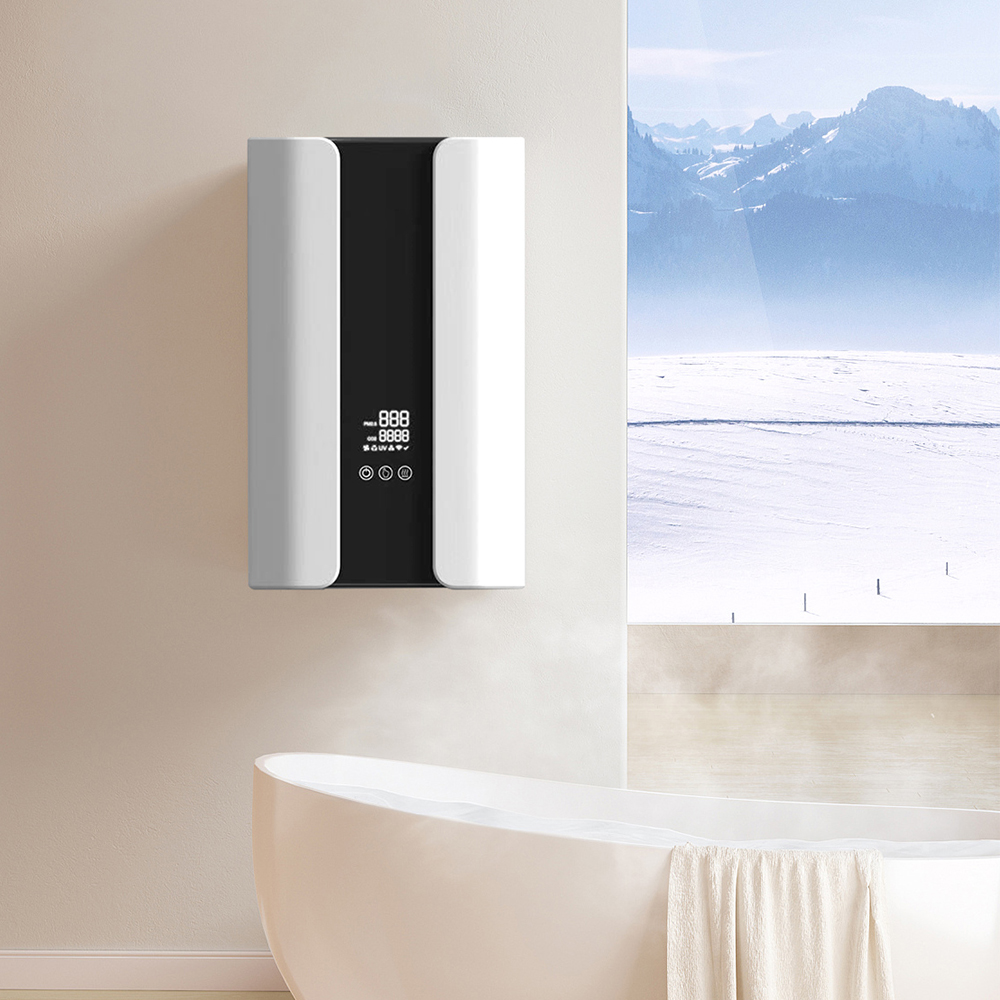
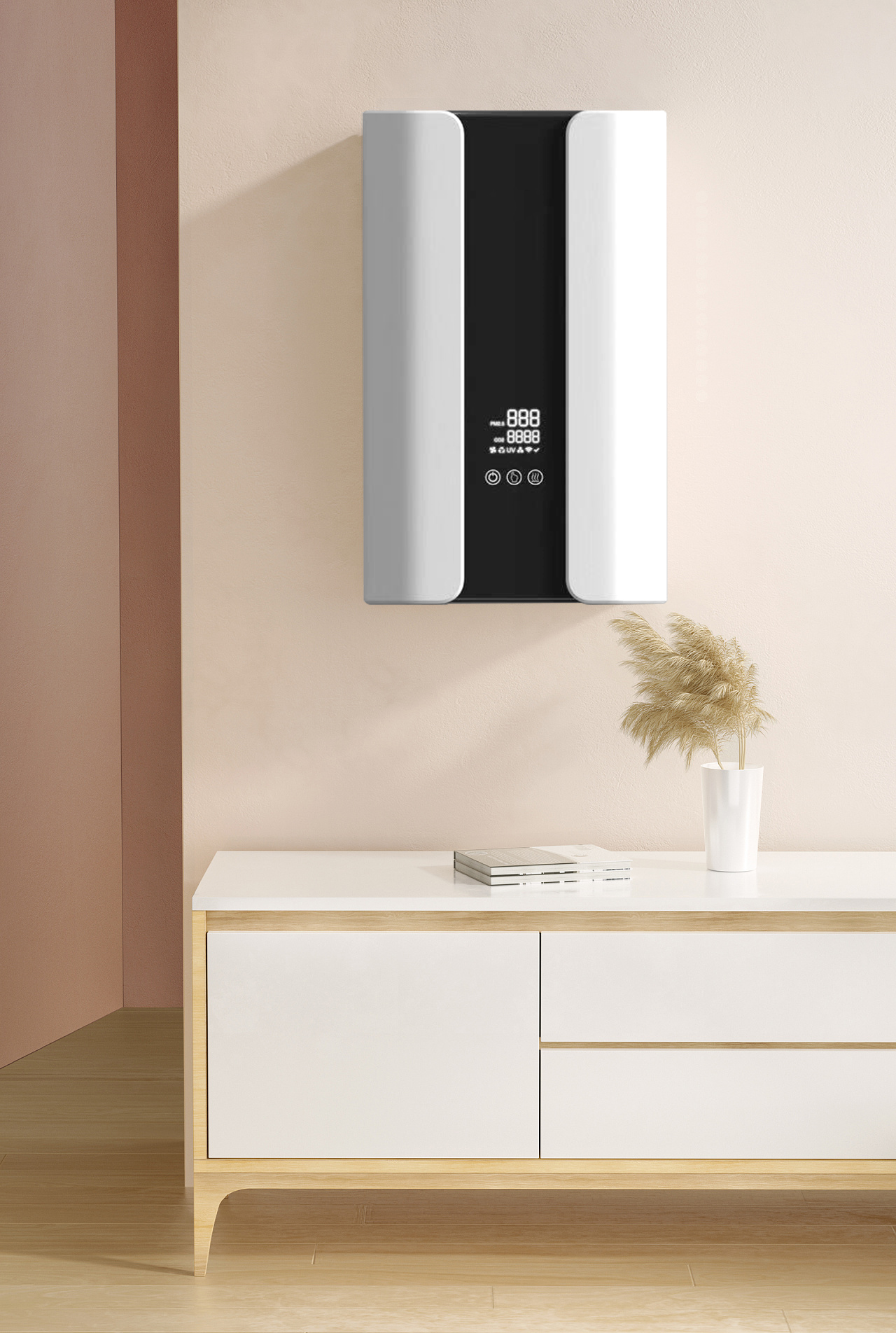
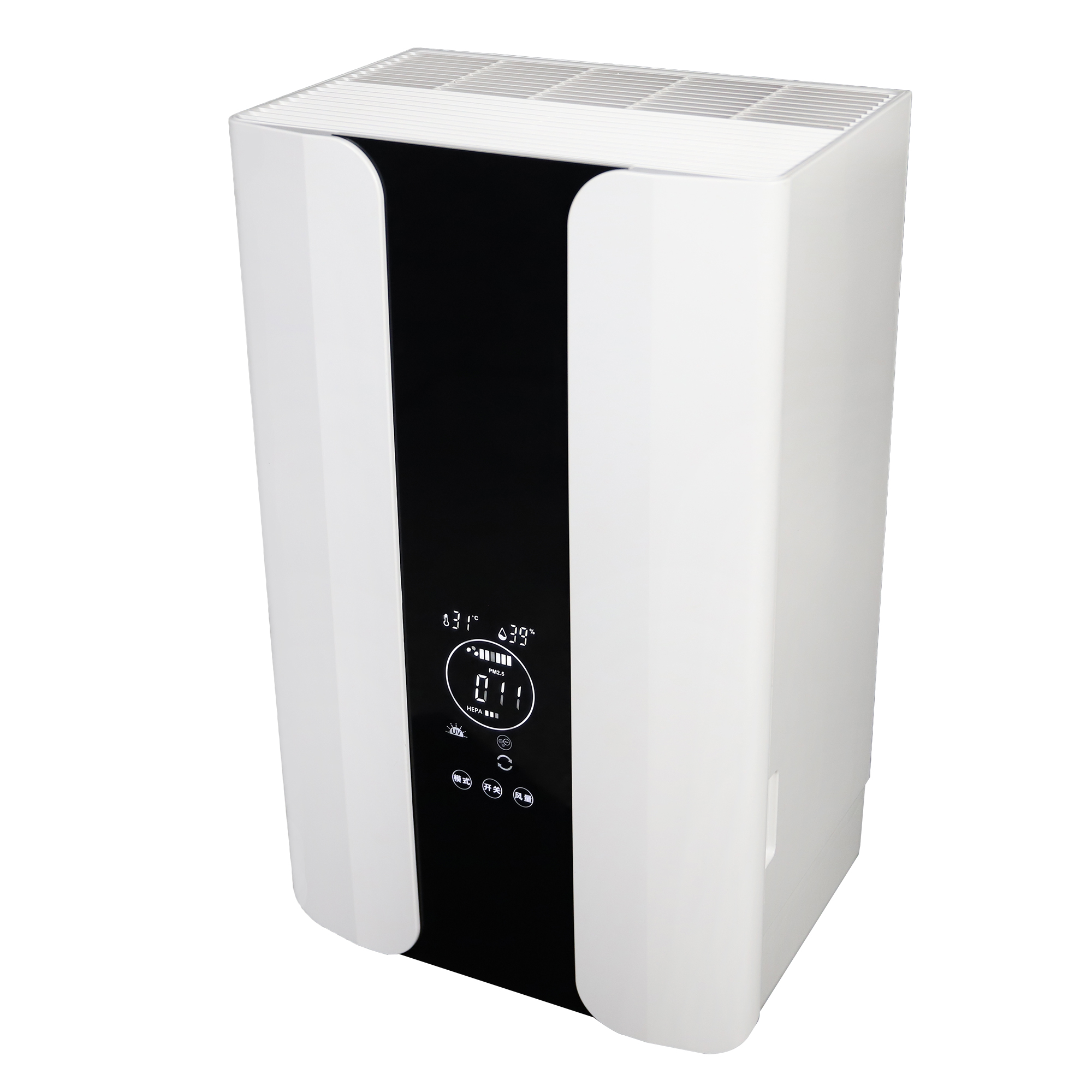 Wall-Mounted Medical Air Purifier with 300 CADR and Multi-Function DisplayThis wall-mounted unit suits medium rooms where floor space matters. Its verified 300 CADR supports the two-thirds rule for a 300-square-foot area, while touch controls, UV lamp, and air quality displays add practical value.View Product →
For a medium bedroom, a home office, or a small clinic room, a wall-mounted purifier with a verified 300 CADR satisfies the 2/3 rule for a 300-square-foot space while keeping the floor clear. Wall-mounted units also hold stable airflow because they sit above furniture and away from blockages. In short, verified CADR plus the right filter medium is the combination that actually delivers the number on the label — which is why the AHAM Verifide program also keeps a directory of tested replacement filters. When you do need media, stick with true HEPA filter replacements that match the original fit and pressure drop.
Common Sizing Mistakes to Avoid
Mistakes usually happen at the measuring stage, not at checkout. The most common ones we see in factory service feedback and consumer forums are:
- Sizing with the dust or pollen CADR instead of the smoke value, which overstates the room the unit can handle.
- Measuring only the seating area while leaving doors open to hallways and adjoining rooms, so the real volume is larger.
- Ignoring ceiling height in lofts, basements, and rooms with exposed beams.
- Assuming "HEPA" alone is a performance guarantee when airflow and filter sealing matter just as much.
- Buying the cheapest unit and discovering that proprietary replacement filters cost more than the purifier within two years.
For spaces above 500 square feet, look for high-CADR models that hold at least 4.8 ACH without running at maximum speed. A verified 1200 CADR unit, for example, cleans an 1,800-square-foot open area at the 2/3-rule minimum.
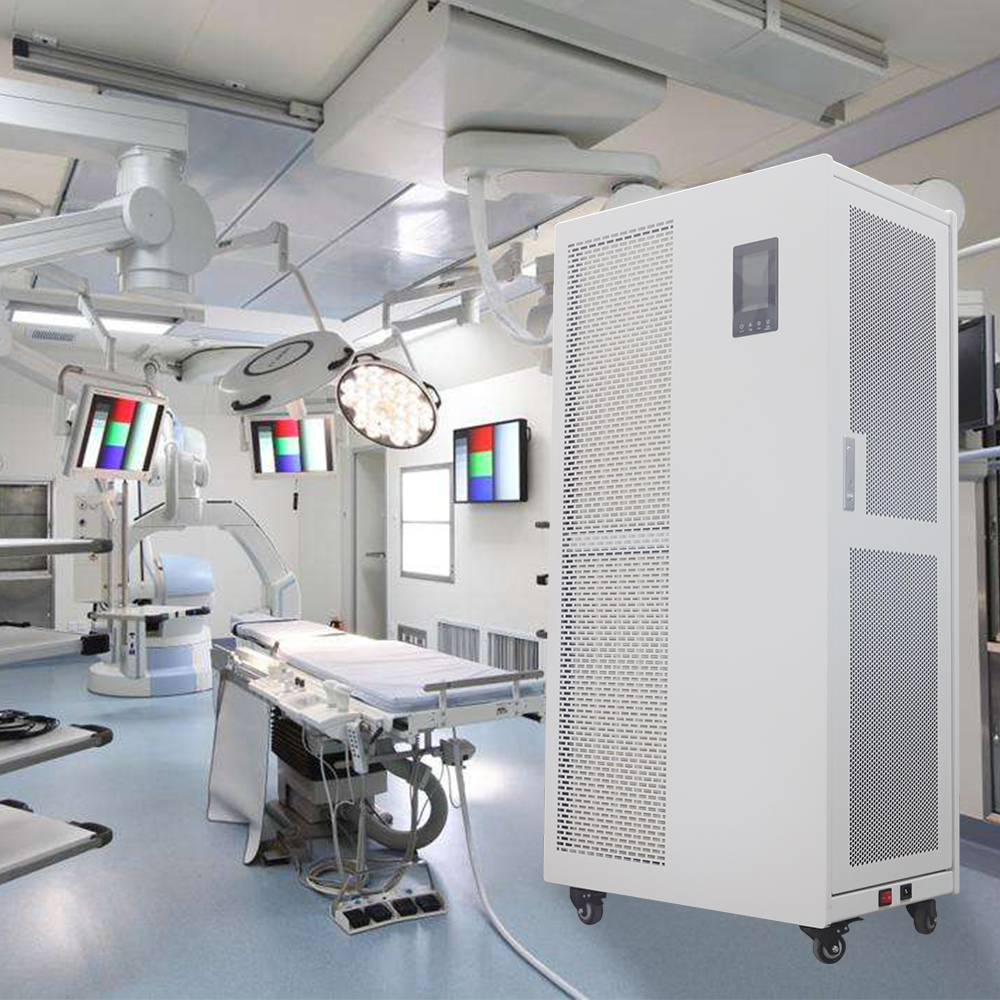
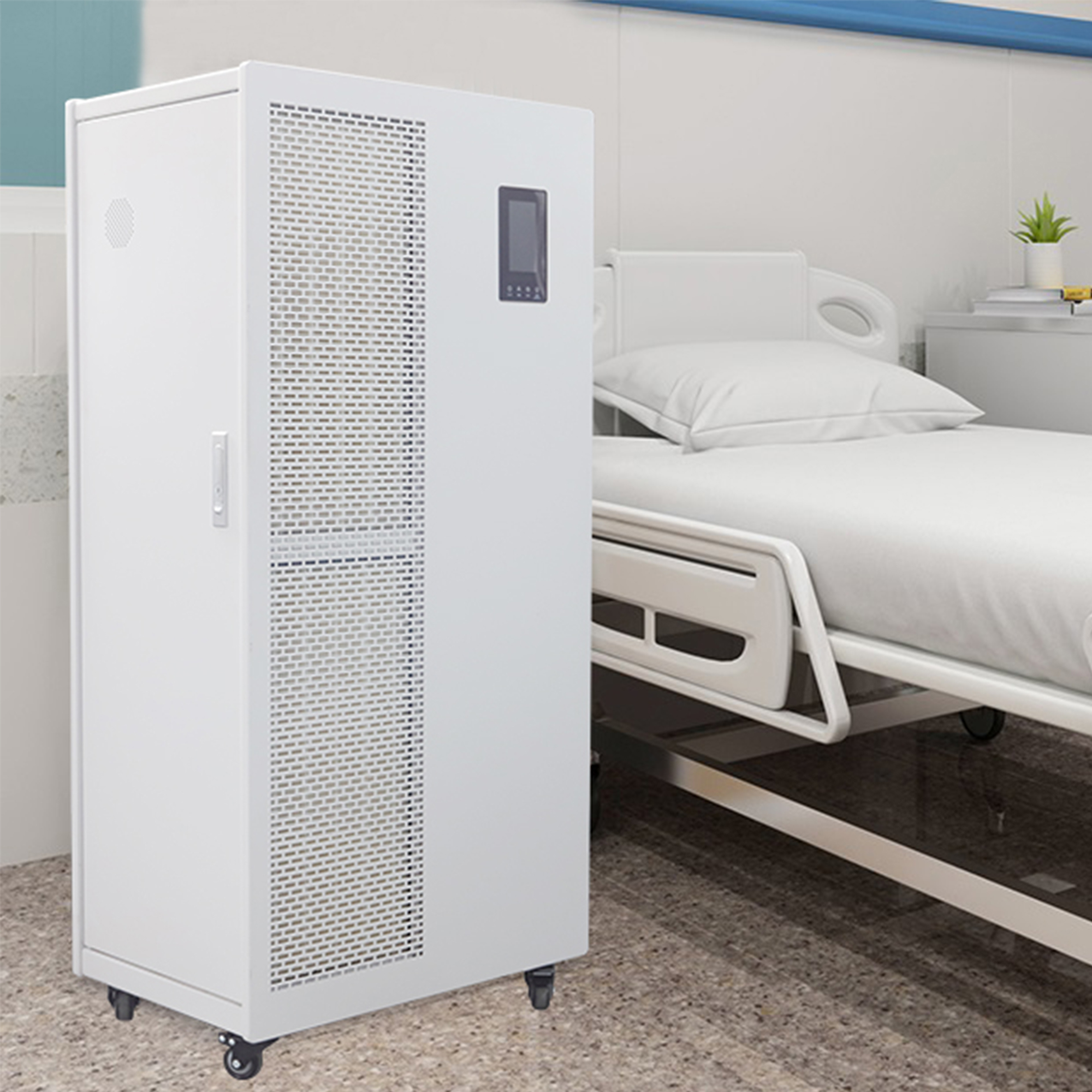
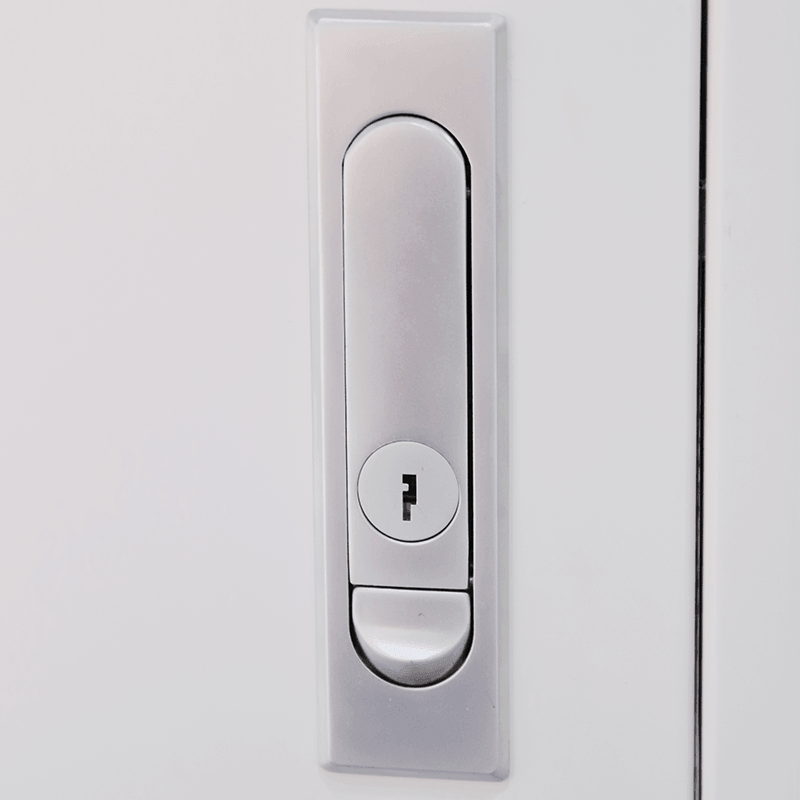 High-CADR Medical Air Purifier on Wheels for Large SpacesWith a 1200 CADR rating, this wheeled hospital-grade purifier handles open areas up to 1,800 square feet at the recommended air changes per hour. UV sterilization and filter-life indicators support continuous, low-maintenance operation.View Product →
Large-room high-CADR purifiers use bigger fans and deeper filter beds, so they move large volumes of air at moderate noise levels. If your room stays between 150 and 400 square feet, a verified unit in the 200–300 smoke CADR range is the right class. Above that, step up to large-room high-CADR purifiers. The whole rule, in one line: keep the smoke CADR at or above two-thirds of the room area, and the room will stay clean.
Frequently Asked Questions About AHAM Verifide and CADR
What is AHAM Verifide?
AHAM Verifide is an independent certification program run by the Association of Home Appliance Manufacturers. It tests portable air cleaners in a standardized chamber and verifies that the Clean Air Delivery Rate (CADR) printed on the label is accurate.
How do I choose the right room size air purifier?
Measure the floor area in square feet, then look for a tobacco smoke CADR of at least two-thirds of that area. For a 300-square-foot room, that means 200 CADR. Matching CADR to the room size gives faster cleaning and quieter operation.
What CADR do I need for a 300 sq ft room?
The AHAM minimum is a 200 smoke CADR; the more comfortable target is 300 smoke CADR. Both values sustain the recommended 4.8 air changes per hour if the filter is genuine and clean.
Is a higher CADR air purifier always better?
Not always necessary, but rarely a problem. Higher CADR cleans faster and allows quieter low-speed operation, although the unit costs more. Pick a verified model with a smoke CADR at least two-thirds of the room area, then decide how much headroom you want.
What is the 2/3 rule in air purifiers?
The 2/3 rule is AHAM's sizing guideline: a portable air cleaner's tobacco smoke CADR should be at least two-thirds of the room's area in square feet. That ratio delivers about 4.8 air changes per hour.
Do AHAM Verifide air purifiers need genuine replacement filters?
AHAM Verifide performance is measured with the original filter. Unverified replacement filters can reduce CADR by 20–30 percent and may not seal correctly, so genuine or verified replacement media is recommended to maintain the tested performance.