EN
EN
 English
 中文简体
中文简体
.png)
In a 300-bed county hospital, the infection control team replaced eleven aging wall-mounted units with medical-grade air disinfection purifiers. Within three weeks, surface microbial counts in the ICU corridor dropped measurably, and the nursing staff reported noticeably fewer stale-air complaints during morning rounds. That outcome did not come from a single high-tech feature — it came from matching the right disinfection technology to the right ventilation context. This guide explains how air disinfection purifiers actually work, what performance data matters, and how to evaluate them for medical, commercial, or residential use.
Content
- 1 What an Air Disinfection Purifier Actually Does
- 2 CADR and Disinfection CADR: What the Numbers Really Tell You
- 3 HEPA Ratings: H13 vs. H14 and Why It Matters for Disinfection
- 4 UVC Disinfection: The Difference Between Effective and Symbolic
- 5 Plasma and Ionizer Technologies: Efficacy and Safety Considerations
- 6 Room Size, Placement, and Airflow Patterns
- 7 Filtration Media and Replacement Cost
- 8 Standards and Certifications for Disinfection Purifiers
- 9 Procurement Considerations for Medical, Commercial, and Residential Sectors
- 10 Air Disinfection Purifier in the Era of Respiratory Infection Control
- 11 Visual Guide: Key Components of a Medical-Grade Air Disinfection Purifier
- 12 Common Air Disinfection Purifier Questions
- 12.1 Q1: What is the difference between an air purifier and an air disinfection purifier?
- 12.2 Q2: How many air changes per hour do I need in a medical setting?
- 12.3 Q3: Is UVC safe for occupied spaces?
- 12.4 Q4: How often should I replace the HEPA filter in a disinfection purifier?
- 12.5 Q5: Can an air disinfection purifier remove viruses from the air?
- 12.6 Q6: What CADR rating should I choose for a 20 m² room?
What an Air Disinfection Purifier Actually Does
An air disinfection purifier is distinct from a standard air purifier. A standard unit typically filters particles — dust, pollen, PM2.5 — but does not actively inactivate microorganisms. A disinfection purifier, by contrast, must reduce the viability of bacteria, viruses, and mold spores in the air stream. This is not a marketing distinction; it is a functional one.
The table below summarizes how the three dominant technologies compare in practice.
| Technology | Primary Mechanism | Typical Microbe Reduction | Byproducts | Best Use Case |
|---|---|---|---|---|
| HEPA filtration (H13/H14) | Physical capture of particles ≥0.3 µm | 99.95%–99.995% particle removal | None (captured microbes remain in filter) | Baseline filtration for all settings |
| UVC (254 nm) irradiation | DNA/RNA damage via ultraviolet exposure | >99% for many pathogens with sufficient dose | Ozone (if lamp quality is poor) | Enclosed chambers, upper-room air, duct mounting |
| Plasma / cold plasma | Reactive oxygen and nitrogen species attack microbes | >99% in controlled chamber tests | Low ozone (must be monitored) | Continuous operation in occupied spaces |
Most serious medical-grade units combine at least two of these mechanisms. A typical configuration is H13/H14 HEPA pre-filtration plus UVC irradiation inside the air stream, sometimes with a photocatalytic or plasma stage. The order matters: filtration removes particles, and UVC then inactivates microorganisms that have been concentrated in the airflow path near the lamp.
CADR and Disinfection CADR: What the Numbers Really Tell You
CADR (Clean Air Delivery Rate) measures the volume of particle-free air a purifier delivers in cubic feet per minute (CFM) or cubic meters per hour (m³/h). For a disinfection purifier, you should look for both particle CADR and microorganism reduction claims — they are not the same thing.
Here is what experienced procurement teams check first:
- Particle CADR: Reported for dust, pollen, and smoke. For a hospital ward of about 40 m², you generally want a CADR of at least 300 CFM for meaningful air exchange.
- Disinfection CADR (dCADR): A newer metric that measures the rate at which a purifier removes bioaerosols such as bacteria and viruses. A unit with high particle CADR but poor dCADR may filter particles efficiently while failing to inactivate pathogens.
- Clean Air Changes per Hour (ACH): For medical environments, an air disinfection purifier should support at least 6–8 equivalent air changes per hour in the target room. This is calculated as (disinfected air volume per hour) ÷ (room volume).
One common procurement mistake is comparing CADR numbers without checking the test standard. A CADR measured in a 30 m³ chamber under AHAM AC-1 conditions is not directly comparable to a result from a Chinese GB/T 18801 test or a manufacturer's internal protocol. If you are specifying equipment for a medical project, ask for a third-party test report that states the standard, chamber size, and measurement uncertainty.
HEPA Ratings: H13 vs. H14 and Why It Matters for Disinfection
HEPA filters are rated by their efficiency at capturing particles at the most penetrating particle size (MPPS), typically around 0.15–0.3 µm. H13 captures at least 99.95% at MPPS; H14 captures at least 99.995%. For a purifier framed as a "disinfection" device, the HEPA grade affects not just filtration efficiency but also the microbial load reaching downstream UVC lamps or plasma chambers.
From a system design standpoint:
- H13 is adequate for most residential and general office use. It removes dust, allergens, and most airborne bacteria carriers at high efficiency.
- H14 is preferred for hospital isolation rooms, dental clinics, and cleanroom-adjacent spaces where fungal spores, viral aerosols, and surgical smoke are concerns.
- Filter seal integrity matters more than the media grade. A HEPA filter with poor gasketing or frame sealing will allow bypass airflow — meaning contaminated air passes around the filter rather than through it.
Look at the filter frame and sealing method. Many medical-grade purifiers on the market, including those built by OEM purification factories, now use a one-piece gasket design with compression sealing. That reduces the risk of bypass leak, which is the same reason certified cleanroom filters are individually scanned for leaks before shipment.
UVC Disinfection: The Difference Between Effective and Symbolic
UVC light at 254 nm is a proven antimicrobial mechanism, but the dose delivered to the microorganism is what determines efficacy. Dose = irradiance × exposure time. A UVC lamp placed inside a small chamber can deliver a high dose in the fraction of a second that air passes through — if the air path is properly designed. A lamp that merely glows inside the unit without forcing air to pass close to it provides little disinfection value.
Check these specifics when evaluating UVC-based air disinfection purifiers:
- Lamp position and air channel geometry: The air path should pass within 5–10 cm of the lamp surface, with enough residence time to achieve the claimed dose.
- Output degradation: UVC lamps lose output over time. A good unit compensates by over-specifying lamp wattage or incorporating a timer-based replacement alert.
- Ozone emission: Some low-quality lamps generate ozone as a byproduct. Medical units should have ozone output below 0.05 ppm in the room — ideally zero. Reliable suppliers often feature ozone-free air sterilizers that intentionally avoid this issue.
Also verify whether the UVC lamp is exposed or enclosed. Enclosed UVC chambers (inside the purifier) are generally safer because the lamp is shielded from direct view and there is no skin or eye exposure risk.
Plasma and Ionizer Technologies: Efficacy and Safety Considerations
Plasma-based air disinfection uses electrical discharge to generate reactive species that inactivate microorganisms in the air. It can be effective, but two concerns repeatedly surface in procurement discussions: ozone formation and reduced efficacy at high airflow.
- Ozone safety: Legitimate plasma disinfection systems are designed with ozone removal stages or catalytic decomposition. Ask for the manufacturer's ozone emission report under both normal and accelerated aging conditions.
- Airflow dependence: A plasma chamber works well at moderate airflow. At maximum fan speed, the residence time drops, and the disinfection rate per liter of air decreases. A well-designed unit maintains a minimum effective dose even at its highest CADR setting.
- Ionizers alone are not sufficient: Standalone ionizers without HEPA filtration do not remove particles from the air; they simply charge them so they settle on surfaces. This is not vacuum filtration. In a medical context, ionizing alone is a weak disinfection strategy.
For purchasing decisions, treat plasma as a complementary stage, not a replacement for HEPA and UVC. A good combination unit might use H13/H14 filtration for particle capture, UVC for pathogen inactivation in the air stream, and plasma for treating air that bypasses the filter path. This redundancy is what serious medical specifiers look for.
Room Size, Placement, and Airflow Patterns
A purifier that is undersized for a room will underperform regardless of how strong its CADR claims are. The practical rule is to calculate the room volume, multiply by the desired air changes per hour, and then work backwards to the required clean air delivery. For consultation rooms, treatment rooms, or waiting areas where patients are present, 6–8 ACH is a realistic target.
Airflow patterns matter just as much. A unit placed in a corner behind a curtain cannot effectively disinfect the whole room. Consider these points:
- Doors and windows: Air leaks undermine disinfection. In a typical room, a door opening can reduce effective ACH by 30–50% momentarily.
- Clean air zone: Position the unit to deliver clean air toward the breathing zone of the highest-risk occupant — for example, a patient bed or an operator chair in a dental clinic.
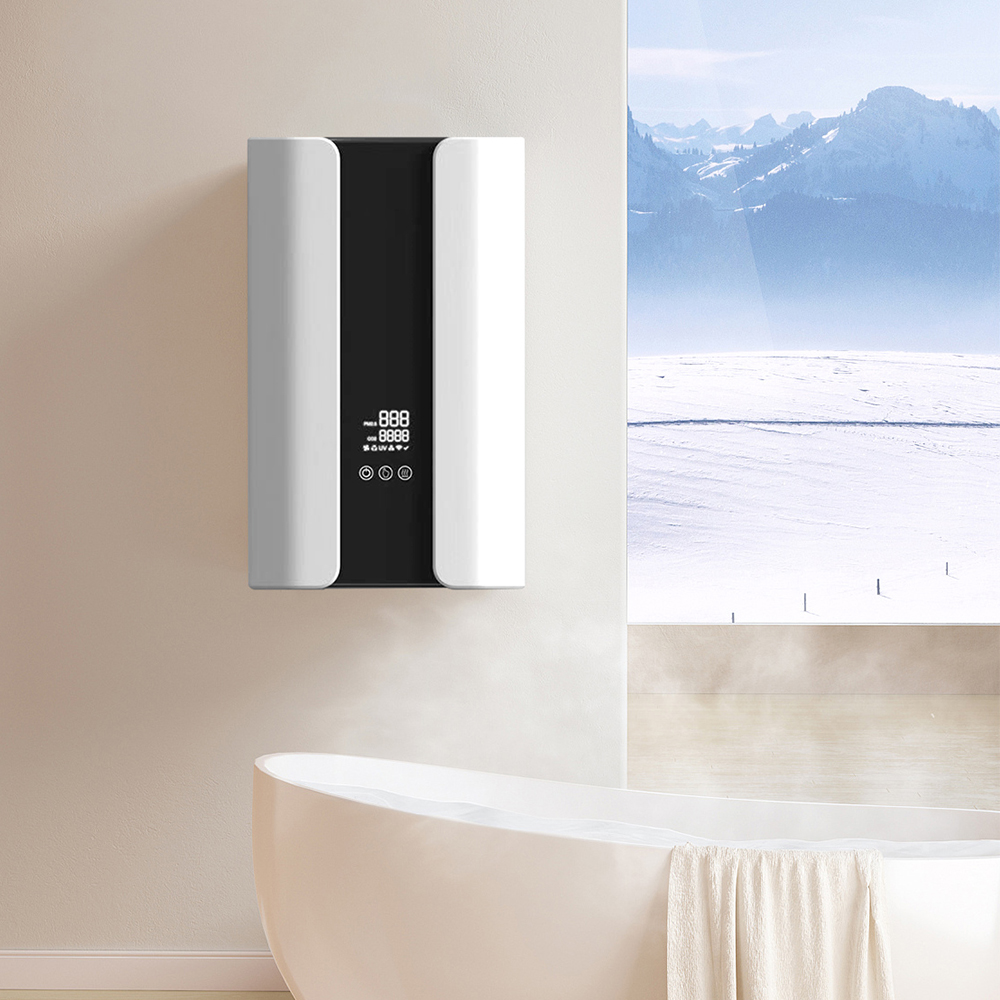
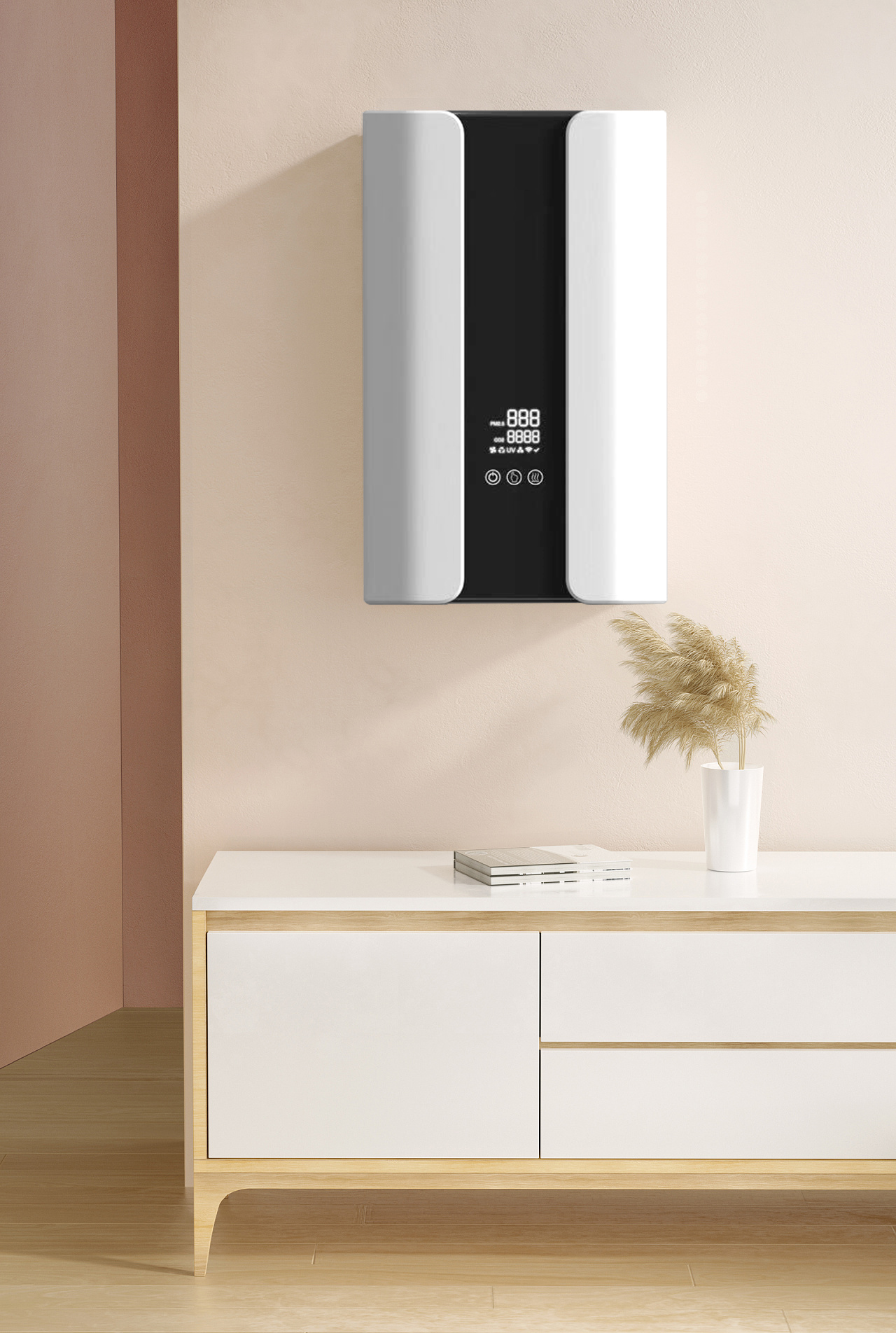
- Wall-mounted vs. mobile: Wall-mounted units such as the wall-mounted air sterilizers series keep the floor clear and maintain consistent airflow near the breathing zone. Mobile units offer flexibility but may create less predictable flow patterns.
There is also a distinction between internal recirculation and fresh-air ventilation. An air disinfection purifier, by definition, recirculates and treats the same indoor air. It does not bring fresh outdoor air into the space. This is why some facilities combine recirculating purifiers with mechanical ventilation rather than treating them as substitutes.
Filtration Media and Replacement Cost
Owners frequently under-budget for filter replacement. It is worth calculating the life-cycle cost before choosing a specific model. The table below shows the typical replacement parts and intervals for a medical-grade air disinfection purifier.
| Component | Typical Life | Function | Replacement Signal |
|---|---|---|---|
| Pre-filter | 1–3 months | Captures large particles, protects main filter | Visible dust accumulation, airflow drop |
| HEPA H13/H14 filter | 6–12 months | Removes airborne particles at 99.95%+ efficiency | Filter replacement indicator, odor buildup |
| Activated carbon stage | 6–12 months | Adsorbs VOCs, formaldehyde, odors | Loss of odor removal performance |
| UVC lamp | 9,000–12,000 hours | Inactivates microorganisms in the air path | Timer alert, reduced irradiance |
| Plasma / ionizer stage | 2–3 years | Generates reactive species for disinfection | Performance test, visual inspection |
When buying in bulk — whether for a hospital group or a multi-location clinic chain — the availability and pricing of genuine replacement filters should be a contractual term, not an afterthought. Some manufacturers offer true HEPA filter replacements directly, which simplifies supply chain management when using the same filter geometry across multiple unit models.
Standards and Certifications for Disinfection Purifiers
There is no single global certification that declares a device "safe and effective as an air disinfection purifier." Instead, buyers must look at a matrix of standards:
- GB/T 18801 (China): The primary standard for air purifier performance, including CADR, CCM, and noise. Many Chinese-manufactured medical purifiers cite this standard for particle CADR.
- GB 21551.3 (China): A specific standard for antibacterial and purifying functions of household appliances. It includes test methods for microorganism reduction.
- IEC 60335-2-65: An international safety standard for air-cleaning appliances. Important for the electrical safety review.
- AHAM AC-1 (USA): The basis for CADR ratings in the North American market. Useful for comparing particle removal.
- EPA registration (USA): If a device makes surface disinfection claims, it may require EPA registration. Air disinfection devices are often considered under a different regulatory path.
For a medical-grade purchase, the strongest evidence of safety and efficacy is a third-party test report from a certified laboratory such as CNAS, SGS, Intertek, or TÜV. If possible, request the microorganism reduction test results for the specific model — not a generic test report for the series.
Procurement Considerations for Medical, Commercial, and Residential Sectors
Medical Facilities (Hospitals, Clinics, Dental Offices)
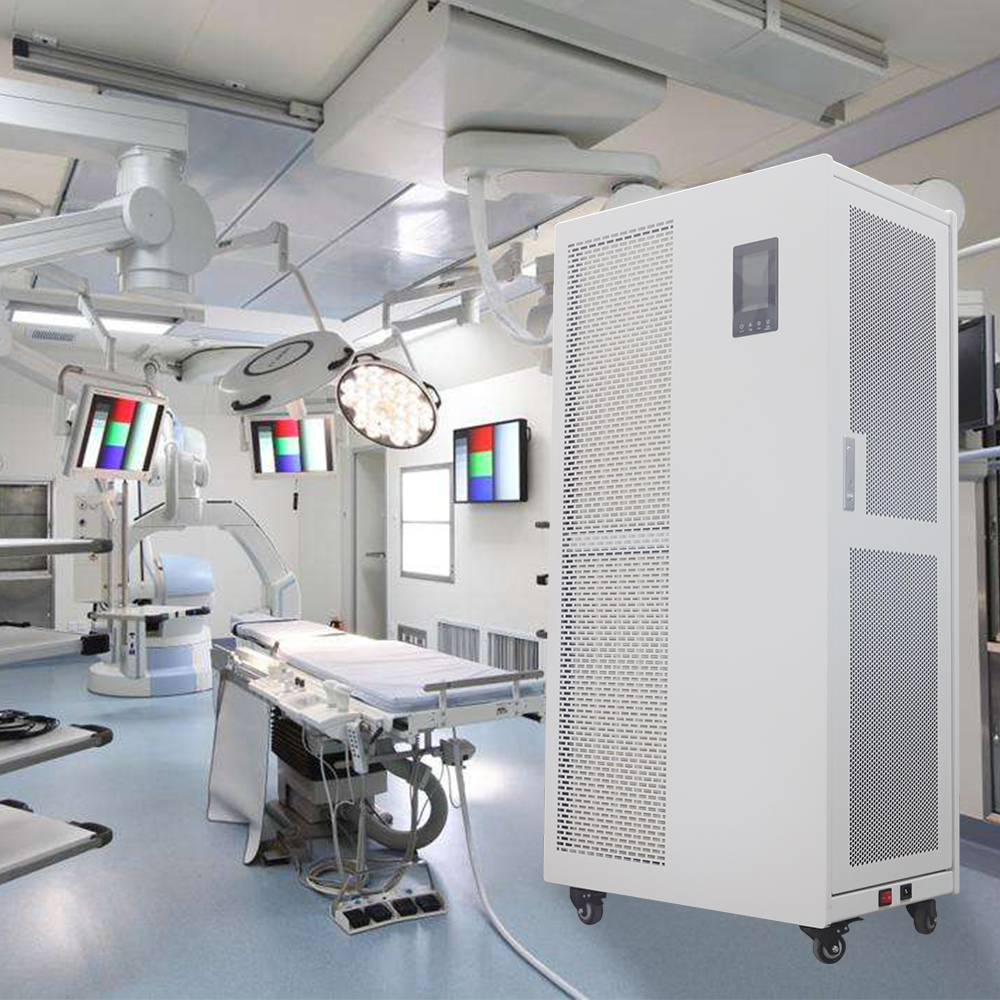
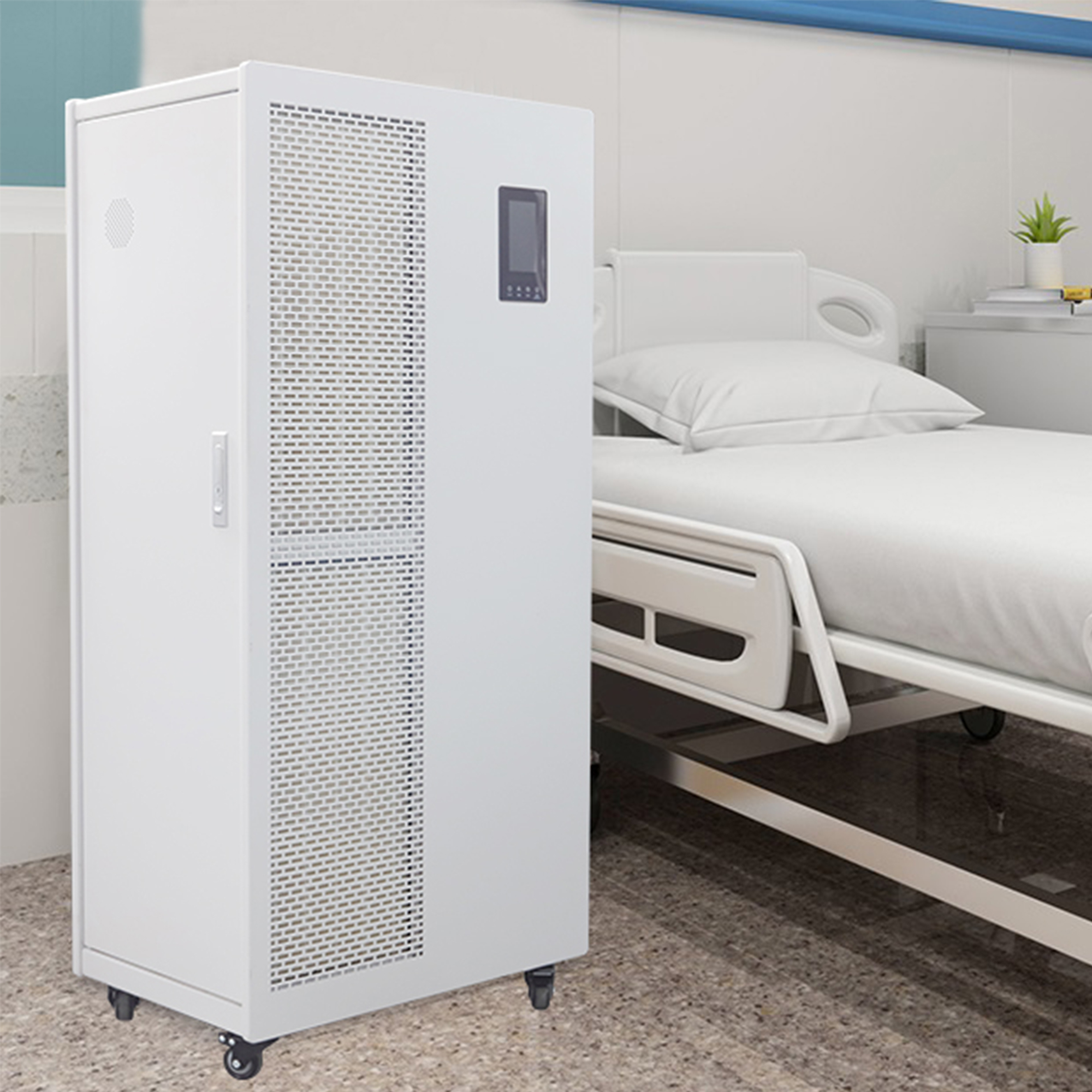
Hospitals need disinfection purifiers in isolation rooms, respiratory wards, dental treatment rooms, and outpatient waiting areas. The key criteria are: H14 filtration, a dedicated UVC chamber with documented dose, low noise output in patient areas, and infection control approval for the region. Mobile units with wheels (sometimes called medical air sterilizers) are beneficial for temporary isolation areas or ICU overflow. Wall-mounted models are preferable in corridors to keep traffic paths clear.
Commercial and Office Environments
Office buildings and conference rooms typically use H13-level units with a slightly lower CADR — enough for 4–6 ACH in the space. Appearance matters more than in hospitals, and noise levels of 35–50 dB are generally acceptable during business hours. Smart monitoring with CO₂ and PM2.5 display is useful for facilities teams who need to demonstrate air quality improvements. Various smart IoT air purifiers now support remote dashboard integration for multi-floor installations.
Residential Use
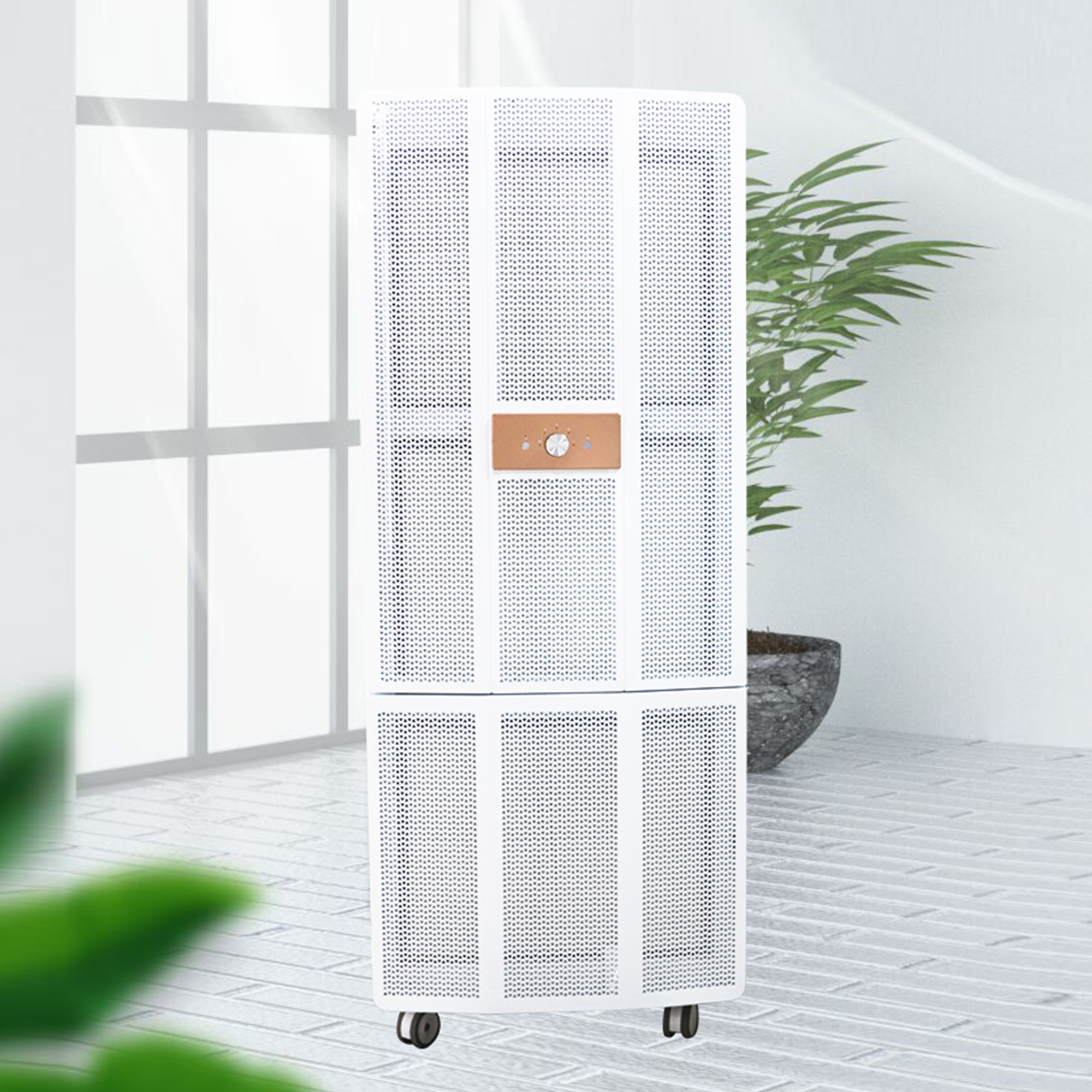
For home use, especially in bedrooms, quiet operation at night is the top consideration. A sleep mode that reduces noise to below 29 dB while maintaining a baseline ACH of 4 is a solid criterion. HEPA H13 is sufficient for a typical master bedroom. Additional smoke and allergen removal (e.g., for asthma sufferers) may justify a higher CADR in a larger living room — large-room, high-CADR purifiers make sense for families with shared open-plan areas.
Air Disinfection Purifier in the Era of Respiratory Infection Control
The global demand for air disinfection equipment has shifted from an optional comfort product to a standard piece of infection-control infrastructure. A market report published in 2024 by Grand View Research estimated that the global medical air purifier market was valued at $8.4 billion in 2023, and is projected to grow at a compound annual rate of roughly 7.5% through 2030. Hospitals are spending on permanent fixtures rather than temporary portable units.
Key practices that facilities teams should adopt include:
- Continuous monitoring: Do not rely on filter replacement indicators alone. Use a particle counter or well-calibrated PM2.5 monitor to verify baseline performance.
- Documented disinfection cycles: Some units include a "boost" mode for disinfection during breaks or overnight. This is especially valuable in clinics between patient appointments.
- Independent testing: Periodic air sampling before and after purifier deployment provides actionable evidence that the unit is delivering real biological reduction, not just particle counts.
When selecting a manufacturing partner for private-label or OEM air disinfection purifiers, take note of whether your supplier has in-house ISO-certified manufacturing capabilities and full vertical integration of the filter media, injection molding, and final assembly. This level of control strongly correlates with more consistent quality, ready access to components, and better customization flexibility.
Visual Guide: Key Components of a Medical-Grade Air Disinfection Purifier
Understanding the internal layout of a typical medical-grade purifier helps buyers communicate requirements more precisely to manufacturers and evaluate spec sheets. The isometric diagram below illustrates the standard airflow path.
In this arrangement, air enters through a pre-filter that removes larger particles, then passes through a true HEPA stage that captures fine aerosols, and finally moves across a UVC lamp that inactivates trapped and passing microbes before the clean air is released. Some units add a plasma stage between the HEPA and the UVC lamp for extra redundancy.
Common Air Disinfection Purifier Questions
Q1: What is the difference between an air purifier and an air disinfection purifier?
A standard air purifier captures particles like dust, pollen, and PM2.5. An air disinfection purifier actively inactivates pathogens — bacteria, viruses, and mold spores — using UVC, plasma, or other antimicrobial mechanisms, and is designed to meet stricter microbial reduction standards.
Q2: How many air changes per hour do I need in a medical setting?
For patient treatment rooms, isolation areas, and dental clinics, a minimum of 6–8 equivalent air changes per hour is generally recommended. In critical care or high-risk areas, 10–12 ACH is preferable.
Q3: Is UVC safe for occupied spaces?
Yes, when the UVC lamp is fully enclosed inside the purifier and the unit emits no measurable ozone. Enclosed UVC chambers irradiate the internal air path without exposing occupants to direct 254 nm light. Always verify ozone release under 0.05 ppm.
Q4: How often should I replace the HEPA filter in a disinfection purifier?
HEPA filter life typically ranges from 6 to 12 months depending on room air quality, usage hours, and pre-filter effectiveness. Units with a good pre-filter stage usually extend the main HEPA life toward the 12-month mark.
Q5: Can an air disinfection purifier remove viruses from the air?
Laboratory tests show that combined HEPA and UVC systems reduce airborne virus concentrations by over 99% in chamber tests. HEPA captures viral aerosols and UVC inactivates them, reducing the risk of re-aerosolization during filter changes.
Q6: What CADR rating should I choose for a 20 m² room?
For a standard 20 m² room with 2.6 m ceiling height (≈52 m³), a CADR of at least 250 CFM will deliver approximately 6 ACH. For stronger disinfection, choose 300 CFM and run the unit on medium or high during occupied periods.