EN
EN
 English
 中文简体
中文简体
.png)
Two air purifiers can sit side by side in the same showroom, both advertised for "large rooms," and still deliver very different volumes of clean air into a bedroom. The number that separates them is CADR, clean air delivery rate, and the number that keeps them honest is the room size printed beside it under the AHAM Verifide program.
Here is the short version. When a model carries the AHAM Verifide mark, its smoke, dust, and pollen CADR values were measured by an independent laboratory under ANSI/AHAM AC-1, and the room size on the listing was calculated from that data at 4.8 air changes per hour with an 8-foot ceiling. When the mark is missing, the coverage claim is simply whatever the brand decided it should be.
The rest of this guide covers how those numbers are produced, where they stop matching a real room, and what to check before you buy one unit for a bedroom or specify several thousand for a hospital project.
Content
- 1 What the AHAM Verifide Mark Actually Confirms
- 2 From CADR to Square Feet: Where the 1.55 Multiplier Comes From
- 3 Why the Printed Room Size Seldom Matches Your Room
- 4 Air Changes Per Hour: The Check That Beats Square Feet
- 5 Matching the Unit to the Room Before You Specify
- 6 What OEM and Private-Label Buyers Should Verify
- 7 Frequently Asked Questions
- 7.1 Q1. What does AHAM Verifide mean on an air purifier?
- 7.2 Q2. How many square feet will a 200 CADR air purifier cover?
- 7.3 Q3. Is CADR the same as HEPA filter efficiency?
- 7.4 Q4. What CADR do I need for smoke, allergies, or pet dander?
- 7.5 Q5. Why does a purifier's room size rating feel too high for my home?
- 7.6 Q6. Do medical-grade air purifiers need AHAM verification?
What the AHAM Verifide Mark Actually Confirms
AHAM Verifide is a verification program run by the Association of Home Appliance Manufacturers. Manufacturers volunteer to join it; the testing is not voluntary. Units are measured in an independent laboratory against ANSI/AHAM AC-1, and the results go into a public directory rather than onto a self-designed badge.
Three CADR values appear on a verified listing, each measured separately at the unit's highest fan speed and expressed in cubic feet per minute. A listing also has to hold ozone output at or below 0.050 ppm, which is one reason ozone-generating purifiers never appear in the directory.
| CADR value | Test pollutant | Particle profile | What it predicts |
|---|---|---|---|
| Smoke CADR | Tobacco smoke | Fine, sub-micron | Wildfire smoke, exhaust, combustion particles |
| Dust CADR | Fine test dust | Mid-range | Household dust, pet dander, settled particulate |
| Pollen CADR | Pollen | Large, coarse | Seasonal allergens and other big particles |
Read the lowest of the three figures first. A unit that moves 320 CFM of pollen but only 210 CFM of smoke is a 210 CFM machine for anyone near a wildfire zone or running a wood stove, and 210 is the number to compare against the next model on your list.
From CADR to Square Feet: Where the 1.55 Multiplier Comes From
The room size on a verified listing is arithmetic, not opinion. AHAM's method assumes an 8-foot ceiling and enough clean air to turn the room over 4.8 times an hour, which gives a simple relationship: required CADR equals room volume in cubic feet, multiplied by 4.8, divided by 60. Rearranged for floor area, the multiplier works out at roughly 1.55.
A 250 CADR purifier therefore supports about 388 square feet, while a 150 CADR unit supports about 233 square feet. The chart below shows how quickly the requirement climbs as you move up the range.
Two assumptions are hiding inside that chart. The first is ceiling height, always 8 feet. The second is that the unit runs flat out, because CADR is measured at the highest speed setting, and almost nobody sleeps beside a purifier set to high.
Why the Printed Room Size Seldom Matches Your Room
The 4.8 air changes per hour figure is a sensible middle ground, not a promise about your building. Five things routinely pull real performance away from the label.
- Ceiling height. A 10-foot ceiling adds 25 percent more air to clean, so the same purifier delivers roughly 20 percent fewer air changes.
- Open floor plans. Air does not stop at the edge of the rug. A 400 square foot living space that opens onto a kitchen and hallway is closer to 700 square feet of shared air.
- Fan speed. Rated CADR comes from the highest setting, and sleep mode on the same machine may move a third of that airflow. Fine overnight, inadequate during a cooking smoke event.
- Filter loading. A loaded HEPA filter raises resistance and cuts airflow, so end-of-life performance sits below the day-one number.
- Placement. An intake within a foot of a wall, behind a sofa, or inside a cabinet will recirculate its own exhaust and clean very little.
Run a 250 CFM unit in a 200 square foot bedroom and it delivers roughly 9.4 air changes per hour, double what the label assumed. Move the same unit into a 500 square foot space and the figure falls to 3.8. "Covers 400 square feet" and "cleans 400 square feet well" are two different claims, and the second one is the one you live with.
Air Changes Per Hour: The Check That Beats Square Feet
Square footage is easy to market and awkward to apply. Air changes per hour is the figure engineers work with, and it takes one line to calculate: ACH equals CADR multiplied by 60, divided by room volume in cubic feet.
Take the room above: 12 feet by 10 feet with an 8-foot ceiling, so 960 cubic feet. A 5 ACH target calls for 5 x 960 / 60 = 80 CFM of clean air, which is a mid-size residential unit rather than a commercial one. The same arithmetic, applied across typical rooms, gives the requirements below.
Useful targets: 4 to 5 ACH for a living room or office, 6 to 8 ACH where allergies, pets, or smoke are the reason for the purchase, and higher again in clinical settings. ASHRAE Standard 170 sets minimum air change rates of 6 ACH for examination rooms and 12 ACH for airborne infection isolation rooms, which is the range medical-grade purifiers are designed around.
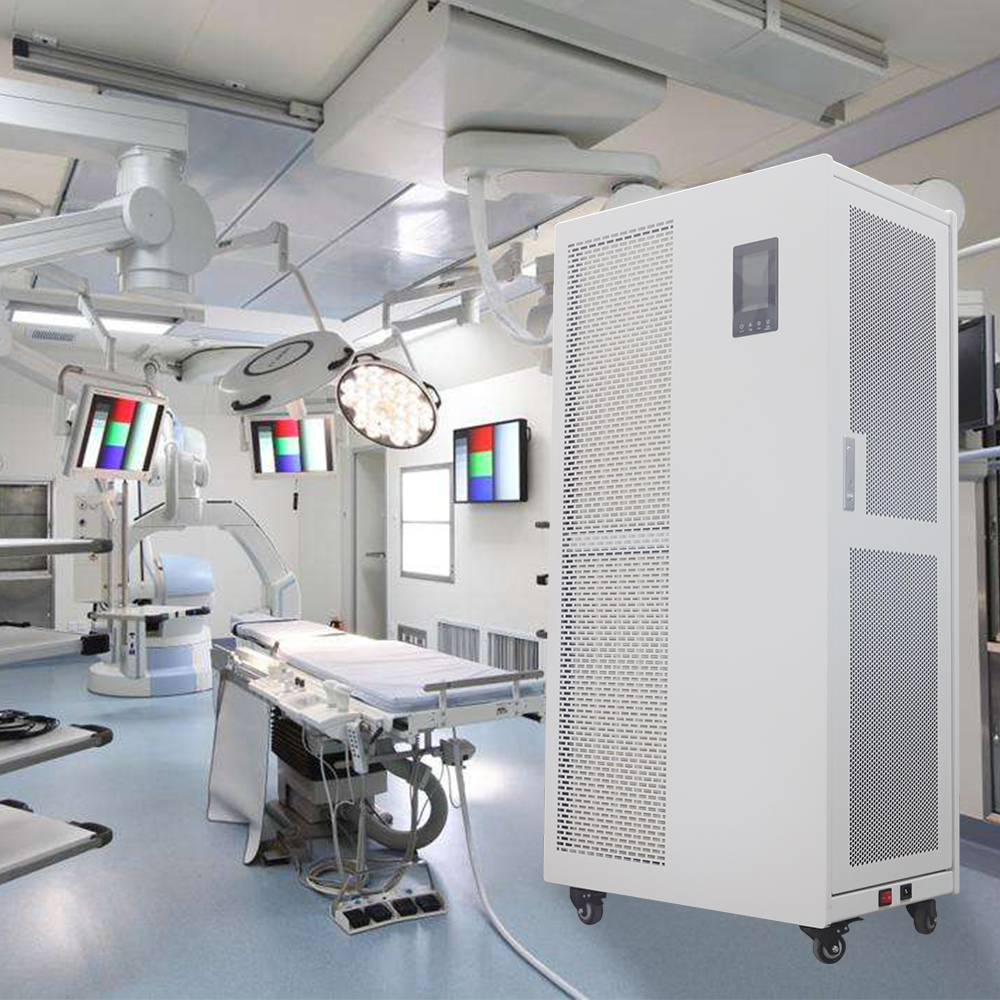
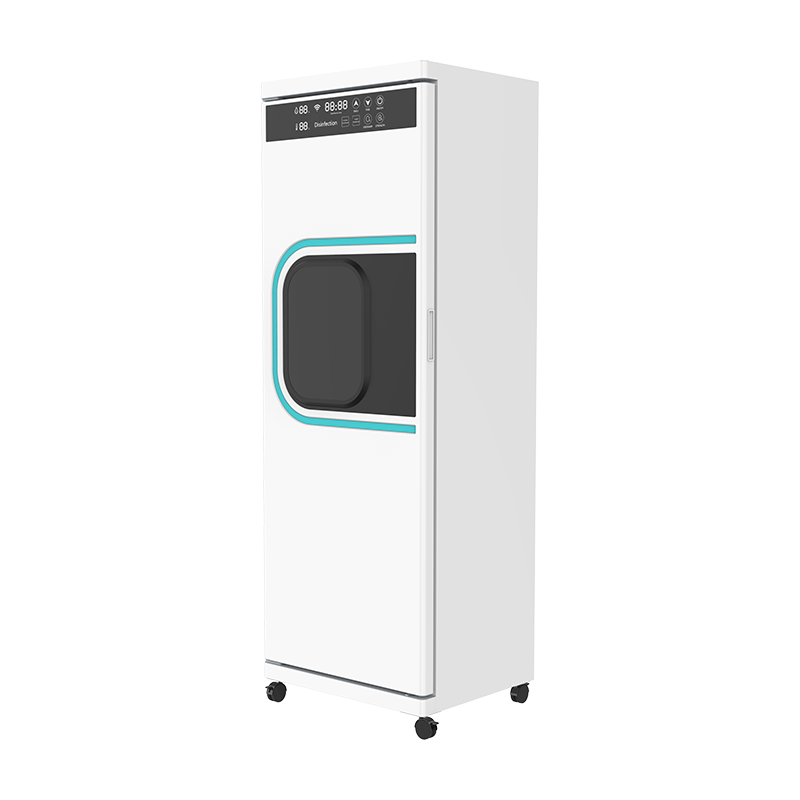
 Medical grade new model 1200 CADR Air purifier YY-Y-1200AKilling rate of Staphylococcus albusView Product →
Matching the Unit to the Room Before You Specify
A verified CADR number says nothing about how a purifier feels to live with, and the same airflow figure scores differently depending on where it is installed. Three room types pull the specification in three directions.
Bedrooms reward low noise at the rated speed and long, unattended run times, so a slightly smaller CADR running every night usually beats a larger unit that gets switched off. Open living areas and double-height spaces need headroom instead, and often a second unit, because pushing 800 CFM through one housing means noise, pressure drop, and a filter that loads quickly. Clinical rooms shift the priority again, toward filtration grade, continuous duty, and documented air change rates rather than overnight comfort.
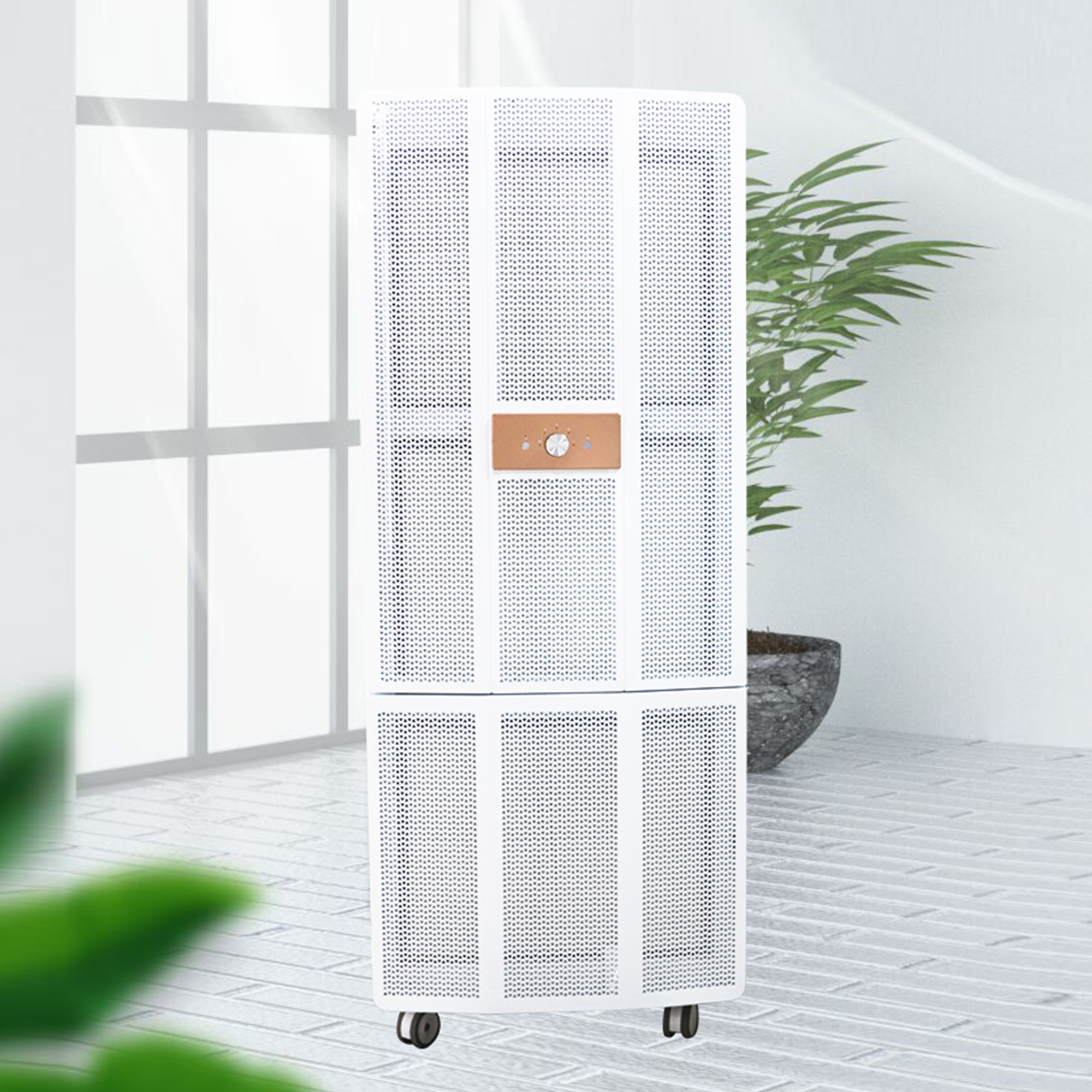
For open-plan or double-height rooms, look at units built as large-room high-CADR platforms rather than bedroom models stretched to a bigger number on the box.
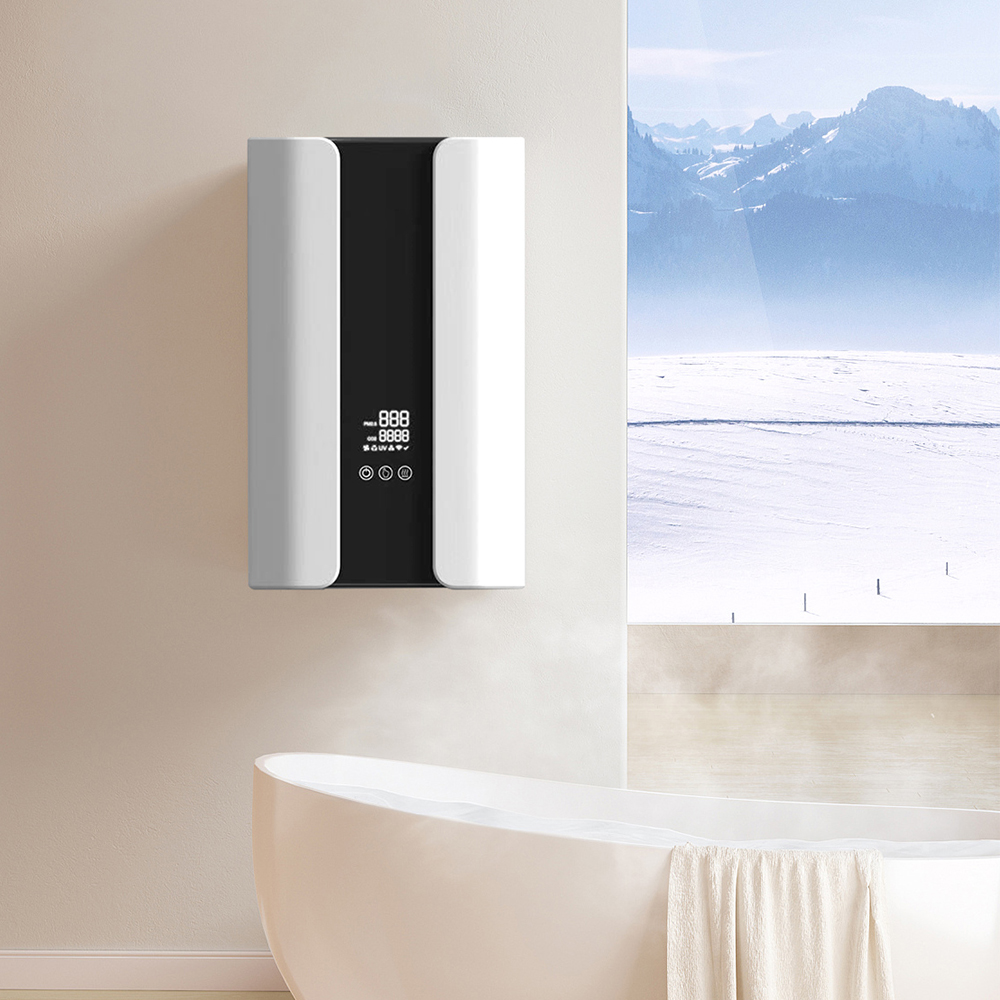
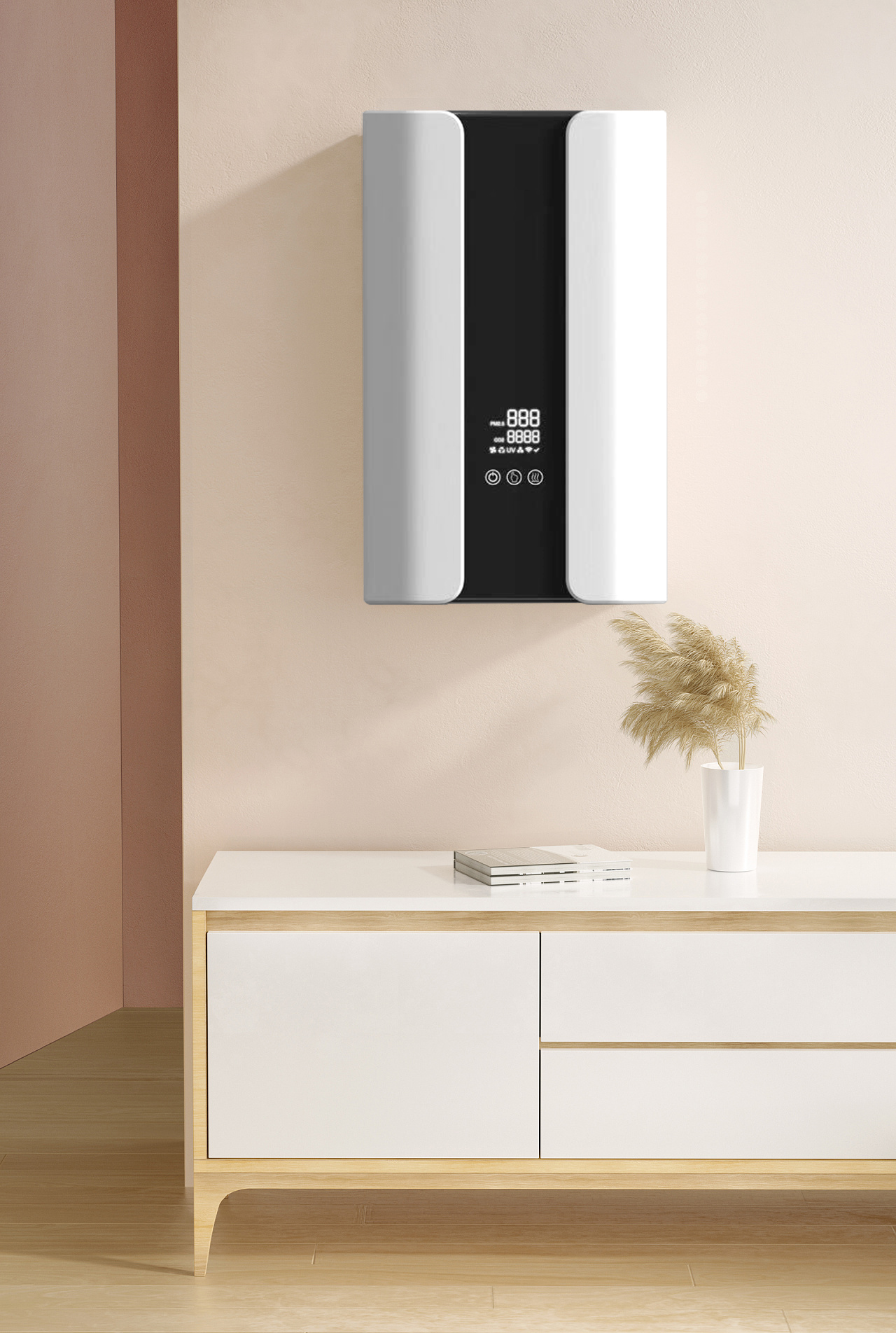
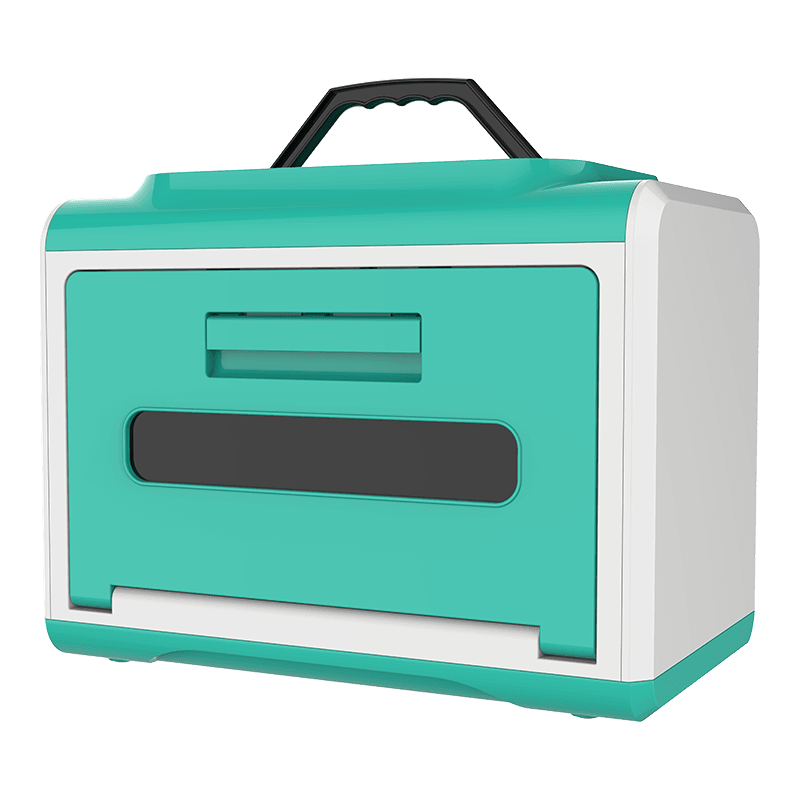
 Wall mounted 500 CADR air fresh ventilation device medical air purifier YY-B-500-Touch operation; -6 fan speeds; -Sleep; -LED UV lamp; -Child lock; -Temperature and humidity display; -PM2.5 digital display; -CO2 display; -Anion concentration displ...View Product →
What OEM and Private-Label Buyers Should Verify
If you are specifying purifiers for a brand, a distributor, or a healthcare client, an AHAM listing is a starting point rather than a finished specification. Five items belong in the request for quotation.
- The test report behind the mark, not just the mark. Confirm model number, test date, and laboratory.
- The fan speed used in testing, and the noise level at that speed. A verified CADR measured at 62 dB carries different value in a ward than in a garage.
- The exact filter part number and media grade. The verified number belongs to one specific filter, and H13 and H14 media can share a housing while returning different airflow, so ask for pressure drop data and the replacement interval.
- Ozone and byproduct documentation. The 0.050 ppm ceiling is a compliance floor, not a selling point.
- Filter supply and service life. A unit that performs well for two years and then cannot be supplied with filters is a warranty problem waiting to happen.
Filter consistency is the item buyers skip most often. A verified CADR only holds when production filters match the tested ones, which is far easier to guarantee when the supplier makes the media in-house instead of buying on the open market. Manufacturers that build both the machine and the media, including H14 HEPA filtration systems for medical and cleanroom duty, can hold that tolerance across a production run.
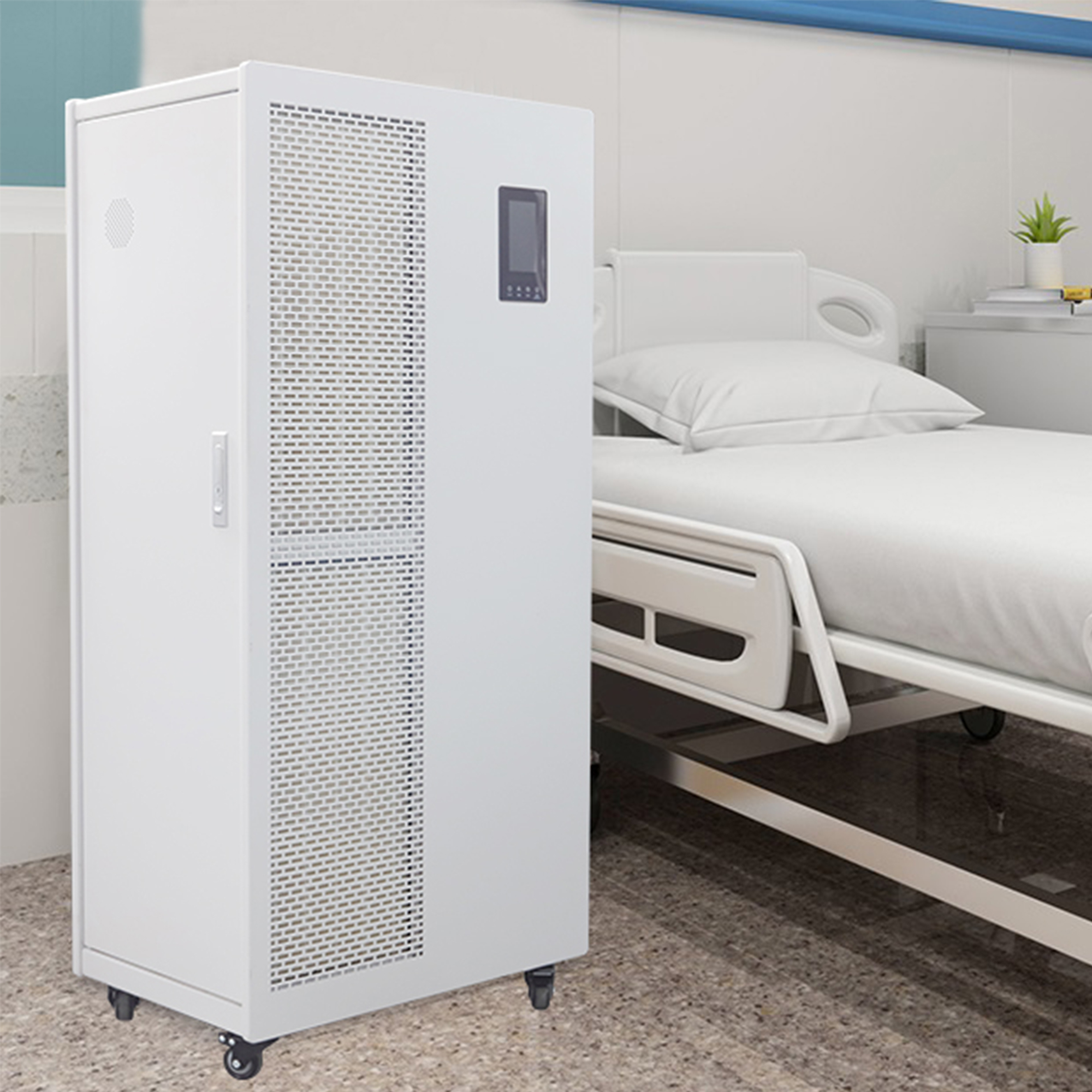
 Medical 2000 CADR Air purifier hospital with wheels YKX-20005 Fan speeds; UV sterilization function; Air purification function; Smell remover; Formaldehyde removal; TVOC; External control display module (optional); PM2.5 digita...View Product →
Frequently Asked Questions
Q1. What does AHAM Verifide mean on an air purifier?
It means an independent lab measured the unit's smoke, dust, and pollen CADR under ANSI/AHAM AC-1 and listed the results in AHAM's public directory. The room size shown is calculated from that data at 4.8 air changes per hour with an 8-foot ceiling.
Q2. How many square feet will a 200 CADR air purifier cover?
About 310 square feet under the AHAM assumption of an 8-foot ceiling. If you want a full 6 air changes per hour under a 9-foot ceiling, plan on roughly 220 square feet instead.
Q3. Is CADR the same as HEPA filter efficiency?
No. HEPA efficiency describes how well the media captures a particle size, while CADR describes how much clean air the finished machine delivers. A unit can hold certified H13 media and still post a low CADR if airflow is restricted.
Q4. What CADR do I need for smoke, allergies, or pet dander?
Size for 6 to 8 air changes per hour. A 300 square foot room with an 8-foot ceiling needs roughly 240 CADR at 6 ACH. Use the smoke CADR for wildfire or tobacco smoke, and the dust CADR for dander.
Q5. Why does a purifier's room size rating feel too high for my home?
Because the rating assumes an 8-foot ceiling, 4.8 air changes per hour, and the unit running at its highest speed. Vaulted ceilings, open floor plans, medium fan settings, and a loaded filter all reduce real coverage.
Q6. Do medical-grade air purifiers need AHAM verification?
Clinical units are usually specified against healthcare ventilation standards such as ASHRAE 170, which call for higher air change rates. An AHAM listing is still useful evidence of measured airflow, but it is not the only specification that matters.