EN
EN
 English
 中文简体
中文简体
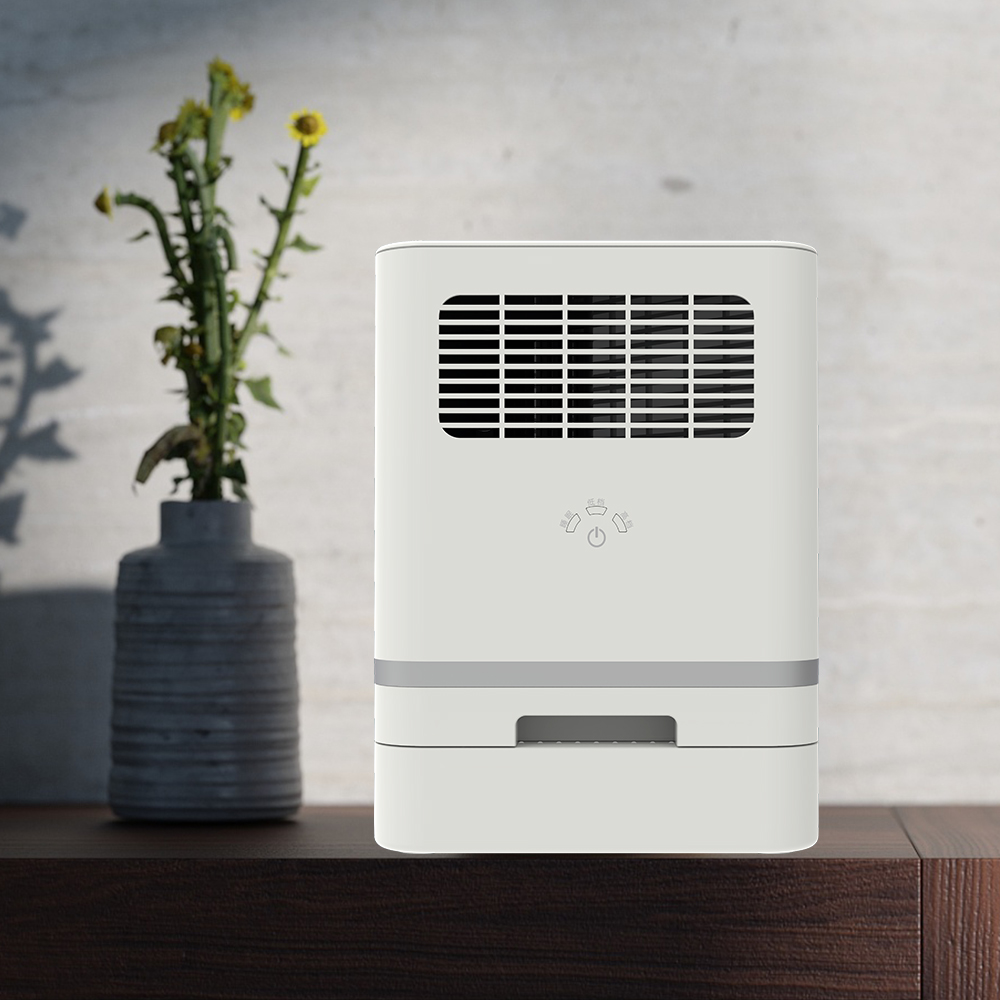
.png)
Picture a 120 m² open-plan office with one tower purifier labelled "up to 140 m²" and a particle counter that refuses to drop at the far end of the room. The unit is not faulty. It was specified against floor area rather than air volume, and floor area says nothing about how much clean air actually reaches the back of the room.
The practical answer for large spaces is to specify by clean air delivery rate (CADR) against room volume instead of the coverage sticker: target 4 to 6 air changes per hour (ACH) in homes and general offices, 6 or more where infection control, smoke or strong odours are involved, and treat air distribution as a separate design decision. The sections below explain how those three numbers interact and where large-space projects usually go wrong.
Content
- 1 Why Coverage-Area Ratings Mislead Buyers
- 2 Sizing Rule: Volume and Air Changes First, CADR Second
- 3 Filter Grade, Pressure Drop and Running Cost
- 4 One Large Unit or Several Smaller Ones?
- 5 What Is Inside a Large-Space Purifier
- 6 Procurement Checklist: Risks That Appear After Installation
- 7 Sourcing Large-Space Purifiers as an OEM or Importer
- 8 Frequently Asked Questions
Why Coverage-Area Ratings Mislead Buyers
A coverage figure is arithmetic, not a performance guarantee. Published numbers usually assume a 2.4 m ceiling, a completely open room, the highest fan setting and roughly one air change per hour. Change one assumption — a 3 m ceiling, a partition wall, an occupied office where nobody tolerates top speed — and delivered clean air falls well short of the label.
CADR travels better. The AHAM standard defines it as the volume of clean air delivered per minute, measured separately for dust, pollen and smoke and quoted in m³/h in metric documentation. A unit that publishes no CADR for at least two of those categories is being marketed rather than specified.
CADR required at 5 air changes per hour (2.5 m ceiling)
Values calculated as volume multiplied by target air changes per hour.
Treat those numbers as a floor, not a target. They assume continuous operation at maximum output, which almost no occupied room can tolerate.
Sizing Rule: Volume and Air Changes First, CADR Second
- Volume (m³) = floor area (m²) × ceiling height (m)
- Required CADR (m³/h) = volume (m³) × target air changes per hour
A 100 m² hall with a 3 m ceiling is 300 m³. At 5 ACH it needs 1,500 m³/h of clean air; at 6 ACH, 1,800 m³/h. The table applies the same arithmetic to four common space types.
| Space | Ceiling | Volume | 4 ACH | 5 ACH | 6 ACH |
|---|---|---|---|---|---|
| Living room, 40 m² | 2.6 m | 104 m³ | 416 m³/h | 520 m³/h | 624 m³/h |
| Open office, 80 m² | 2.7 m | 216 m³ | 864 m³/h | 1,080 m³/h | 1,296 m³/h |
| Clinic waiting area, 60 m² | 2.7 m | 162 m³ | 648 m³/h | 810 m³/h | 972 m³/h |
| Retail floor, 150 m² | 3.0 m | 450 m³ | 1,800 m³/h | 2,250 m³/h | 2,700 m³/h |
Two corrections matter before you buy. CADR is measured with a specific filter and fan setting, so a denser filter or a loaded carbon stage reduces delivered airflow — a 20 to 30% loss is common. Published CADR also usually refers to top speed, which is not the speed anyone uses all day.
Air changes delivered in a 250 m³ room by CADR class
Theoretical maxima at full output, calculated as CADR divided by room volume.
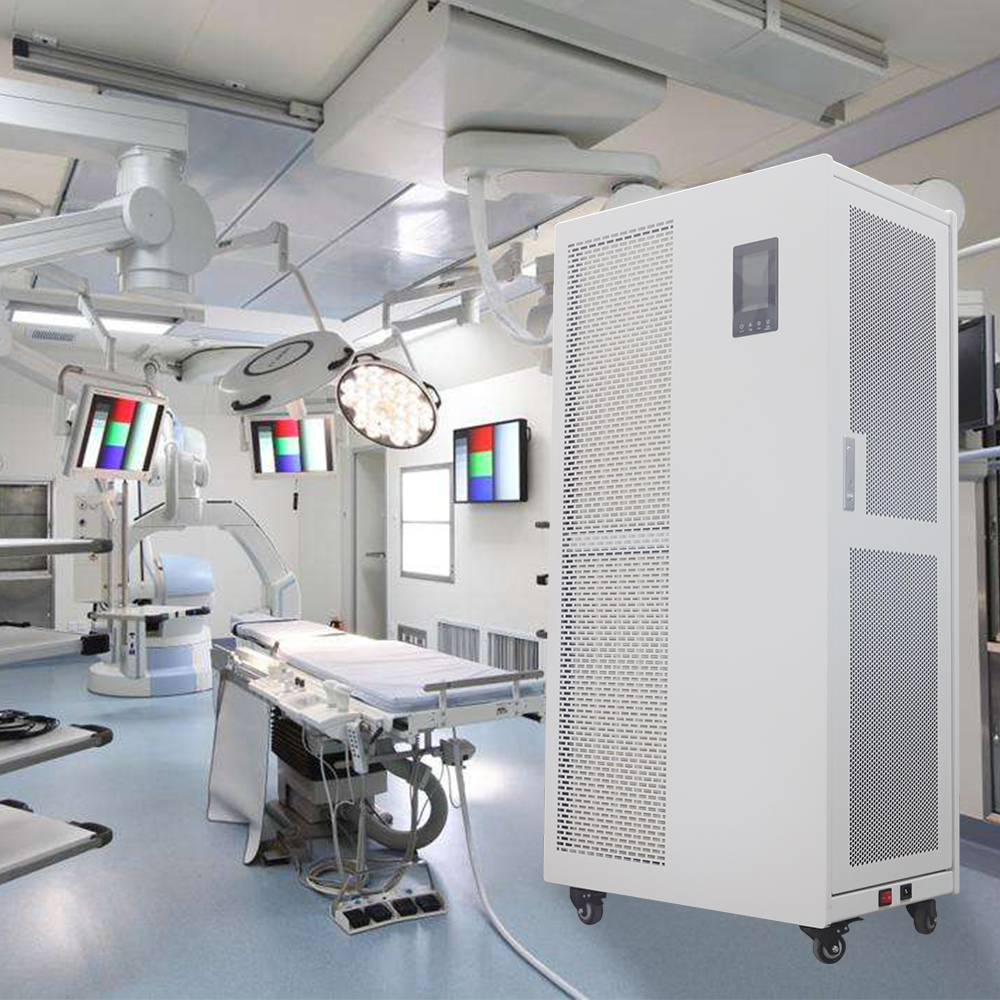
A platform such as the 1,200 m³/h YYY1200A is built around high static pressure rather than a large number on the box, which is what keeps delivered airflow stable as the filter loads.
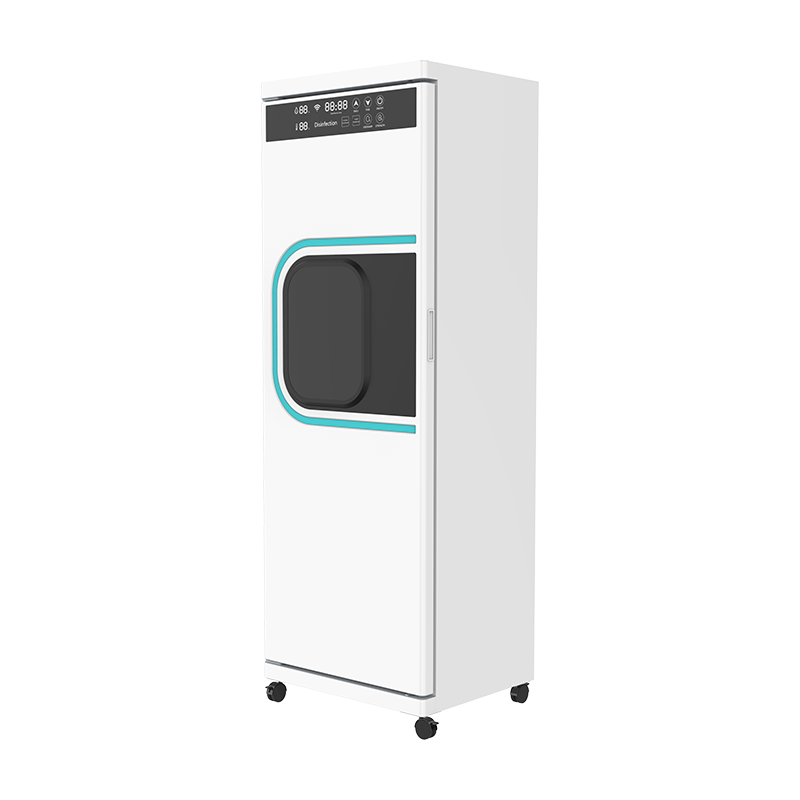
 Medical grade new model 1200 CADR Air purifier YY-Y-1200AKilling rate of Staphylococcus albusView Product →
Filter Grade, Pressure Drop and Running Cost
Filter grade is often treated as a quality badge, but in a large space it is a trade-off. Under EN 1822, H13 media removes at least 99.95% of particles at the most penetrating particle size, and H14 at least 99.995%. The difference is real, yet denser media resist airflow more, so the same blower delivers less clean air and more noise with H14 fitted.
The working rule is H13 for residential, office and retail duty; H14 where the room serves clinical, laboratory or cleanroom functions, with CADR confirmed against that exact filter.
Gas and odour control follows different logic. Performance depends on the mass and type of sorbent, not on the presence of a carbon stage. Odour-heavy large spaces typically need several kilograms of activated carbon or a carbon and zeolite combination; a thin honeycomb pad is a deodorising layer, not a gas-phase filter.
Modelled decay from a starting load of 150 µg/m³ using a single-zone mixing model; real rooms vary with leakage and mixing.
Filter cost, not purchase price, decides the lifetime budget. Ask for rated life in hours, price per replacement and whether the pre-filter can be vacuumed. A large-space unit that needs a proprietary cartridge every three months can cost more over five years than the machine itself.
One Large Unit or Several Smaller Ones?
A single high-CADR unit is cheaper to buy, easier to service and simpler to wire. It also concentrates clean air near itself. In rooms longer than about 8 m, or anywhere with partitions, shelving or a central island, the far zone can sit two to three air changes behind the near zone.
Qualitative engineering comparison of two layouts, not laboratory measurements.
Placement does much of the work. Keep 30 to 60 cm of clearance around the intake, avoid the corner behind a door, and aim the discharge across the room's long axis rather than into the nearest wall.
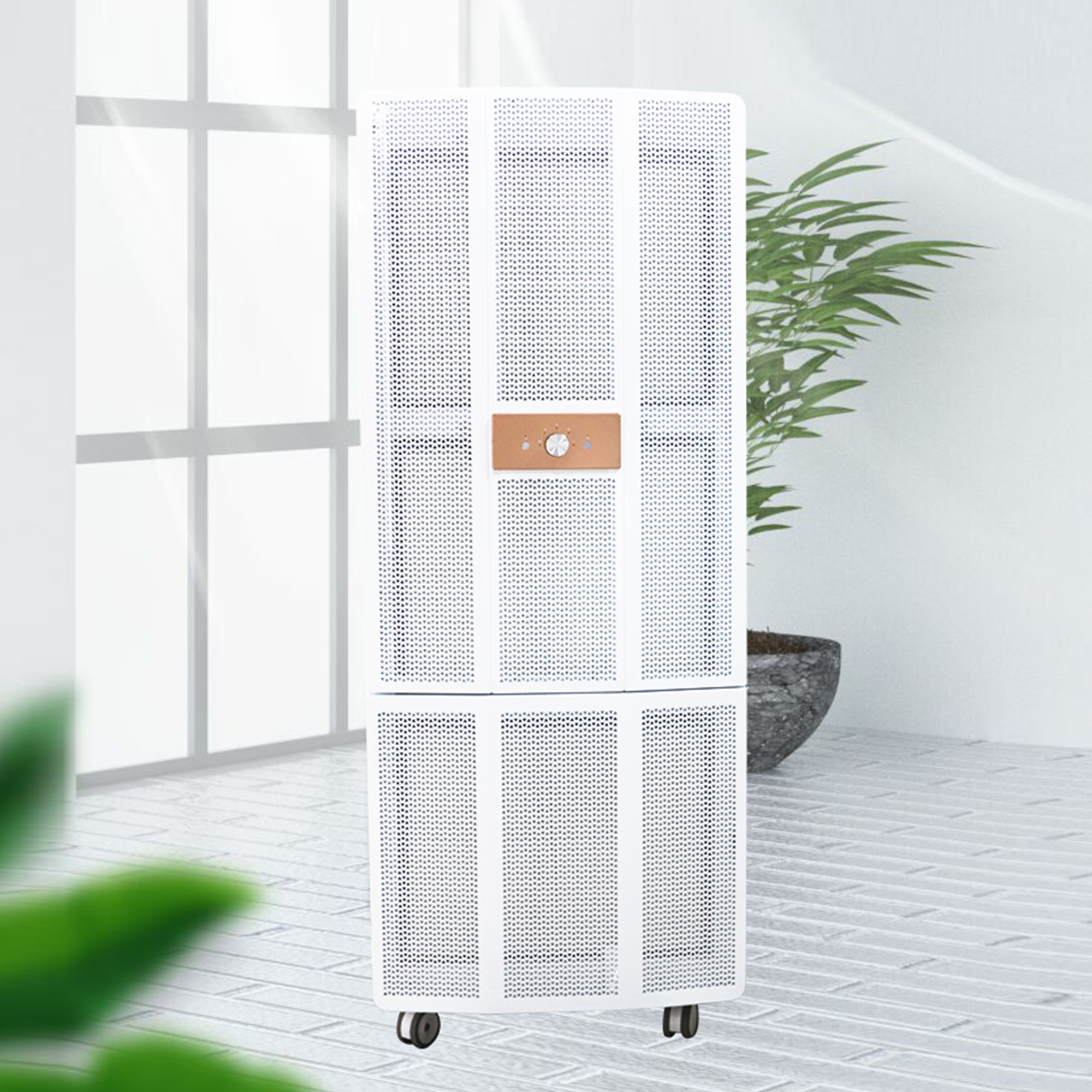
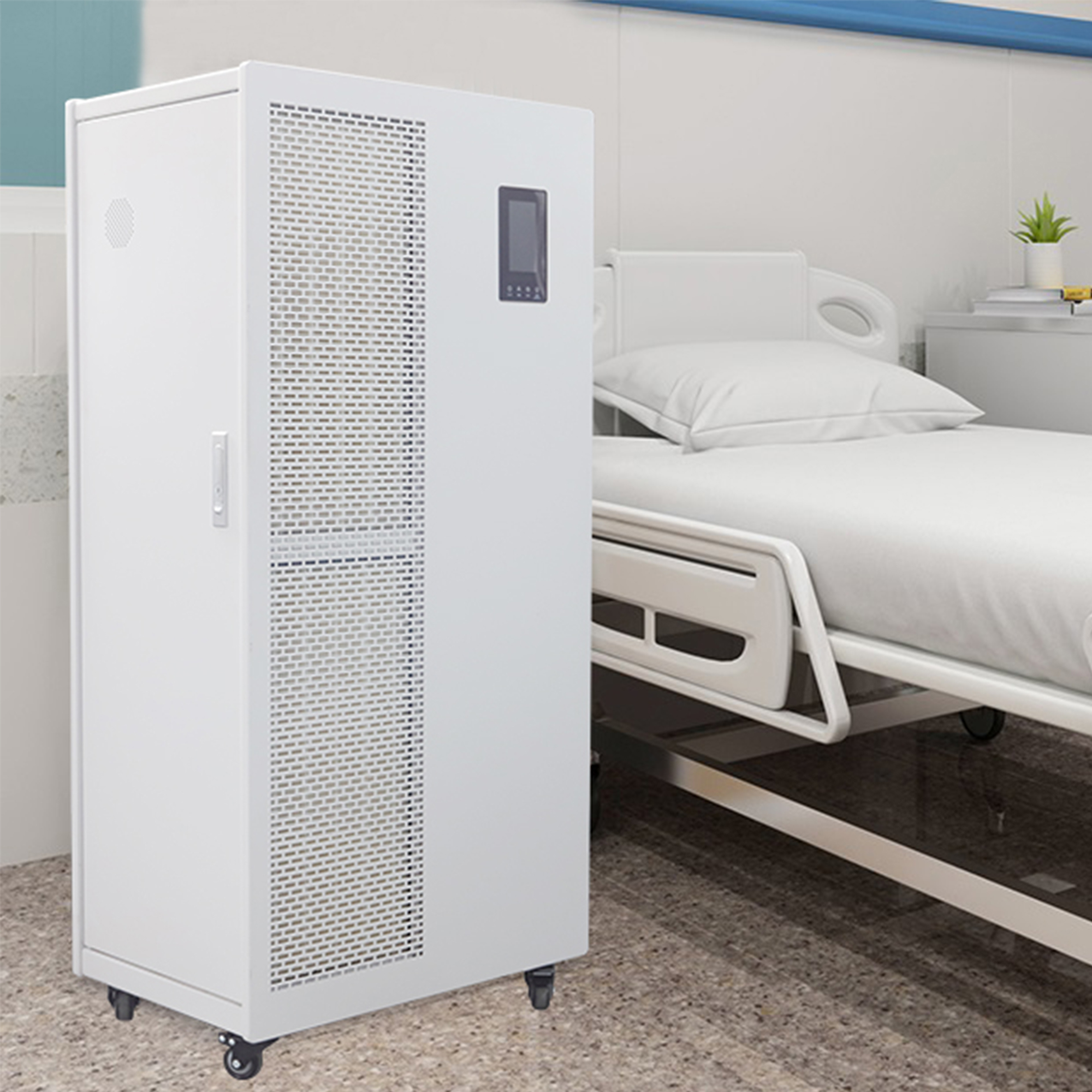
Wheeled units in the 2,000 m³/h class exist for rooms that cannot take wall hardware; they trade floor space for output and mobility, and they suit halls that are rearranged often.
 Medical 2000 CADR Air purifier hospital with wheels YKX-20005 Fan speeds; UV sterilization function; Air purification function; Smell remover; Formaldehyde removal; TVOC; External control display module (optional); PM2.5 digita...View Product →
What Is Inside a Large-Space Purifier
Large-space machines differ from bedroom purifiers mainly in pressure budget and filter area. A typical layout uses a coarse pre-filter for hair and lint, a high-area HEPA stage in H13 or H14, and a sorbent stage for gases. Some medical and public-space models add UVC lamps or an ozone-free plasma stage; ozone-generating designs should not run in occupied rooms.
Schematic airflow layout for a large-space unit; proportions are illustrative.
The blower matters as much as the filter. A large filter area combined with a high-efficiency EC motor keeps pressure drop low at high airflow, which is what allows a unit to reach 1,500 m³/h without sounding like a vacuum cleaner. Noise is normally quoted at the lowest speed — ask for the figure at the speed you intend to use.
Sensors are secondary but useful. A filter-load or pressure-drop indicator tells maintenance when to change media, and a particulate sensor makes the ACH target visible to the people in the room.
Procurement Checklist: Risks That Appear After Installation
Most large-space failures surface months after handover. The list below covers the specification gaps that cause them.
- Coverage claims stated without CADR, ceiling height or fan-speed assumptions
- Noise data quoted only at the lowest speed
- Filter cartridges with no published part number, price or lead time
- Ozone output from plasma or ioniser stages left unspecified
- No static pressure curve to predict behaviour once the filter loads
- Single-source spares, with no CKD or SKD option for overseas assembly
- Certification claims without a test report for the destination market
- CADR measured with a different filter grade than the one shipped
Sourcing Large-Space Purifiers as an OEM or Importer
For brand owners and importers the specification work does not change — volume, ACH and filter grade still decide the design — but the questions move to the supplier. Filter media, filter area, blower curve and housing tooling are the four items that determine whether a large-space model can be built consistently at volume.
A manufacturer with in-house media production and injection moulding can adjust those four items together rather than forcing a filter into an existing housing. That is the difference between a catalogue model and a platform that can be re-rated for a 60 Hz market, a different filter grade or a wall-mounted configuration. Buyers evaluating high-CADR large-room platforms or briefing an OEM purification factory usually start from the same four questions.
A useful request for quotation includes the target CADR at a stated filter grade, the noise ceiling at each of three speeds, the filter part number and price, the certification list for the destination market, and the packing format — complete units, or CKD and SKD kits if local assembly is planned.
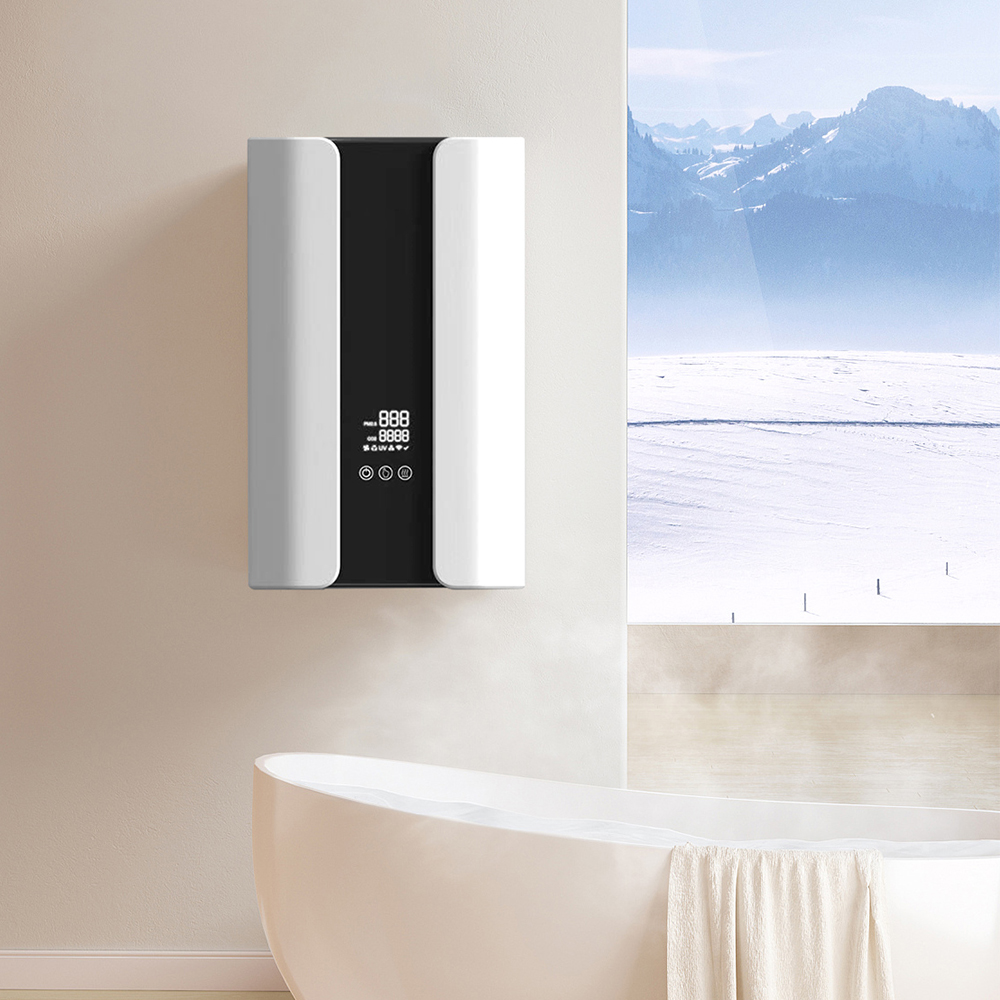
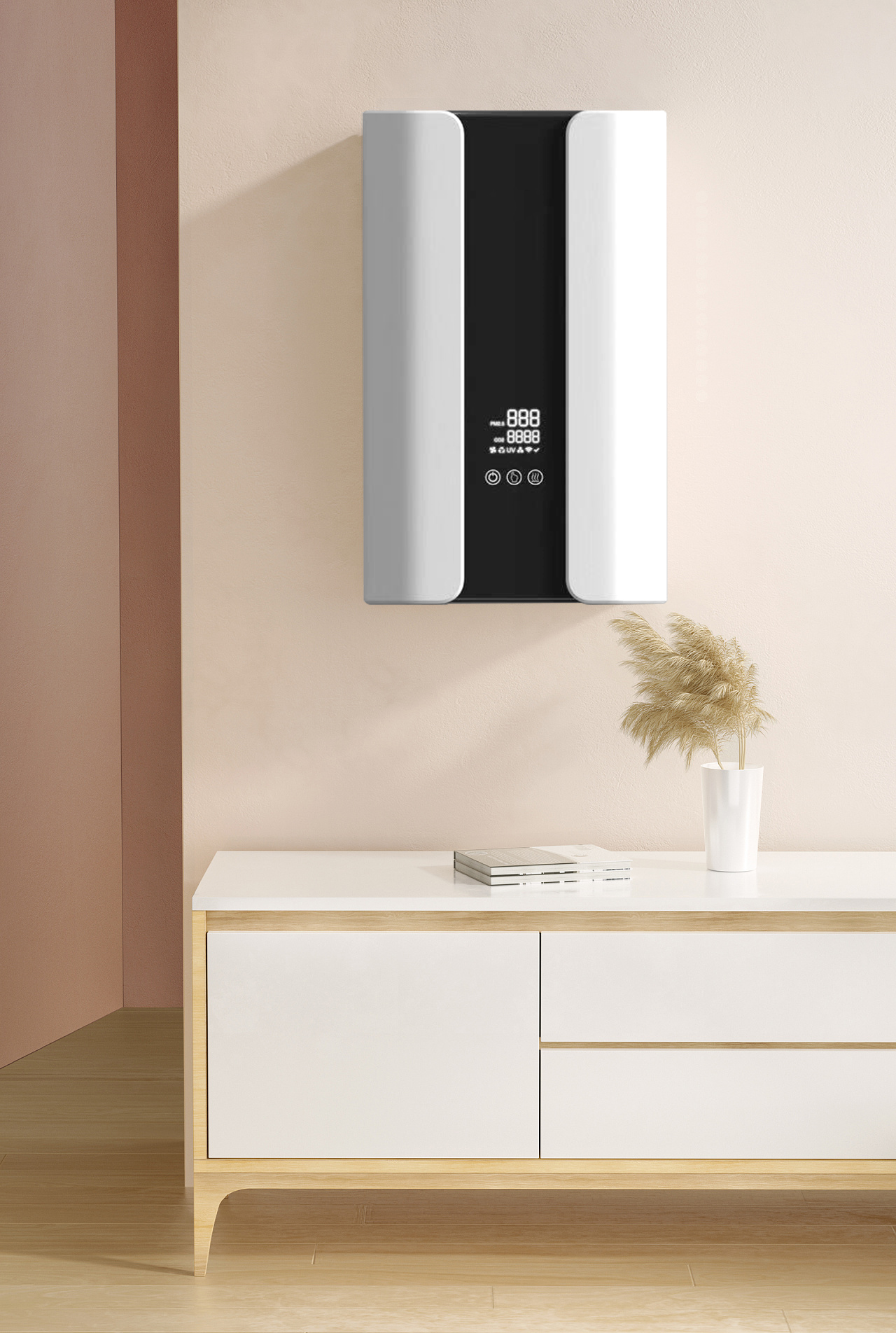
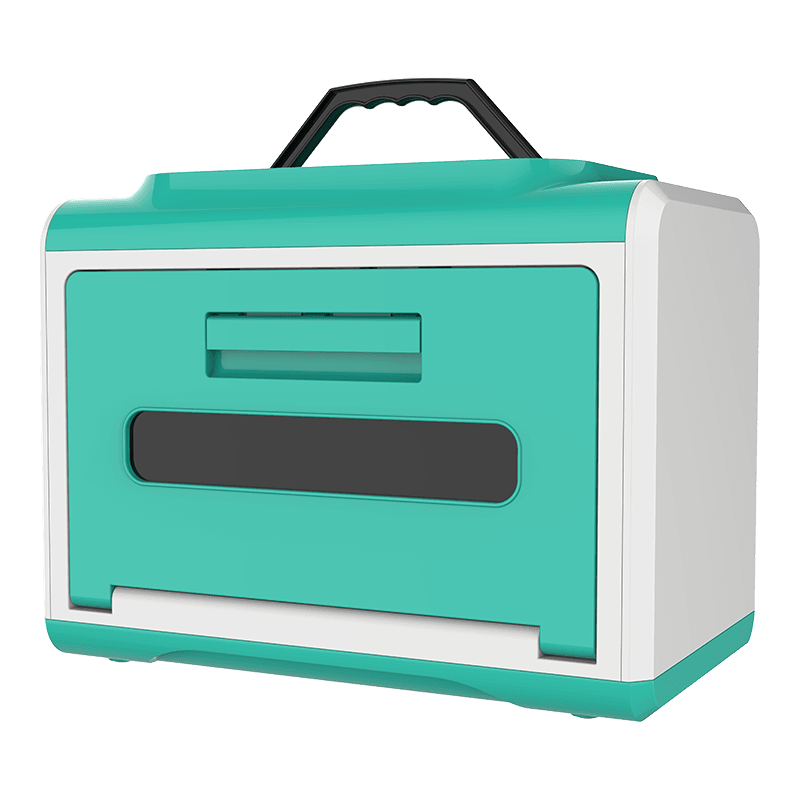
 Wall mounted 500 CADR air fresh ventilation device medical air purifier YY-B-500-Touch operation; -6 fan speeds; -Sleep; -LED UV lamp; -Child lock; -Temperature and humidity display; -PM2.5 digital display; -CO2 display; -Anion concentration displ...View Product →
Frequently Asked Questions
Q1. What CADR do I need for a 100 m² room?
Multiply 100 m² by ceiling height — about 270 m³ at 2.7 m — then by your target air changes. At 5 ACH that is roughly 1,350 m³/h.
Q2. How many air changes per hour are enough for a large space?
Four to six ACH suits most homes, offices and retail floors. Clinical, laboratory and smoke-heavy spaces are usually specified at six or more.
Q3. Is H14 HEPA better than H13 for a large room?
H14 captures at least 99.995% at the most penetrating particle size against 99.95% for H13, but it raises pressure drop. Use H14 where clinical or cleanroom standards apply.
Q4. Can one air purifier cover an open-plan office?
Only if its CADR matches the full room volume and the air can mix. Above roughly 8 m of length, two mid-sized units placed apart give more even air changes.
Q5. How loud are large-space air purifiers?
Quiet models run near 30 to 35 dB(A) at the lowest speed. High-CADR operation is louder, so ask for the dB(A) figure at each of the three speeds.
Q6. How often do HEPA filters need replacing in a large-space purifier?
In continuous duty, HEPA media in well-designed units often lasts 8,000 to 12,000 hours, while pre-filters are cleaned far more often. A pressure-drop indicator beats a calendar.