EN
EN
 English
 中文简体
中文简体
.png)
Direct answer: In a medical air purifier, HEPA filters should typically be replaced every 12 to 18 months, activated carbon pre-filters every 3 to 6 months, and pre-filters every 1 to 3 months depending on usage intensity and environment. In high-pollution or clinical settings, all intervals shorten significantly. Keep reading for a full breakdown by filter type, environment, and usage pattern.
Content
- 1 Why Filter Replacement Intervals Matter in a Medical Air Purifier
- 2 Filter Types in a Medical Air Purifier and Their Replacement Schedules
- 3 Factors That Shorten Filter Life Beyond the Standard Schedule
- 4 Medical Grade Air Purifier for Home Use: Choosing the Right Replacement Filter
- 5 Quiet Medical Air Purifier for Bedroom Use: Filter Maintenance Without Disrupting Sleep
- 6 Medical Air Purifier for Clinics and Hospitals: Stricter Replacement Standards
- 7 Signs That a Filter Needs Replacing Now — Before the Scheduled Date
- 8 About Ningbo Yinyu Purification Technology Co., Ltd.
- 9 Frequently Asked Questions
Why Filter Replacement Intervals Matter in a Medical Air Purifier
A medical air purifier operates on fundamentally different standards than a residential consumer unit. Medical-grade devices are designed to achieve filtration efficiencies of 99.97% or higher for particles as small as 0.3 microns, including airborne viruses, bacteria, fine particulate matter (PM2.5), and volatile organic compounds (VOCs). This performance level is only sustainable when filters are maintained on the correct schedule.
When a HEPA filter becomes overloaded with captured particles, two problems arise simultaneously: airflow resistance increases, reducing the volume of air processed per hour; and the risk of particle re-entrainment — where trapped contaminants are dislodged back into the airstream — rises. In a clinical setting or home use environment where vulnerable individuals are present, either failure mode carries real health consequences.
The Clean Air Delivery Rate (CADR) of a medical air purifier can decline by as much as 40–50% before a filter shows visible signs of saturation. This is why relying on visual inspection alone is insufficient — scheduled replacement is the only reliable approach.
Filter Types in a Medical Air Purifier and Their Replacement Schedules
Most HEPA medical air purifiers for virus removal use a multi-stage filtration system. Each stage has its own replacement interval because each filter type captures different contaminants at different rates of accumulation.
Pre-Filter (Mechanical / Washable)
The pre-filter captures large particles — dust, hair, lint, pet dander — before they reach the HEPA layer. In average residential use, pre-filters should be cleaned or replaced every 1 to 3 months. In homes with pets, heavy dust, or in commercial environments, monthly cleaning is advisable. A clogged pre-filter significantly reduces HEPA life by allowing larger debris to accumulate on the finer filtration medium.
Activated Carbon Filter
The activated carbon layer adsorbs gases, odors, and VOCs including formaldehyde, benzene, and nitrogen dioxide. Carbon has a finite adsorption capacity — once saturated, it no longer captures new gaseous contaminants and may begin to off-gas previously captured compounds. Replace every 3 to 6 months in standard home environments; every 2 to 3 months in environments with cooking fumes, chemical exposure, or high VOC loads such as healthcare facilities with cleaning agents.
True HEPA Filter (H13 or H14 Grade)
The HEPA filter is the core filtration stage. Medical-grade units typically use H13 or H14 HEPA filters, which capture particles down to 0.1 microns at efficiencies of 99.95% to 99.995% respectively. Under standard 24/7 home operation, expect a service life of 12 to 18 months. In clinical environments such as examination rooms, hospital waiting areas, or isolation spaces, this interval may shorten to 6 to 12 months depending on patient volume and ambient air quality.
UV-C or Photocatalytic Stage (Where Present)
Some medical air purifiers include a UV-C germicidal lamp. UV lamp output degrades over time even when the lamp remains illuminated. Most manufacturers rate UV lamp effectiveness for 8,000 to 12,000 hours of operation, after which germicidal intensity falls below effective levels. At 12 hours per day of use, this equates to approximately 2 to 3 years of service life, though annual verification of UV output is recommended in critical clinical applications.
| Filter Stage | What It Captures | Home Use Interval | Clinical / High-Use Interval |
|---|---|---|---|
| Pre-filter | Dust, hair, large particles | 1–3 months | Monthly |
| Activated Carbon | Gases, odors, VOCs | 3–6 months | 2–3 months |
| H13/H14 HEPA | Viruses, bacteria, PM0.1–PM2.5 | 12–18 months | 6–12 months |
| UV-C Lamp | Airborne pathogens | 2–3 years | Annual verification |
Factors That Shorten Filter Life Beyond the Standard Schedule
Published replacement intervals assume average operating conditions. Several real-world factors can reduce filter service life significantly, requiring earlier replacement regardless of the stated schedule.
- Air quality index (AQI) above 100: Operating in areas with poor outdoor air quality accelerates HEPA loading dramatically. During wildfire seasons or high-smog periods, filter life can be reduced to a fraction of the standard interval.
- High humidity environments: Moisture reduces activated carbon adsorption capacity and can promote microbial growth on the filter media, compromising both performance and hygiene.
- Continuous high-speed operation: Running a unit at maximum fan speed processes more air volume but also pushes more particles onto the filter per unit of time.
- Skipped pre-filter maintenance: A saturated pre-filter forces HEPA media to capture particles it would not ordinarily handle, reducing HEPA life by as much as 30–50%.
Medical Grade Air Purifier for Home Use: Choosing the Right Replacement Filter
When selecting replacement filters for a medical grade air purifier for home use, three specifications must match your device exactly: filter dimensions, HEPA grade classification, and carbon weight or layer count.
HEPA Grade: H13 vs H14
H13 HEPA filters capture 99.95% of particles at 0.3 microns; H14 captures 99.995%. For household use — including rooms occupied by allergy sufferers, asthmatics, or immunocompromised individuals — H13 is typically sufficient. For a HEPA medical air purifier for virus removal in a clinical setting or home with active respiratory illness, H14 is the recommended grade, as it provides an additional order of magnitude in virus and ultrafine particle capture.
Carbon Filter Specification
Not all carbon filters are equivalent. The key parameter is activated carbon weight per unit area — measured in grams per square meter (g/m²). Higher carbon density provides greater adsorption capacity and longer effective service life. Thin carbon-impregnated pre-filters with weights below 100 g/m² are often inadequate for environments with significant VOC or odor loads; standalone carbon filters with weights above 300 g/m² perform significantly better in those applications.
OEM vs. Compatible Replacement Filters
Always verify that replacement filters meet the same HEPA grade certification as the original. A filter labeled "HEPA-type" rather than "True HEPA H13" does not meet medical-grade standards. Substituting lower-grade filters in a medical air purifier undermines the unit's certification and performance entirely.
Quiet Medical Air Purifier for Bedroom Use: Filter Maintenance Without Disrupting Sleep
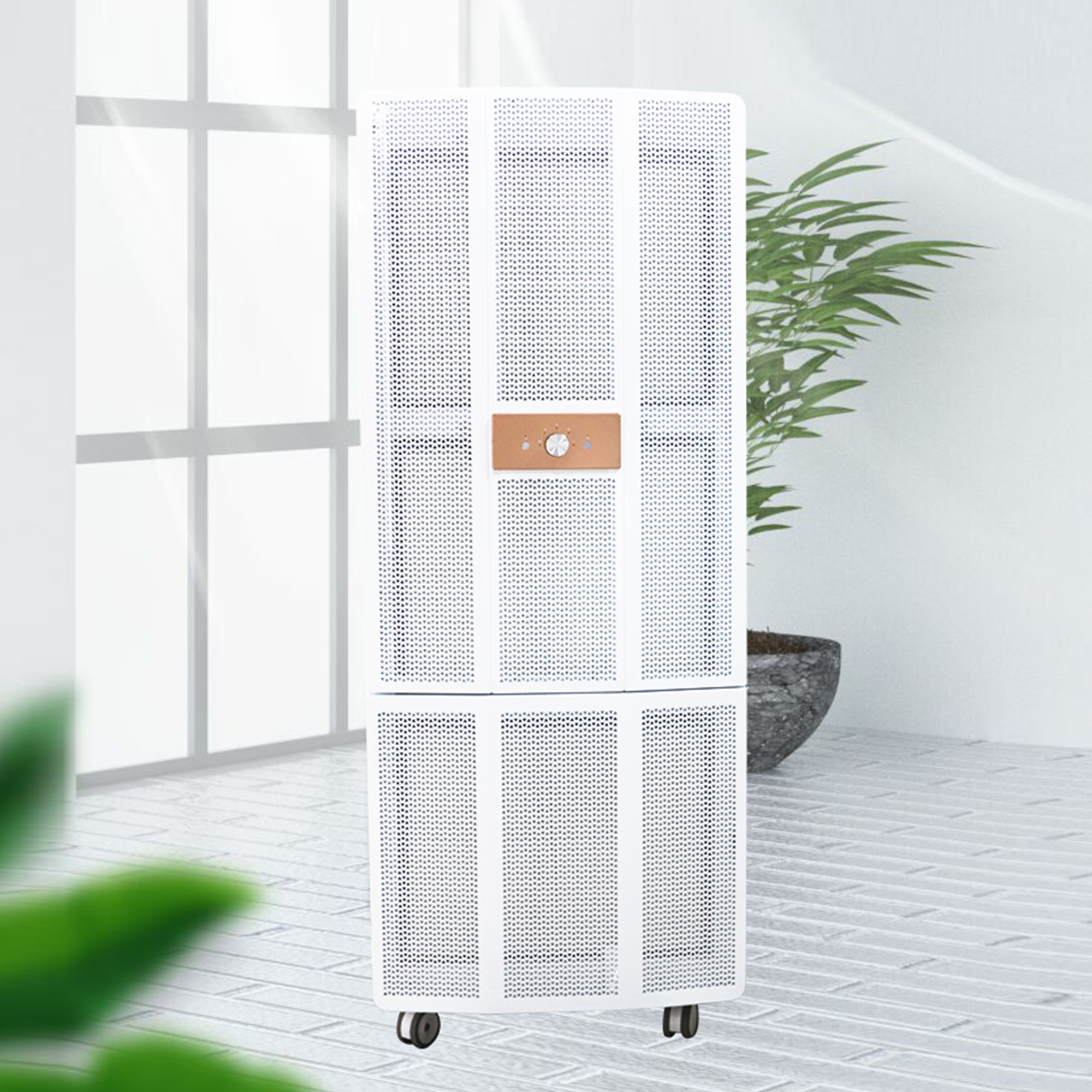
A quiet medical air purifier for bedroom environments is typically operated continuously overnight at low fan speeds to minimize noise — often at 25 to 35 dB(A), equivalent to a whisper or rustling leaves. While this makes for undisturbed sleep, continuous low-speed operation has specific implications for filter maintenance.
At low fan speed, the unit processes less air volume per hour but may run for 16–24 hours per day, accumulating more total operating hours than a unit used only during waking hours. Total hours of operation — not calendar months alone — should be a primary guide for filter replacement in continuously-run bedroom units.
Bedrooms typically have lower particle loads than kitchens or living rooms, but are more likely to accumulate fine biological particles including dust mite allergens, mold spores, and respiratory droplets. For this reason, even at lower fan speeds, the HEPA filter in a bedroom unit should be inspected at the standard 12-month interval and replaced if discoloration or airflow reduction is evident.
A practical approach for bedroom units: enable the filter life indicator if available, log the installation date on the filter housing with a marker, and schedule a pre-filter cleaning every 6 weeks to extend HEPA service life.
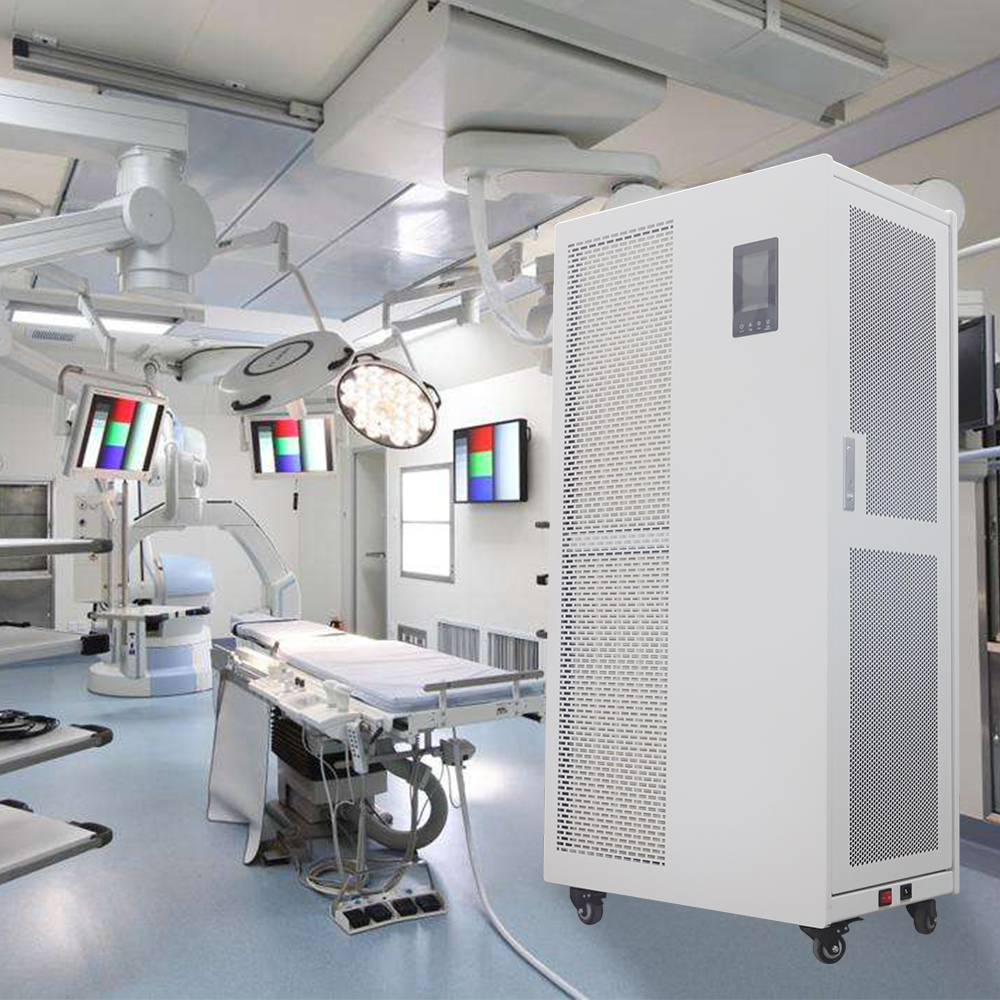
Medical Air Purifier for Clinics and Hospitals: Stricter Replacement Standards
A medical air purifier for clinics and hospitals operates in a fundamentally different environment from any home application. Patient volume, pathogen load, and regulatory accountability all demand more rigorous maintenance protocols.
Regulatory and Infection Control Context
Healthcare facilities in most jurisdictions are required to maintain documented air quality management records. Filter replacement must be logged with installation dates, filter batch numbers, and the technician who performed the change. This documentation is inspected during accreditation reviews and infection control audits.
Recommended Clinical Maintenance Schedule
- Pre-filter: Inspect weekly, clean or replace monthly in waiting rooms and examination areas.
- Activated carbon: Replace every 2 to 3 months, or immediately following any chemical decontamination procedure in the room.
- H14 HEPA filter: Replace every 6 months in high-acuity areas (ICU, isolation rooms, oncology wards); every 9 to 12 months in lower-risk areas (administrative offices, waiting rooms).
- UV-C lamp: Verify output intensity annually with a UV radiometer; replace if intensity has declined below the manufacturer's minimum effective threshold.
| Clinical Setting | HEPA Grade | HEPA Interval | Carbon Interval |
|---|---|---|---|
| ICU / Isolation Room | H14 | 6 months | 2–3 months |
| Examination / Treatment Room | H13–H14 | 6–9 months | 3 months |
| Waiting Room / Reception | H13 | 9–12 months | 3–4 months |
| Administrative Office | H13 | 12 months | 4–6 months |
Signs That a Filter Needs Replacing Now — Before the Scheduled Date
Maintenance schedules are guidelines based on average conditions. These signs indicate a filter may need immediate replacement regardless of how recently it was installed:
- Noticeably reduced airflow at the same fan speed setting — indicates HEPA or pre-filter is heavily loaded.
- Return of odors that the unit previously suppressed — indicates activated carbon saturation.
- Visible dark discoloration across the HEPA pleats — indicates accumulated particulate load. Normal light grey is acceptable; dark brown or black patches are not.
- Increase in allergy symptoms among room occupants despite the unit running — suggests filtration efficiency has declined.
- Filter life indicator alert — modern units with air quality sensors and differential pressure monitoring will flag this automatically. Do not delay replacement when an alert is triggered.
- Musty or unusual smell from the unit — may indicate mold growth on a saturated filter, which requires immediate replacement and internal cleaning.
About Ningbo Yinyu Purification Technology Co., Ltd.
Ningbo Yinyu Purification Technology Co., Ltd. was established in 2011 and is located in Cixi City, Ningbo — nationally recognized as the hometown of household appliances in China — on the south bank of the Hangzhou Bay Cross Sea Bridge.
The company operates through two subsidiaries: Cixi Beilian Electric Appliance Co., Ltd. and Yinyu Medical Technology (Zhejiang) Co., Ltd. This structure allows Yinyu to serve both consumer and medical-grade markets with dedicated production capabilities.
Yinyu has developed into a fully integrated industrial and trade enterprise covering product research and development, mold development, filter manufacturing, plastic injection molding, and finished product assembly — combining R&D, production, and sales under one roof. The company has established OEM partnerships with well-known brands including TCL, Changhong, Qinyuan, Desai, BREATHWELL, and Whirlpool, reflecting the breadth of its manufacturing competence and quality management standards.