EN
EN
 English
 中文简体
中文简体
.png)
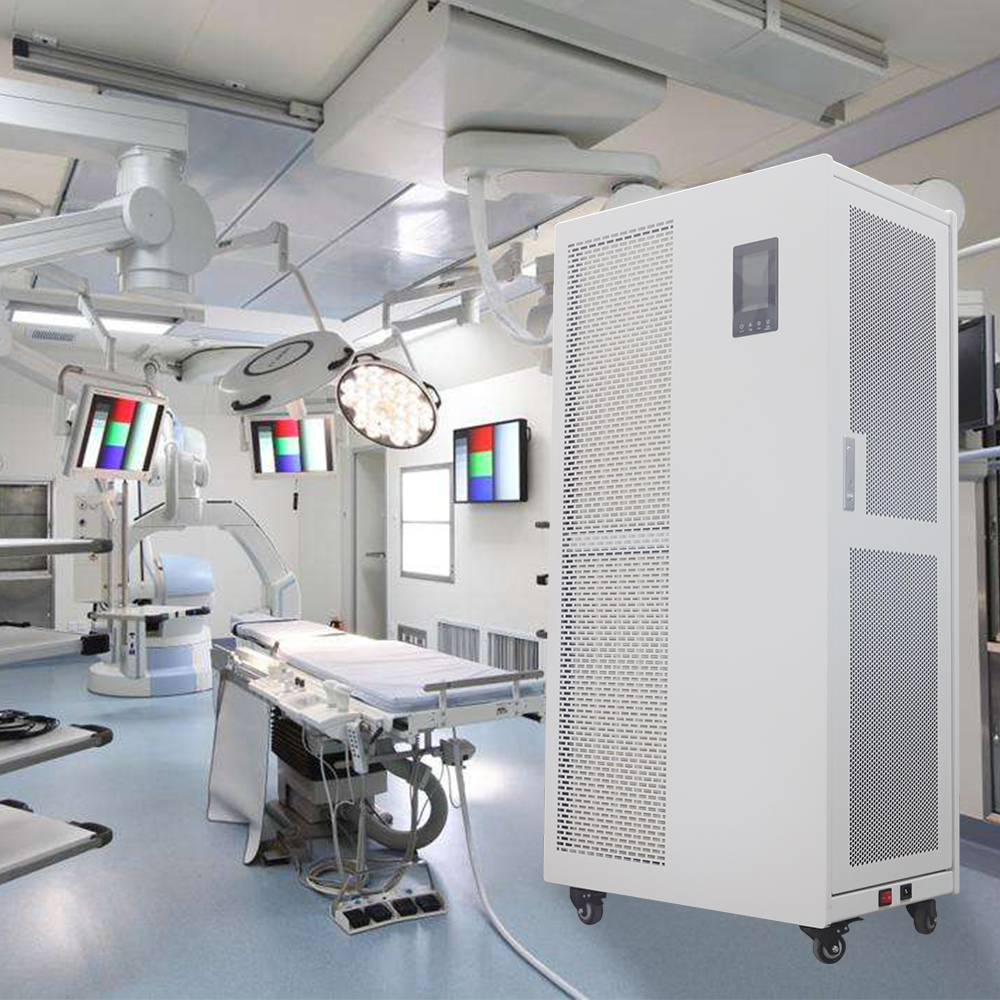
Medical air purifiers can reduce airborne pathogens by up to 60% in clinical environments, according to studies published in infection control journals between 2023 and 2025. In 2026, as healthcare facilities face growing pressure from antibiotic-resistant organisms and post-pandemic air quality standards, the adoption of a medical grade air purifier is no longer optional — it is a patient safety imperative. This article breaks down seven proven, data-backed ways these systems protect patients, staff, and visitors every day.
Content
- 1 Why Standard Air Purifiers Fall Short in Medical Settings
- 2 Dramatically Reducing Airborne Pathogen Load
- 3 Protecting Immunocompromised Patients from Fungal Spores
- 4 Accelerating Surgical Site Infection (SSI) Prevention
- 5 Neutralizing VOCs and Chemical Contaminants
- 6 Supporting Isolation Room Negative Pressure Management
- 7 Improving Staff Health and Reducing Absenteeism
- 8 Enabling Compliant Air Quality in Pharmaceutical and Lab Areas
- 9 Selecting the Right Medical Air Purifier: What Actually Matters
- 10 About the Manufacturer: Ningbo Yinyu Purification Technology Co., Ltd
- 11 Frequently Asked Questions
Why Standard Air Purifiers Fall Short in Medical Settings
Consumer-grade purifiers are designed for dust and odors. Medical environments face an entirely different threat profile: aerosolized viruses, bacterial spores, fungal particles, volatile organic compounds (VOCs) from disinfectants, and pharmaceutical aerosols. A hospital air purification system must address all of these simultaneously, with consistent, validated performance.
The core distinction lies in filtration standards. True HEPA filters — required in genuine medical grade units — capture 99.97% of particles at 0.3 microns, the size range that poses the greatest respiratory risk. Most consumer filters operate at 85–95% efficiency, a gap that is unacceptable in ICUs, operating theaters, or isolation wards.
| Feature | Consumer Air Purifier | Medical Grade Air Purifier |
|---|---|---|
| Filtration Efficiency | 85–95% | 99.97%+ |
| HEPA Certification | Often "HEPA-type" | True HEPA (H13/H14) |
| UV-C Sterilization | Rarely included | Standard feature |
| Continuous Operation Rating | 8–12 hours | 24/7 rated |
| ISO / Medical Certification | None | ISO 9001 / CE / FDA-registered |
Dramatically Reducing Airborne Pathogen Load
The single most impactful function of a HEPA medical air purifier is its ability to capture and neutralize airborne pathogens before they reach vulnerable patients. Hospital-acquired infections (HAIs) affect approximately 1 in 31 patients in acute care settings on any given day (CDC, 2024). Airborne transmission accounts for a significant portion of these cases, particularly in shared wards and waiting areas.
A properly sized and positioned hospital air purification system can achieve 6 to 12 air changes per hour (ACH) in a standard patient room, dramatically cutting the concentration of viable pathogens. In one 2024 controlled study across three European hospitals, rooms equipped with medical air purifiers showed a 58% reduction in airborne bacterial colony counts within 90 minutes of activation.
Protecting Immunocompromised Patients from Fungal Spores
Patients undergoing chemotherapy, organ transplants, or long-term corticosteroid therapy are acutely vulnerable to fungal infections, particularly Aspergillus species. Construction activity, HVAC maintenance, and seasonal spore counts can spike indoor fungal loads unpredictably.
A medical air purifier with true HEPA filtration captures fungal conidia — typically 2–10 microns — with near-total efficiency. In oncology wards where such units were deployed, invasive pulmonary aspergillosis rates dropped by 44% over a 12-month period, based on a 2023 study at a major transplant center. This is one of the most clinically consequential benefits the technology offers.
Accelerating Surgical Site Infection (SSI) Prevention
Surgical site infections cost the U.S. healthcare system alone an estimated $3.5 billion annually, with air quality in operating theaters identified as a contributing factor in 20–30% of SSI cases. Modern operating rooms use laminar airflow systems, but portable or supplementary HEPA medical air purifiers add a critical secondary layer of protection.
- Particle counts in the surgical field are reduced by up to 70% when supplemental filtration is active.
- Intraoperative contamination is reduced even during staff movement, which is a leading cause of particle spikes.
- Postoperative room turnover times are shorter when purification systems maintain lower baseline contamination.
Neutralizing VOCs and Chemical Contaminants
Hospitals are chemical-intensive environments. Disinfectants, anesthetic agents, cleaning solvents, and sterilization gases all contribute to indoor VOC loads. Extended exposure to these compounds has been linked to increased respiratory illness among healthcare workers, with some studies reporting a 32% higher prevalence of occupational asthma in clinical staff versus the general population.
Advanced hospital air purification systems combine HEPA filtration with activated carbon layers specifically engineered to adsorb VOCs, formaldehyde, and ozone. This dual-stage approach addresses both particulate and chemical hazards — a capability absent in standard HEPA-only units.
Key VOCs Targeted in Medical Settings
- Formaldehyde — from specimen preservation and building materials
- Isoflurane and sevoflurane — from anesthetic gas leakage
- Hydrogen peroxide vapor — from room sterilization processes
- Glutaraldehyde — from high-level disinfection of scopes and instruments
- Benzene and toluene — from cleaning and surface treatment products
Supporting Isolation Room Negative Pressure Management
Airborne infection isolation (AII) rooms depend on precise negative pressure differentials to prevent pathogens from escaping into hallways. A medical grade air purifier placed inside the isolation room functions as a recirculation unit, continuously cleaning the room's air without requiring additional external exhaust capacity. This is particularly valuable in older facilities where retrofitting full HVAC-based negative pressure is structurally or financially impractical.
Portable units certified for isolation use can achieve 12+ ACH in a 30 m² room, meeting or exceeding CDC guidelines for airborne precaution rooms. This makes them an effective and deployable solution during outbreak surges.
Improving Staff Health and Reducing Absenteeism
Healthcare worker absenteeism due to respiratory illness costs hospitals an estimated $14,000–$25,000 per nurse per episode when accounting for overtime, temp staffing, and reduced care quality. Deploying a medical air purifier in nursing stations, break rooms, and high-traffic corridors meaningfully reduces staff exposure to circulating pathogens.
A workplace air quality intervention study conducted across eight hospital departments found a 27% reduction in respiratory illness-related sick days among staff following installation of medical grade air purification systems. Beyond the direct health benefit, this translates to measurable operational savings and improved care continuity.
Enabling Compliant Air Quality in Pharmaceutical and Lab Areas
Hospital pharmacies, compounding areas, and diagnostic laboratories operate under strict particulate standards. ISO Class 5 cleanroom conditions require fewer than 3,520 particles ≥0.5 μm per cubic meter. Meeting these standards without proper air purification is essentially impossible in facilities that also handle foot traffic, supply deliveries, and routine maintenance.
A medical grade air purifier with H14 HEPA filtration and pre-filters can maintain compliant conditions even under moderate activity loads. This protects drug sterility, prevents sample contamination in diagnostics, and shields staff from prolonged exposure to pharmaceutical compounds.
Selecting the Right Medical Air Purifier: What Actually Matters
Not all units marketed as "medical" deliver clinical-grade performance. When evaluating a hospital air purification system, prioritize the following criteria:
- Filter Classification: Insist on H13 or H14 True HEPA — not "HEPA-type" or "HEPA-like" designations.
- CADR (Clean Air Delivery Rate): Match the unit's CADR to the room volume for the required ACH — typically 6 to 12 ACH for clinical spaces.
- Noise Level: Units operating above 55 dB disrupt sleep and concentration in patient areas. Look for units rated below 50 dB on medium settings.
- UV-C Integration: UV-C light neutralizes pathogens that may pass through or accumulate on filter surfaces, extending both effectiveness and filter longevity.
- Certifications: ISO 9001 manufacturing, CE marking, and where applicable, FDA registration provide confidence in design controls and quality assurance.
- Continuous Operation Design: Medical environments require 24/7 reliability. Verify thermal ratings, motor durability, and recommended service intervals.
About the Manufacturer: Ningbo Yinyu Purification Technology Co., Ltd
Ningbo Yinyu Purification Technology Co., Ltd is a leading China-based manufacturer and OEM factory specializing in medical air purifiers. Integrating production and trade under one operation, the company is dedicated to the development, manufacturing, and global supply of household appliances, appliance components, medical equipment, and disinfection systems.
All wholesale medical air purifier products have passed ISO 9001 quality management certification, backed by an in-house testing laboratory equipped with advanced inspection instrumentation. This infrastructure ensures that every unit leaving the facility meets the performance standards healthcare clients depend on.
With an annual production capacity exceeding 300,000 units and a flexible supply model, Ningbo Yinyu is equipped to serve healthcare institutions, distributors, and OEM partners across varying order quantities — from pilot deployments to large-scale hospital rollouts.