EN
EN
 English
 中文简体
中文简体
.png)
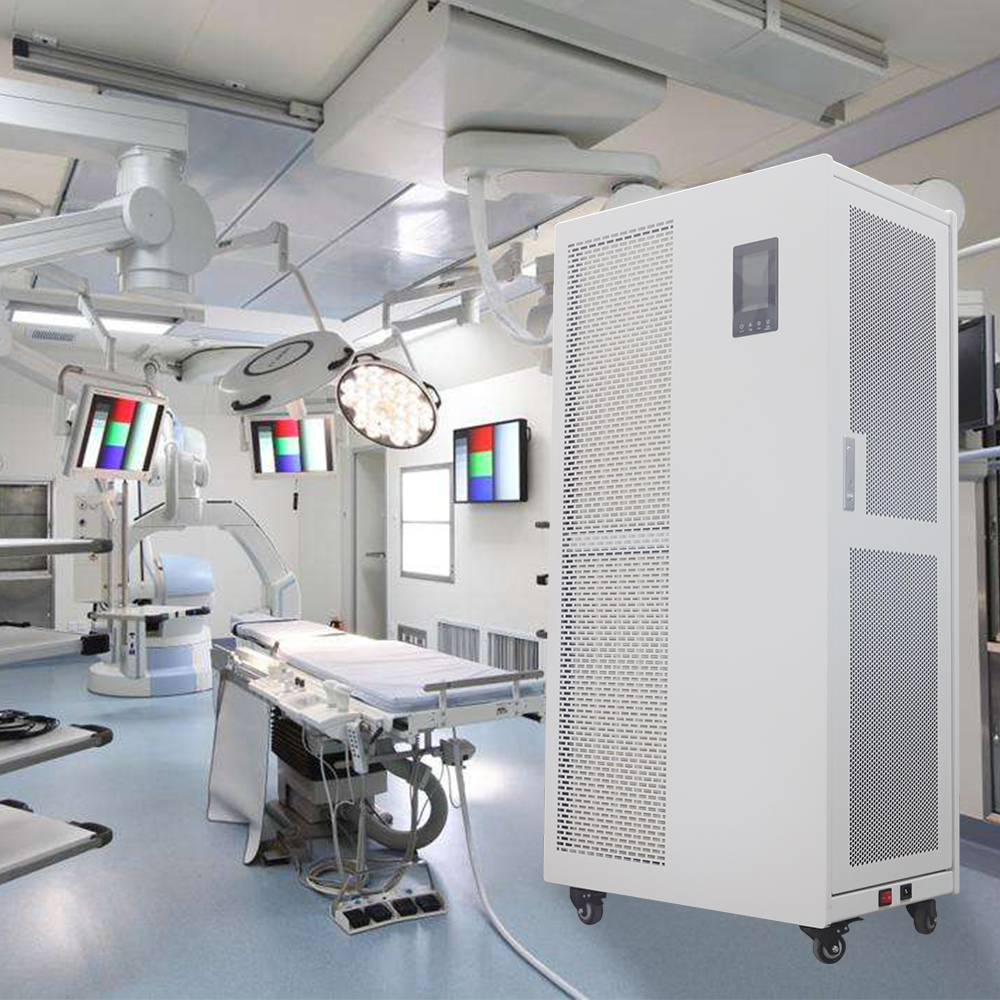
Yes — medical air purifiers can significantly reduce the risk of airborne infections in healthcare facilities when properly selected and deployed. Clinical evidence consistently shows that hospital-grade air purifiers equipped with HEPA filtration and UV-C sterilization are capable of removing more than 99.97% of airborne particles as small as 0.3 microns — including bacteria, viruses, mold spores, and fine particulate matter. For clinics, surgical suites, isolation wards, and patient rooms, a medical air purifier is no longer optional equipment; it is a frontline infection control tool.
Content
- 1 The Infection Risk Hidden in Healthcare Air
- 2 What Makes a Medical Air Purifier Different from a Consumer Model
- 3 Core Technologies Inside a HEPA Medical Air Purifier
- 4 Medical Air Purifier for Clinics: Room-by-Room Application Guide
- 5 Key Metrics to Evaluate When Choosing a Hospital Grade Air Purifier
- 6 Evidence: How Air Purification Reduces Infection Rates
- 7 About Ningbo Yinyu Purification Technology Co., Ltd
- 8 Frequently Asked Questions
The Infection Risk Hidden in Healthcare Air
Healthcare-associated infections (HAIs) affect an estimated 1 in 31 hospital patients on any given day, according to the U.S. Centers for Disease Control and Prevention. A significant proportion of these infections are transmitted via airborne or droplet routes — meaning the quality of indoor air directly influences patient safety outcomes.
Pathogens commonly found suspended in healthcare facility air include:
- Mycobacterium tuberculosis — the airborne bacterium responsible for tuberculosis, which can remain viable in air for hours
- Aspergillus fungal spores — a particular threat to immunocompromised patients in oncology and transplant wards
- SARS-CoV-2 and influenza virions — respiratory viruses that travel on aerosol particles and persist in poorly ventilated spaces
- Staphylococcus aureus (MRSA) — carried on skin cells and dispersed into the air through routine patient care activities
A hospital-grade air purifier with true HEPA filtration directly addresses these risks by continuously cycling and cleaning room air, reducing the concentration of viable pathogens in the breathing zone.
What Makes a Medical Air Purifier Different from a Consumer Model
Not all air purifiers meet the demands of a clinical environment. A true medical air purifier is engineered to standards that consumer devices cannot match. The key differences include:
| Feature | Medical Air Purifier | Consumer Air Purifier |
|---|---|---|
| Filtration Standard | True HEPA H13/H14 | HEPA-type or H10/H11 |
| Particle Removal Rate | >99.97% at 0.3 microns | 85–95% |
| UV-C Sterilization | Standard in clinical models | Optional / limited |
| CADR (Clean Air Delivery Rate) | High — suited for large clinical spaces | Moderate — designed for home rooms |
| Certification | ISO, CE, medical device standards | General consumer certification |
| Continuous Operation Rating | 24/7 duty cycle | Intermittent use |
| Noise Level | Low (patient comfort optimized) | Variable |
Core Technologies Inside a HEPA Medical Air Purifier
A high-performance HEPA medical air purifier typically combines multiple filtration stages to deliver comprehensive air cleaning. Understanding each stage helps healthcare administrators select the right unit for their setting.
Stage 1 — Pre-Filter
Captures large particles such as dust, hair, and lint. Protects the downstream HEPA filter from premature loading, extending its operational life and maintaining system efficiency.
Stage 2 — True HEPA H13/H14 Filter
The core filtration layer. H13-grade HEPA removes 99.95% of particles at 0.3 microns; H14 achieves 99.995%. This stage captures bacteria, fungal spores, and virus-laden aerosols — the primary vectors of HAIs.
Stage 3 — Activated Carbon Filter
Adsorbs volatile organic compounds (VOCs), chemical odors, and disinfectant fumes common in clinical environments. Hospitals routinely use chemical disinfectants that generate potentially harmful VOC levels; the carbon stage mitigates this secondary air quality concern.
Stage 4 — UV-C Germicidal Irradiation
UV-C light at 254nm wavelength disrupts the DNA of microorganisms, inactivating pathogens that pass through the filter stage. Studies show UV-C systems can achieve 99.9% inactivation of airborne influenza and coronavirus particles within a single pass. This stage adds a critical layer of redundancy for high-risk areas.
Stage 5 — Negative Ion or Plasma Emission (select models)
Some advanced medical air purifiers add ionization to cause ultrafine particles to agglomerate and fall out of the air column, further reducing the airborne burden in the breathing zone.
Figure 1: Approximate particle/pathogen removal efficiency per filtration stage in a multi-stage HEPA medical air purifier
Medical Air Purifier for Clinics: Room-by-Room Application Guide
Selecting the right medical air purifier for clinics requires matching the unit's CADR (Clean Air Delivery Rate) and filtration capability to the specific risk profile of each room type. Below is a practical deployment guide:
Waiting Rooms and Reception Areas
High foot traffic, mixed populations (including symptomatic patients), and prolonged seating make waiting rooms a primary transmission zone. A medical air purifier with a CADR sufficient to deliver at least 6 air changes per hour (ACH) is recommended for these spaces. Models with real-time air quality displays help staff respond dynamically to elevated particle counts.
Examination and Consultation Rooms
Close proximity between clinician and patient demands reliable airborne pathogen control. A compact hospital-grade air purifier with H13 HEPA and UV-C rated for the room's square footage ensures the air is turned over frequently enough to reduce the risk of short-range aerosol transmission.
Surgical Suites and Procedure Rooms
Operating environments require ISO Class 5 or better air cleanliness (fewer than 3,520 particles ≥0.5 microns per cubic meter). A hospital-grade air purifier integrated with the room's laminar airflow system provides supplemental protection, particularly during wound closure and instrument handling phases.
Isolation Rooms and Negative Pressure Wards
For patients with confirmed or suspected airborne communicable diseases, a HEPA medical air purifier positioned within the room itself provides continuous scrubbing independent of the building's ventilation infrastructure. This is especially valuable in retrofitted facilities where ducted negative pressure is not feasible. A minimum of 12 ACH is the standard recommendation from infection control guidelines for these rooms.
Dental Clinics
Dental procedures generate significant aerosol and spatter containing blood, saliva, and respiratory secretions. A high-CADR HEPA medical air purifier for clinics positioned near the dental chair can reduce the aerosol concentration in the room by over 80% within 15 minutes post-procedure, protecting both the next patient and clinical staff.
Key Metrics to Evaluate When Choosing a Hospital Grade Air Purifier
Healthcare procurement teams should evaluate hospital-grade air purifiers using the following criteria:
- CADR Rating — Match the unit's rated CADR to the room volume. As a guide: CADR (m³/h) = Room Volume (m³) × Target ACH.
- HEPA Grade — Insist on H13 or H14 certification. HEPA-type or "HEPA-like" filters do not meet clinical standards.
- Noise Level — Patient-facing rooms require units operating below 45 dB(A) at full speed to avoid disrupting rest and consultation.
- Filter Replacement Interval — Longer intervals reduce maintenance burden; confirm with manufacturer data for clinical loading conditions.
- Certifications — Verify ISO 9001 quality management certification and relevant medical device or safety standards for your market (CE, FDA clearance, etc.).
- Continuous Duty Cycle — The unit must be rated for 24/7 uninterrupted operation without performance degradation.
- Real-Time Monitoring — Units with integrated PM2.5 sensors and air quality indicators enable data-driven infection control decisions.
Evidence: How Air Purification Reduces Infection Rates
The clinical evidence supporting the use of medical air purifiers in infection control is substantial and growing:
- A study published in the journal Infection Control & Hospital Epidemiology found that portable HEPA filtration units reduced airborne fungal spore counts by over 90% in hematology wards, correlating with a significant reduction in invasive fungal infections among neutropenic patients.
- Research during the COVID-19 pandemic demonstrated that HEPA air purifiers running in hospital corridors reduced SARS-CoV-2 RNA detection in air samples by up to 93%.
- A UK National Health Service evaluation found that deploying portable HEPA purifiers in COVID-19 assessment areas reduced staff infection risk substantially during high-prevalence periods.
- In dental clinic settings, studies confirm that high-CADR medical air purifiers reduced total bacterial counts in room air by 75–85% when operated continuously during clinic hours.
Figure 2: Estimated airborne pathogen reduction as a function of air changes per hour (ACH) achieved by a HEPA medical air purifier
About Ningbo Yinyu Purification Technology Co., Ltd
Ningbo Yinyu Purification Technology Co., Ltd is a professional China medical air purifier manufacturer and OEM medical air purifier factory. The company integrates production and trade, with a comprehensive focus on manufacturing and distributing household appliances, household appliance parts, medical equipment, and disinfection equipment.
Wholesale medical air purifiers from Yinyu have passed ISO 9001 quality management system certification, reflecting a company-wide commitment to process discipline and product reliability. The company operates its own advanced testing laboratory equipped with complete inspection instruments, ensuring that every unit meets rigorous quality benchmarks before leaving the production floor.
With an annual production capacity exceeding 300,000 units, Ningbo Yinyu is equipped to serve customers at any scale — from single-clinic procurement to large-scale hospital or distributor orders. Flexible OEM capabilities allow customers to specify configurations, branding, and compliance requirements suited to their target markets.