EN
EN
 English
 中文简体
中文简体
.png)
Quick Answer
A medical-grade HEPA air filter is a High-Efficiency Particulate Air filter that captures at least 99.97% of airborne particles 0.3 microns or larger — the standard defined by the U.S. Department of Energy (DOE) and referenced by the CDC and WHO for clinical environments. In a medical context, HEPA meaning goes beyond basic air cleaning: hospital HEPA filters must control airborne pathogens, surgical smoke, allergens, and fine particulate matter to protect patients with compromised immune systems, prevent healthcare-associated infections (HAIs), and maintain regulatory compliance in operating rooms, isolation wards, and cleanrooms.
Content
- 1 HEPA Medical Term: What "Medical-Grade" Actually Means
- 2 How Does a Medical HEPA Filter Actually Capture Particles?
- 3 HEPA Filter Classification Standards: What the Grades Mean for Hospital Use
- 4 What Medical HEPA Filters Capture: Particle Types and Sizes in Clinical Environments
- 5 HEPA Filter in Hospital Settings: Where and Why It Is Required
- 6 Portable Medical HEPA Air Purifiers: Supplementing Fixed HVAC Filtration
- 7 How to Evaluate Medical HEPA Filtration Systems: A Buyer's Checklist
- 8 About Ningbo Yinyu Purification Technology Co., Ltd.
- 9 Frequently Asked Questions
HEPA Medical Term: What "Medical-Grade" Actually Means
The term HEPA — High-Efficiency Particulate Air — was originally developed during the Manhattan Project in the 1940s to filter radioactive dust. Today, in its medical application, the HEPA medical term describes a specific filtration classification and performance threshold that goes well beyond what consumer-grade air purifiers achieve.
When clinicians, facility managers, or procurement teams ask about medical HEPA filtration systems, they are referring to filters that meet all of the following criteria simultaneously:
- Particle capture efficiency: minimum 99.97% at the Most Penetrating Particle Size (MPPS) of 0.3 microns, per DOE STD-3020 and EN 1822 standards.
- Construction materials: non-outgassing, non-shedding filter media — typically borosilicate glass fiber or synthetic microfiber — that will not introduce secondary contamination into a clinical airstream.
- Structural integrity under continuous operation: rated for the airflow volumes and differential pressures of HVAC-integrated or portable medical air handling units without media bypass or frame leakage.
- Third-party testing and traceability: each filter unit scan-tested to confirm no pinholes or leakage paths that would allow unfiltered air to bypass the media — a requirement absent from residential HEPA products.
The critical distinction: a consumer product labeled "HEPA-type" or "HEPA-style" may capture only 85–99% of particles and is not subject to individual scan testing. In a hospital or clinical environment, that 0.03%–15% gap in capture efficiency can represent thousands of pathogen-sized particles passing into a patient zone every hour. Only filters meeting the true HEPA standard belong in medical settings.
How Does a Medical HEPA Filter Actually Capture Particles?
Unlike a simple sieve that blocks particles larger than its pore size, a HEPA filter works through three simultaneous physical mechanisms operating across different particle size ranges. Understanding this explains why 0.3 microns is the hardest particle size to capture — and why the 99.97% standard is defined at exactly that size.
Inertial Impaction
Large particles (above ~1 micron) have sufficient mass that they cannot follow the air streamlines curving around filter fibers. Their inertia carries them into direct contact with the fiber, where they are captured. This mechanism becomes less effective as particle size decreases.
Diffusion (Brownian Motion)
Very small particles (below ~0.1 micron) are so light that gas molecule collisions cause them to move erratically (Brownian motion). This random path increases their probability of contacting a fiber. The smaller the particle, the more pronounced this effect — which is why ultrafine particles are actually easier to capture than mid-sized ones.
Interception
Particles in the mid-range (0.1–1 micron) that follow air streamlines closely enough to avoid impaction may still contact a fiber as they pass within one particle radius of it. This direct physical contact — interception — captures the intermediate size range that neither impaction nor diffusion handles efficiently.
The 0.3-micron MPPS sits at the crossover point where neither diffusion nor impaction is dominant — the particle is too small for reliable impaction but too large for strong diffusion effects. This is precisely why medical HEPA filters are rated at this size: if the filter achieves 99.97% at the hardest-to-capture particle size, it performs at least as well at all other particle sizes. Bacteria (0.5–5 microns), mold spores (1–30 microns), and many viral aerosol droplet nuclei (0.1–5 microns) all fall within the range where HEPA filtration is highly effective.
HEPA Filter Classification Standards: What the Grades Mean for Hospital Use
Different regulatory frameworks use different grading systems. A procurement team sourcing a hospital filter needs to understand how the U.S. DOE/ASHRAE standard, European EN 1822, and ISO 29463 grades relate to each other — and which grade is required for specific hospital areas.
| EN 1822 Grade | Min. Efficiency (MPPS) | Classification | Typical Hospital Application |
|---|---|---|---|
| H10 | 85% | Not true HEPA | Pre-filtration only |
| H11 | 95% | Not true HEPA | General ventilation pre-filter |
| H13 | 99.95% | True HEPA | ICU, isolation rooms, OR, patient wards |
| H14 | 99.995% | True HEPA | Transplant units, sterile compounding, ISO Class 5 cleanrooms |
| U15 | 99.9995% | ULPA | Biosafety Level 3/4 labs, nuclear medicine |
| U16–U17 | 99.99995%+ | ULPA | Semiconductor-grade cleanrooms, specialized research |
Practical guidance: For most hospital applications — including general wards, emergency departments, and outpatient clinics — H13-rated medical HEPA filtration systems are the recognized baseline. Bone marrow transplant units, oncology wards, and spaces housing patients with severe immunosuppression typically require H14. Always consult your applicable building code and infection control guidelines (e.g., ASHRAE 170, HTM 03-01 in the UK, or local health authority standards) to confirm the required grade for each specific clinical zone.
What Medical HEPA Filters Capture: Particle Types and Sizes in Clinical Environments
To understand why a hospital HEPA filter matters, it helps to see exactly what contaminants circulate in clinical air — and where each falls relative to HEPA's 0.3-micron capture benchmark.
Medical HEPA Capture Rate by Airborne Contaminant Type
It is worth noting that HEPA filtration captures virus-laden respiratory droplet nuclei — the 1–5 micron particles that carry the highest infectious load after evaporation — with efficiency exceeding 99.97%. While individual virions (0.02–0.3 microns) are theoretically below the HEPA rating size, free-floating isolated virions rarely exist in clinical air; they are almost always attached to larger carrier particles that HEPA captures with high efficiency.
HEPA Filter in Hospital Settings: Where and Why It Is Required
Not every room in a healthcare facility has the same air quality requirement. The application of a hospital HEPA filter is mapped to infection risk level, patient vulnerability, and the type of procedures performed. Here is how medical HEPA filtration is deployed across different clinical zones.
Operating Rooms and Surgical Suites
HEPA filtration combined with unidirectional (laminar) airflow is required in most OR standards worldwide. ASHRAE 170 mandates a minimum of 20 air changes per hour (ACH) total with at least 4 ACH of outside air, supplied through HEPA filters. The goal is to maintain a particle-clean environment at the surgical field — reducing surgical site infection (SSI) rates, which affect approximately 2–5% of patients undergoing invasive procedures without adequate air control.
Airborne Infection Isolation (AII) Rooms
Patients with confirmed or suspected airborne diseases (tuberculosis, measles, varicella, SARS-CoV-2 in aerosol-generating procedures) are placed in negative-pressure isolation rooms. These rooms exhaust air through HEPA filters before it re-enters the HVAC system or is released outdoors, preventing pathogen spread to adjacent spaces. The CDC and WHO both specify H13-equivalent HEPA for AII room exhaust filtration.
Immunocompromised Patient Units
Hematology wards, bone marrow transplant units, and oncology departments housing patients undergoing chemotherapy require HEPA-filtered positive-pressure rooms. These protective environment (PE) rooms prevent environmental fungi — particularly Aspergillus species, which are responsible for life-threatening invasive aspergillosis in immunosuppressed patients — from reaching the patient. Studies show HEPA filtration reduces fungal infection incidence by 50–80% in high-risk hematology populations.
Pharmacy Cleanrooms and Sterile Compounding Areas
Hospital pharmacies preparing sterile injectable drugs operate under USP 797 (U.S.) or equivalent standards that require ISO Class 5 (100 particles/m³ at 0.5 microns) cleanroom environments — achievable only with HEPA-filtered laminar airflow workstations and HEPA-supplied room ventilation. A contaminated IV preparation is a direct patient safety risk; HEPA filtration is the primary environmental control preventing microbial contamination at the point of drug compounding.
Portable Medical HEPA Air Purifiers: Supplementing Fixed HVAC Filtration
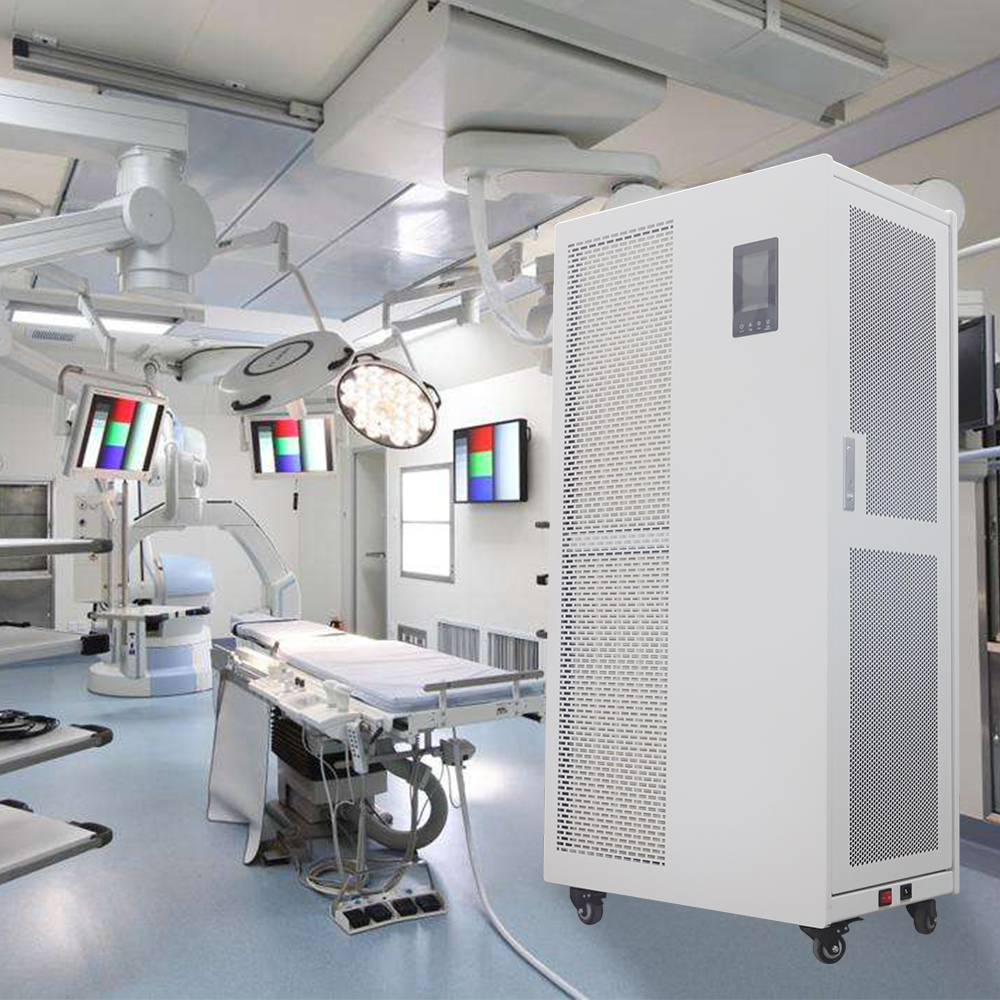
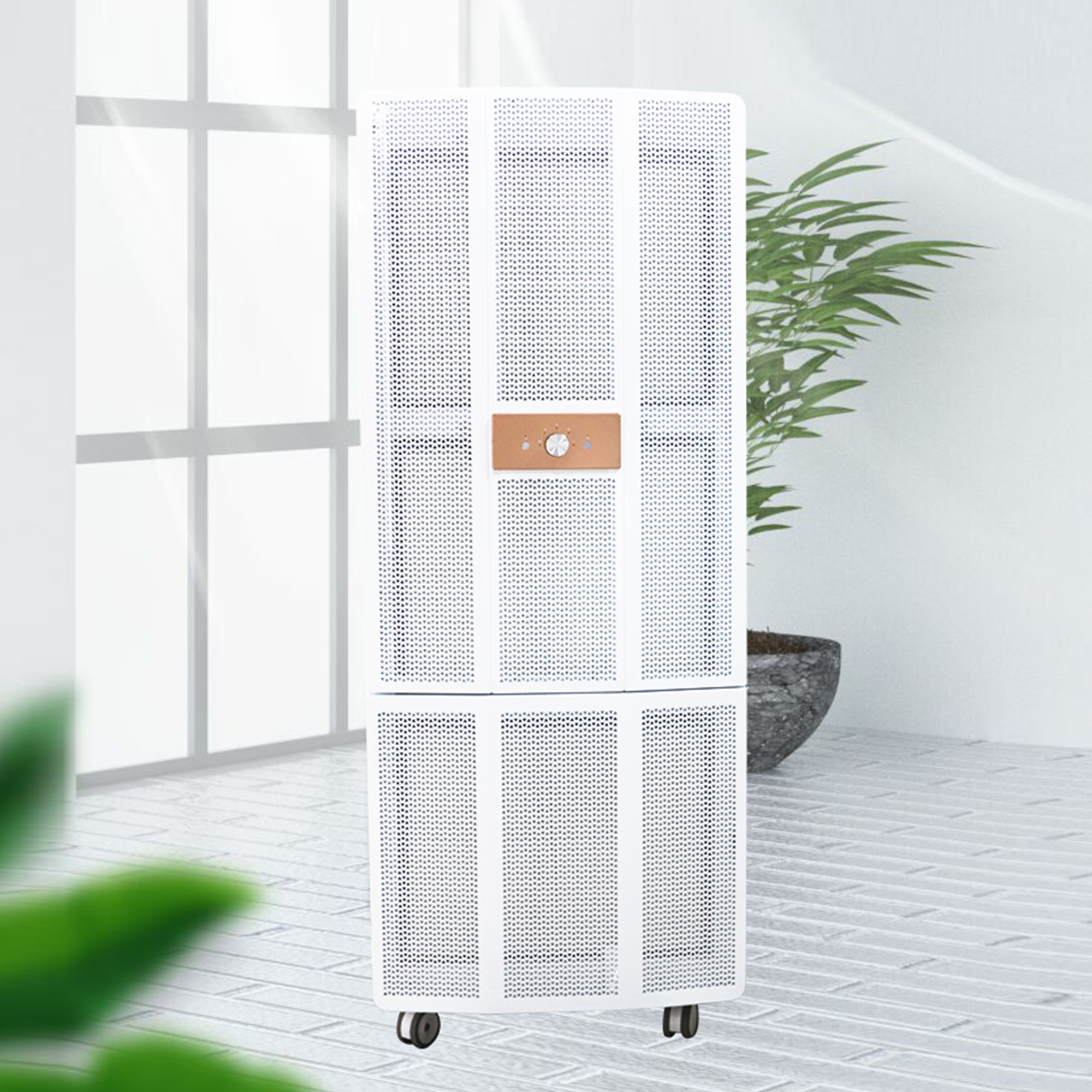
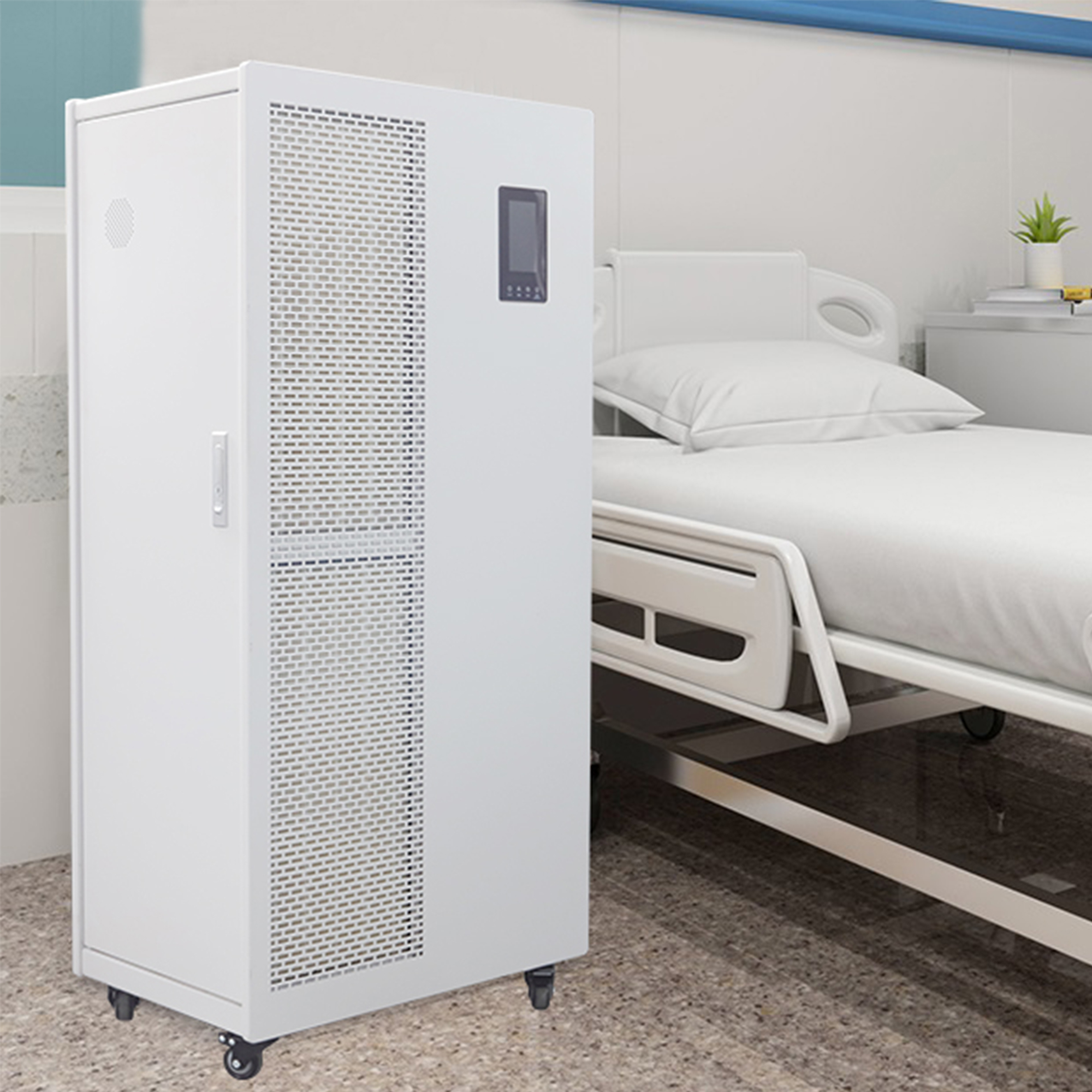
Fixed HVAC-integrated HEPA systems are the backbone of hospital air quality control, but standalone portable medical air purifiers with medical HEPA filters serve an important supplementary role — particularly during construction or renovation activities, in older facilities with legacy HVAC systems, or in temporary clinical spaces.
When evaluating a portable medical HEPA filtration system for clinical use, the key specifications to verify are:
- CADR (Clean Air Delivery Rate): must be sufficient to achieve 12+ ACH in the target room. A 20 m² isolation room with 2.7m ceilings has a volume of 54 m³ — requiring a CADR of at least 648 m³/h (380 CFM) for 12 ACH.
- True H13 or H14 filter classification: confirmed by third-party test documentation, not self-declaration. Medical procurement teams should request the EN 1822 test report for each filter lot.
- Low noise output: clinical environments require units operating below 50 dB(A) at maximum clinical fan speed to avoid disrupting patient rest and staff communication.
- Filter change indicator and serviceability: medical HEPA filters in portable purifiers should be replaceable without tools, with a clear filter life indicator to prevent continued operation after the filter is exhausted.
- No ozone or ionizer output: some air purifiers generate ozone as a byproduct of UV or ionization stages. Ozone is a known respiratory irritant and is contraindicated in clinical environments. Medical units should carry certification confirming ozone output below 0.05 ppm (FDA limit for medical devices).
Air Changes Per Hour (ACH) vs Estimated Airborne Infection Risk Reduction (%)
Risk reduction increases sharply between 6 and 18 ACH. HEPA-filtered air changes above 12 ACH deliver diminishing but clinically meaningful incremental benefits in high-risk areas.
How to Evaluate Medical HEPA Filtration Systems: A Buyer's Checklist
Whether you are a hospital facility manager, infection control officer, or procurement specialist sourcing medical HEPA filtration systems at scale, use the following checklist to evaluate suppliers and products.
- Verify filter grade documentation. Request the EN 1822 or ISO 29463 test certificate with the individual filter's scan test result — not just a product data sheet stating the grade. H13 or H14 certification should be traceable to a recognized third-party laboratory.
- Confirm regulatory clearances for the device category. In the U.S., portable medical air purifiers used in clinical settings may require FDA 510(k) clearance depending on their intended use claims. In the EU, CE marking under the Medical Devices Regulation (MDR 2017/745) or as a general product may apply.
- Calculate CADR against room ACH requirements. Match the purifier's CADR to the specific room volume and required ACH for the clinical zone. Do not rely on manufacturer room size claims without independently verifying the CADR figure against your facility's actual room dimensions and ceiling heights.
- Evaluate total cost of ownership. Medical HEPA filters typically require replacement every 12–24 months in continuous clinical use, depending on particulate load. Factor replacement filter availability, lead time, and the number of filter stages (pre-filter, HEPA, activated carbon) into the full-life cost evaluation.
- Assess supplier production capacity and quality systems. For wholesale or institutional procurement of medical HEPA filtration systems, verify the manufacturer's annual production capacity, ISO 9001 or ISO 13485 quality management certification, and their capability to supply consistent filter lots with batch traceability — essential for healthcare facility audit compliance.
About Ningbo Yinyu Purification Technology Co., Ltd.
Ningbo Yinyu Purification Technology Co., Ltd. is a professional OEM/ODM manufacturer integrating production and trade, dedicated to the R&D, manufacturing, and sale of household appliances, household appliance components, medical equipment, and disinfection equipment — including HEPA filter air purifiers for both domestic and clinical applications.
Located in Cixi City, Zhejiang Province — recognized as China's hometown of small household appliances — the factory covers more than 30,000 square meters, positioned close to Ningbo Port and the Hangzhou Bay Bridge for efficient global logistics. The company operates a professional R&D team, automated production technology, multiple intellectual property rights, and international certifications, forming a diversified domestic production base for small household appliances and medical equipment.
Annual production capacity reaches 300,000 small household appliances and 100,000 medical devices, supported by high-end standardized laboratories. As trusted Medical Air Purifier Suppliers and Medical Purifier Manufacturers, Ningbo Yinyu exports primarily to the United States, Germany, Japan, South Korea, Spain, Italy, the United Kingdom, Australia, and Canada — serving large supermarkets, medical institutions, and online distribution channels across dozens of countries.
For procurement teams seeking Medical Purifier Wholesale programs, OEM customization, or institutional supply agreements for HEPA-grade air purification equipment, Ningbo Yinyu's engineering and supply chain teams provide application-matched product specifications, full quality documentation, and flexible production scheduling to meet both standard and custom clinical air quality requirements.