EN
EN
 English
 中文简体
中文简体
.png)
Yes — a medical air purifier can remove cigarette smoke effectively, provided it combines a true HEPA filter with an activated carbon stage. Cigarette smoke is a complex mixture of fine particulate matter (PM2.5 and smaller), volatile organic compounds (VOCs), carbon monoxide, and over 4,000 chemical compounds. No single filter type captures all of these, which is why medical-grade systems use multi-stage filtration designed to address both particles and gases simultaneously.
A Medical Air Purifier built to clinical standards — typically H13 or H14 HEPA classification — captures 99.95% or more of airborne particles at 0.3 microns, which includes the fine particulate fraction of smoke. The activated carbon layer then adsorbs odor molecules and gaseous pollutants that pass through the HEPA stage. Together, these two filtration stages make a medical-grade system the most reliable solution for households or facilities affected by cigarette smoke.
Content
- 1 What Makes Cigarette Smoke Difficult to Remove from Indoor Air
- 2 How Medical Air Purifiers Are Different from Standard Consumer Models
- 3 Understanding CADR and Room Coverage for Smoke Removal
- 4 Where Medical Air Purifiers Work Best Against Cigarette Smoke
- 5 The Filtration Stages That Matter for Smoke
- 6 Filter Maintenance: What Smoke Does to Medical Air Purifier Filters
- 7 Placement and Operation Tips to Maximize Smoke Removal
- 8 About Ningbo Yinyu Purification Technology Co., Ltd.
- 9 Frequently Asked Questions
What Makes Cigarette Smoke Difficult to Remove from Indoor Air
Cigarette smoke presents a greater purification challenge than most common indoor pollutants because it contains contaminants across multiple physical states — fine solid particles, liquid aerosol droplets, and gaseous chemicals — all simultaneously.
The Particle Problem
The majority of smoke particles fall between 0.1 and 1.0 microns in diameter — well within the range that standard air filters struggle to capture efficiently. These ultrafine particles penetrate deep into lung tissue and remain suspended in room air for hours. A true HEPA filter with H13 classification captures particles down to 0.3 microns at 99.95% efficiency, directly addressing this fraction.
The Gas and Odor Problem
Alongside particles, cigarette smoke releases hundreds of gaseous compounds — including formaldehyde, acrolein, benzene, and nicotine vapor. These molecules are far smaller than particles and pass through HEPA media without resistance. Only an activated carbon adsorption stage captures gases and odors. Medical-grade systems typically use 2–5 kg of activated carbon granules per unit, providing the surface area needed to adsorb gaseous pollutants over extended operation cycles.
Secondhand and Thirdhand Smoke
Secondhand smoke remains airborne in an unventilated room for up to 2–3 hours after a cigarette is extinguished. Thirdhand smoke — residual particles and chemicals that settle onto surfaces — re-enters the air through resuspension. A Medical Grade Air Purifier For Home Use running continuously at appropriate air change rates significantly reduces both airborne secondhand smoke and the resuspension of settled residue.
How Medical Air Purifiers Are Different from Standard Consumer Models
The term "air purifier" covers a wide range of products, from basic single-filter units to multi-stage medical-grade systems. The differences that matter for cigarette smoke removal are substantial.
| Feature | Medical Air Purifier | Standard Consumer Unit |
|---|---|---|
| HEPA Classification | H13 or H14 (True HEPA) | H10–H12 or "HEPA-type" |
| Particle Capture Efficiency | 99.95%+ at 0.3 µm | 85–99% (variable) |
| Activated Carbon Stage | 2–5 kg granular carbon | Thin carbon mesh / minimal |
| CADR (Smoke) | 200–600+ m³/h | 80–200 m³/h typical |
| Sealing / Leakage | Fully sealed housing, tested | Often unsealed, bypass leakage |
| Certifications | ISO, CE, medical device standards | Varies; often self-certified |
Housing seal integrity is a factor that is rarely discussed but critically important. A HEPA filter installed in an unsealed housing allows unfiltered air to bypass the filter media entirely. Medical-grade units are designed and tested to eliminate bypass leakage, ensuring that all air passing through the unit is actually filtered.
Understanding CADR and Room Coverage for Smoke Removal
Clean Air Delivery Rate (CADR) is the most practical metric for evaluating whether a purifier can handle cigarette smoke in a specific room. CADR measures the volume of clean air delivered per hour for a specific pollutant type. Smoke CADR is separately rated from dust and pollen CADR because particle size distributions differ.
For effective smoke control, a purifier should achieve at least 5 air changes per hour (ACH) in the target room. The formula is straightforward:
Required CADR (m³/h) = Room Volume (m³) × Target ACH
For example, a 30 m² room with 2.7 m ceiling height has a volume of 81 m³. To achieve 5 ACH, a CADR of at least 405 m³/h is needed. A HEPA Medical Air Purifier For Clinics or home use at this rating ensures smoke is continually diluted and removed before concentrations reach harmful levels.
Where Medical Air Purifiers Work Best Against Cigarette Smoke
Different environments have different smoke exposure profiles, and matching the purifier specification to the space is critical for real-world performance.
Home Bedrooms and Living Spaces
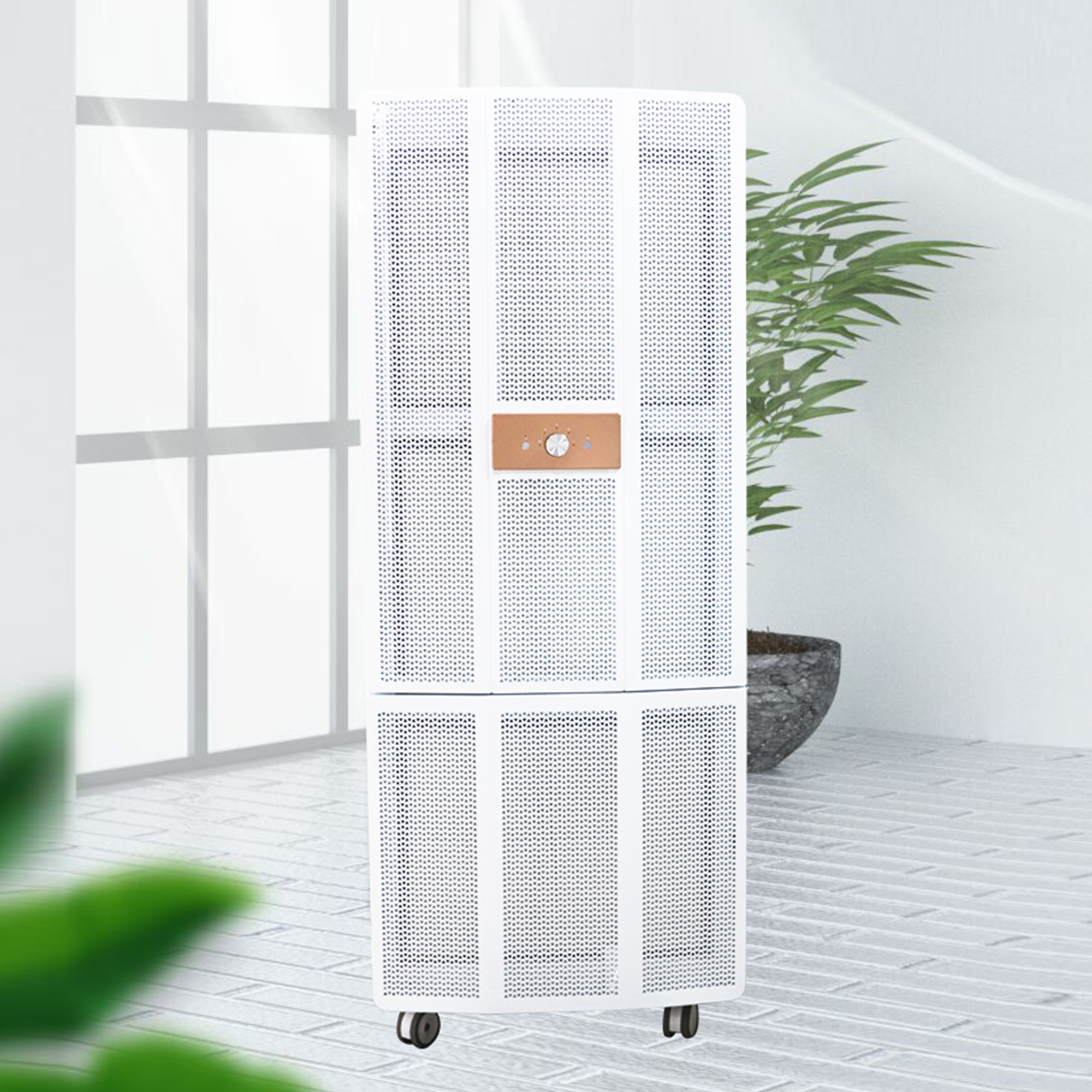
A Quiet Medical Air Purifier For Bedroom use must balance filtration capacity with low noise output. Medical-grade units with EC motor technology operate at 25–35 dB on low speed — comparable to a whisper — while still cycling room air 3–4 times per hour on the lowest fan setting. For bedrooms where smoke drifts in from adjacent rooms or hallways, this provides continuous background protection without disrupting sleep.
Clinical Waiting Rooms and Reception Areas
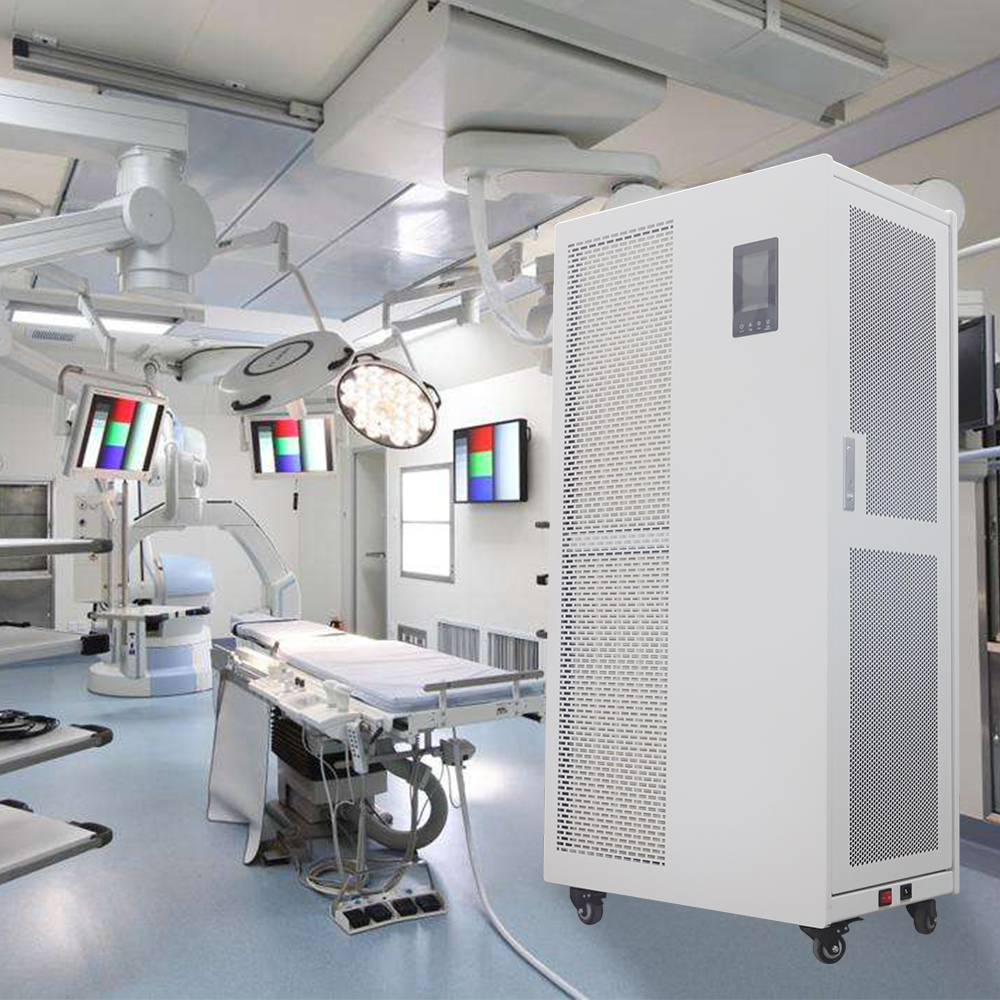
A HEPA Medical Air Purifier For Clinics addresses not only smoke but also the broader infection control requirement in healthcare settings. Clinical units are typically specified at 6–12 ACH to meet infection control guidelines, which simultaneously provides robust smoke and odor removal for facilities near smoking areas or in buildings with poor compartmentalization.
Hotel Rooms and Hospitality Spaces
Hospitality environments face both active smoking residue and persistent thirdhand smoke embedded in furnishings. A medical-grade unit running at full CADR for 2–4 hours after a guest checks out measurably reduces airborne smoke compounds before the next occupant arrives, improving air quality in a way that surface cleaning alone cannot achieve.
The Filtration Stages That Matter for Smoke
A complete medical-grade system for cigarette smoke should include at least three filtration stages, with an optional fourth for additional chemical protection:
- Pre-filter (G3/G4 grade): Captures large particles — hair, lint, visible dust — protecting the HEPA filter and extending its service life by 30–50%
- Activated carbon filter: Adsorbs VOCs, formaldehyde, benzene, nicotine vapor, and the odor compounds that give cigarette smoke its persistent smell. Granular carbon with high surface area (typically 800–1,200 m²/g) outperforms carbon-impregnated foam or thin mesh
- H13 True HEPA filter: Captures 99.95%+ of fine particles including smoke aerosol droplets, tar particles, and combustion byproducts at 0.3 microns
- UV-C germicidal stage (optional): Inactivates bacteria and viruses carried on smoke particles — particularly relevant in clinical or shared living environments
Filter Maintenance: What Smoke Does to Medical Air Purifier Filters
Cigarette smoke is considerably harder on filter media than typical household dust. Tar and sticky aerosol particles load the HEPA filter faster, while VOCs saturate the activated carbon more rapidly than in smoke-free environments. Understanding how this affects maintenance schedules is important for consistent performance.
- Pre-filter: In smoky environments, inspect and clean every 2–4 weeks instead of the standard 4–6 weeks. A clogged pre-filter reduces airflow and CADR by up to 40%
- Activated carbon filter: Replace every 3–6 months with heavy smoke exposure, versus the standard 6–12 months in smoke-free use. A saturated carbon filter releases previously adsorbed gases back into the room air
- HEPA filter: Replace every 12–18 months with continuous operation in a smoky environment. Visual yellowing or browning of the filter face is a clear indicator of heavy particulate loading
Medical-grade units with filter life indicators and airflow monitoring alert users when filter replacement is needed based on actual measured pressure drop — a more reliable trigger than calendar schedules alone.
Placement and Operation Tips to Maximize Smoke Removal
Even the highest-rated Medical Grade Air Purifier For Home Use will underperform if placed or operated incorrectly. The following practical guidelines apply to all spaces:
- Place near the source: Position the unit within 2–3 meters of where smoking occurs. Capturing smoke at the source before it disperses through the room dramatically reduces the concentration the filter must process
- Keep doors and windows closed: Open windows introduce unfiltered outdoor air and reduce the effective ACH the purifier can achieve. In smoke-heavy situations, close the room and run the unit at its highest fan speed
- Avoid corners and enclosed spaces: Place the unit where its intake can draw from a wide area. Corner placement restricts airflow on two sides and reduces effective CADR by 15–25%
- Run continuously at medium speed rather than intermittently at high: Continuous operation maintains a consistently low particulate baseline. Running at maximum speed only after a smoking event allows peak concentrations to form and settle before the purifier responds
- Use auto mode when available: Purifiers with PM2.5 sensors and auto-response functions automatically increase fan speed when smoke is detected and return to quiet mode when air quality recovers
About Ningbo Yinyu Purification Technology Co., Ltd.
Ningbo Yinyu Purification Technology Co., Ltd. is a China-based Medical Air Purifier manufacturer and OEM Medical Air Purifier factory, integrating production and trade. The company is dedicated to the manufacturing and selling of household appliances, household appliance parts, medical equipment, and disinfection equipment. Their wholesale Medical Air Purifiers have passed ISO9001 certification, and the company operates its own testing lab with advanced inspection equipment to ensure consistent product quality. With an annual production capacity exceeding 300,000 units, Ningbo Yinyu Purification Technology Co., Ltd. is capable of meeting the needs of customers across a wide range of purchase quantities.