EN
EN
 English
 中文简体
中文简体
.png)
Content
- 1 The Direct Answer: Yes — With the Right Technology and Placement
- 2 How Flu and Cold Viruses Travel Through Indoor Air
- 3 What Makes a Purifier "Medical Grade" — Key Filtration Standards
- 4 Clinical Evidence: What Studies Show About Airborne Pathogen Reduction
- 5 Where Medical Air Purifiers Deliver the Most Impact
- 6 How to Size and Position a Medical Air Purifier Correctly
- 7 HEPA Alone vs. Multi-Stage Filtration: What Additional Technologies Add
- 8 Limitations: What Medical Air Purifiers Cannot Do
- 9 Frequently Asked Questions
The Direct Answer: Yes — With the Right Technology and Placement
Medical air purifiers equipped with True HEPA filtration can meaningfully reduce the concentration of airborne flu and cold viruses in enclosed spaces. Research published in clinical infection control journals consistently shows that HEPA-grade air cleaning reduces airborne pathogen load by over 99% under controlled conditions. However, the degree of protection depends heavily on the purifier's filtration grade, its CADR (Clean Air Delivery Rate) relative to room size, and how it is positioned.
A medical air purifier is not a standalone shield against infection — handwashing, ventilation, and surface hygiene remain essential. But as a layer of airborne infection control, a properly specified HEPA medical air purifier is one of the most evidence-backed tools available, particularly in healthcare settings and high-occupancy indoor spaces.
How Flu and Cold Viruses Travel Through Indoor Air
Understanding why air purification matters starts with understanding how respiratory viruses spread. Influenza and rhinovirus (the primary cause of the common cold) transmit through two key airborne mechanisms:
- Large respiratory droplets — particles larger than 5 microns that travel up to 6 feet and settle quickly on surfaces.
- Aerosols (fine particles) — particles smaller than 5 microns that can remain suspended in indoor air for minutes to hours and travel much farther than droplets.
A landmark 2020 study in the journal Nature Communications confirmed that aerosol transmission of influenza is a primary infection route in poorly ventilated indoor spaces. Fine aerosol particles carrying viable flu virus have been detected in the air of hospital waiting rooms and offices up to 4.5 meters from the source. This is precisely the threat that a well-deployed hospital room air purifier is designed to address.
What Makes a Purifier "Medical Grade" — Key Filtration Standards
Not all air purifiers are equal. The term "medical grade" refers to a specific level of filtration efficiency. Here is how the main standards compare:
| Filter Standard | Minimum Particle Capture | Particle Size | Typical Application |
|---|---|---|---|
| MERV 8 | 70% | 3–10 microns | Residential HVAC |
| MERV 13 | 85% | 1–3 microns | Commercial buildings |
| True HEPA (H13) | 99.97% | 0.3 microns | Medical air purifiers, ICUs |
| ULPA (U15) | 99.9995% | 0.12 microns | Cleanrooms, operating theaters |
For flu and cold prevention, True HEPA (H13) is the practical standard of choice. Influenza virus particles range from 0.08 to 0.12 microns in diameter. While individual virus particles are smaller than HEPA's 0.3-micron test size, viruses travel attached to respiratory aerosol droplets and larger carrier particles — which fall firmly within HEPA capture range. A HEPA medical air purifier therefore effectively intercepts the delivery vehicle, not just the virus.
Clinical Evidence: What Studies Show About Airborne Pathogen Reduction
The evidence supporting medical air purifiers in infection control has grown substantially since 2020. Key findings include:
- A 2021 study in Aerosol Science and Technology found that HEPA air purifiers reduced airborne SARS-CoV-2 aerosol concentrations by up to 90% within 30 minutes in a simulated patient room environment.
- Research from the University of Cambridge (2022) demonstrated that two HEPA air purifiers placed strategically in a classroom reduced airborne aerosol concentration by 72–86% compared to ventilation alone.
- A hospital-based intervention study published in Journal of Hospital Infection found that deploying portable hospital room air purifiers in patient waiting areas reduced measured airborne microbial counts by 65% during peak occupancy hours.
- The CDC's guidance on engineering controls for healthcare settings specifically lists HEPA filtration as a recommended supplemental control for airborne and droplet-transmitted respiratory pathogens.
Where Medical Air Purifiers Deliver the Most Impact
The benefit of a hospital room air purifier or medical-grade unit scales with the concentration of people and the inadequacy of natural ventilation. The highest-priority environments include:
Healthcare Facilities
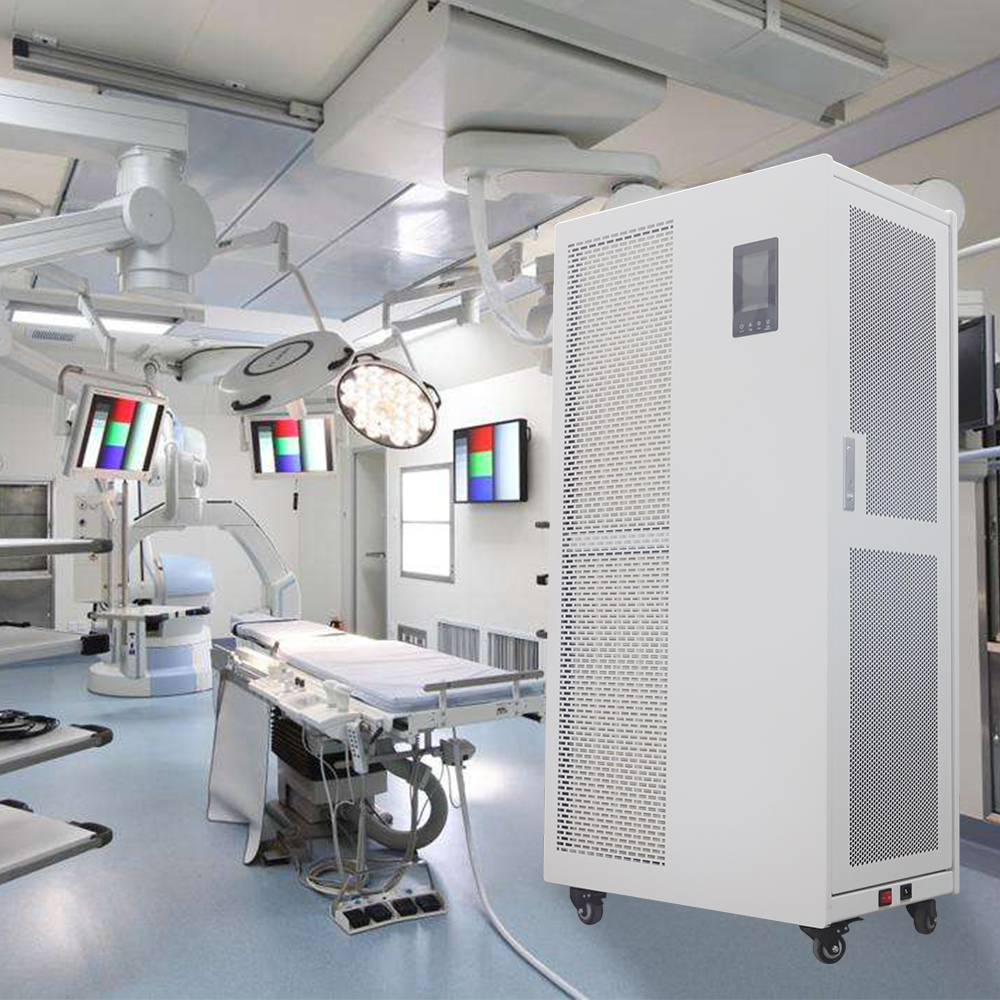
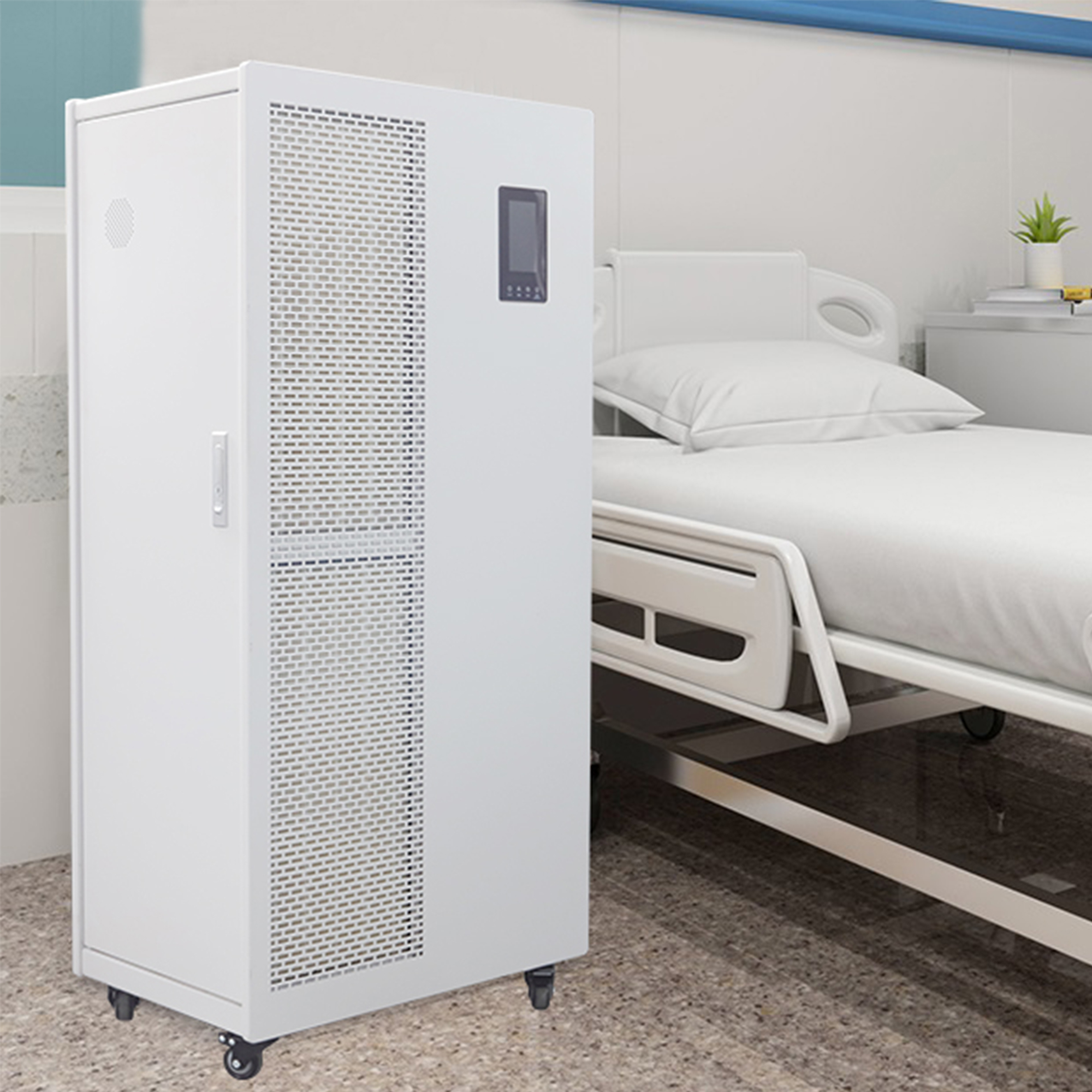
Hospital waiting rooms, emergency departments, and outpatient clinics mix symptomatic and healthy individuals in the same air space for extended periods. Deploying a hospital room air purifier with a CADR rated for the room's volume — and running it continuously — is a validated infection control measure. Isolation rooms for infectious patients typically require a minimum of 12 air changes per hour (ACH), which often requires supplemental portable HEPA units in addition to HVAC systems.
Schools and Childcare Centers
Children are the primary vectors for seasonal flu and rhinovirus spread into households. Classrooms with poor ventilation — a persistent issue in older school buildings — are high-risk environments. Studies in school settings have shown that portable HEPA air purifiers achieving 5–6 ACH can reduce respiratory illness absenteeism by 15–20% during peak flu season.
Offices and High-Occupancy Workplaces
Open-plan offices recirculate air continuously. A single symptomatic employee can seed airborne aerosols across a large shared space within an hour in a poorly ventilated environment. Positioning a medical air purifier near high-traffic zones — reception desks, meeting rooms, break rooms — provides targeted reduction of the local aerosol burden.
Residential Settings With Vulnerable Individuals
Households with elderly members, immunocompromised individuals, or infants face amplified consequences from flu and cold infections. Running a HEPA medical air purifier in shared living areas and bedrooms during illness season provides a meaningful additional layer of protection for these high-risk household members.
How to Size and Position a Medical Air Purifier Correctly
Even the highest-rated HEPA medical air purifier will underperform if it is undersized for the room or placed incorrectly. Follow these practical guidelines:
- Match CADR to room volume: For infection control, target at least 5–6 ACH. Multiply room volume (length × width × height in feet) by the target ACH, then divide by 60 to get the required CFM (cubic feet per minute) CADR rating.
- Place centrally and elevated: Aerosols accumulate in the breathing zone (roughly 3–6 feet above the floor). Placing the unit on a table or elevated surface — rather than on the floor — improves aerosol capture efficiency.
- Avoid corners and obstructions: Air must circulate freely around the unit's intake and exhaust. Keep at least 18 inches of clearance on all sides.
- Run continuously: Aerosol levels rebuild rapidly when a purifier is switched off. In high-risk settings, running the unit on medium or high continuously is more effective than intermittent operation.
- Replace filters on schedule: A clogged HEPA filter loses filtration efficiency and reduces airflow. Most medical-grade filters require replacement every 6–12 months under continuous operation.
HEPA Alone vs. Multi-Stage Filtration: What Additional Technologies Add
A True HEPA filter is the core of any effective medical air purifier. Several supplemental technologies are commonly integrated into medical-grade units to broaden their effectiveness:
UV-C Germicidal Irradiation
UV-C light at wavelengths of 254nm can inactivate virus RNA on contact. When integrated into a purifier's internal chamber — where air passes over the UV-C lamp after HEPA filtration — it provides an additional inactivation step for any viral particles that pass through the filter. Studies show that properly dosed UV-C chambers can achieve 99.9% inactivation of influenza virus in a single pass. Note: UV-C must be contained inside the unit; direct human exposure is harmful.
Activated Carbon Pre-Filter
Activated carbon layers capture volatile organic compounds (VOCs), odors, and some gaseous irritants that HEPA filters cannot trap. In healthcare environments, this reduces background chemical exposure from cleaning agents and contributes to overall indoor air quality — important for patient and staff respiratory health.
Pre-Filter for Coarse Particles
A washable pre-filter captures larger particles (dust, hair, large debris) before they reach the HEPA layer. This extends the working life of the primary HEPA filter significantly, reducing replacement frequency and maintaining consistent airflow over time.
Limitations: What Medical Air Purifiers Cannot Do
Being clear about limitations helps set realistic expectations and ensures air purification is used appropriately within a broader infection control strategy.
- Does not eliminate contact transmission: Air purifiers do not disinfect surfaces. A symptomatic person sneezing on a door handle is not addressed by air filtration.
- Cannot compensate for direct close-range exposure: If an infected person coughs directly at another individual from within 1 meter, the aerosol concentration is briefly very high — a purifier elsewhere in the room cannot intercept this in real time.
- Effectiveness drops in very large or poorly sealed spaces: Open-plan areas with high ceilings dilute CADR effectiveness. Infiltration from corridors or open doors continuously reintroduces aerosols.
- Requires consistent maintenance: A neglected, filter-saturated purifier can reduce airflow to the point where it provides minimal protection, while still appearing to operate normally.