EN
 English
 中文简体

Spec sheets from two HEPA air purifier suppliers can look almost identical: H13 filter, 99.97% efficiency, quiet night mode, four fan speeds. Then the sample arrives and the differences show up — a filter that bypasses its own frame, a fan curve that collapses once static pressure rises, or a CADR figure measured in a lab the buyer will never see.
This guide is written for the people who actually compare those samples: brand owners, importers, distributors, and procurement engineers sourcing HEPA air purifiers for residential, clinic, or commercial programs. It covers what HEPA grades really measure, how to size a unit to a room honestly, which construction details decide long-term performance, and what to check before you approve a factory.
Content
- 1 What a HEPA Rating Actually Tells You
- 2 HEPA Grades Side by Side
- 3 Sizing the Unit: CADR, Room Volume, and Air Changes
- 4 Filter Construction: Where Cheap Units Leak
- 5 When Particle Filtration Is Not Enough
- 6 How to Audit a HEPA Air Purifier Supplier
- 7 Cost of Ownership and Filter Life
- 8 Frequently Asked Questions
- 8.1 Q1. What does HEPA mean, and is H13 better than H14?
- 8.2 Q2. What CADR do I need for a given room?
- 8.3 Q3. How often should the HEPA filter be replaced?
- 8.4 Q4. Do HEPA purifiers remove odors and VOCs?
- 8.5 Q5. Can you manufacture HEPA air purifiers under our own brand?
- 8.6 Q6. What are the MOQ, lead time, and certification options?
What a HEPA Rating Actually Tells You
HEPA is a performance class, not a material, and the number printed on a retail box means little until you know which standard produced it.
In Europe and in most Asian export programs, filters are classified under EN 1822, which measures efficiency at the most penetrating particle size (MPPS) — usually somewhere in the 0.1 to 0.3 micron range, where a filter performs at its weakest. In North America, "True HEPA" generally refers to the older US convention of capturing 99.97% of particles at 0.3 micron. Neither phrase is a certification, and no authority issues a "True HEPA" certificate.
The distinction matters when quotes come in. The same filter tested at 0.3 micron will post a better figure than when tested at its MPPS. Ask every supplier three questions: which standard, which particle size, and which laboratory? Then ask whether the report covers the finished filter or only a flat sheet of media. A media report is not a filter report.
HEPA Grades Side by Side
The table below is the quickest way to spot a mismatch between a product's price and its claimed filtration class.
| Class | Efficiency at MPPS | Typical application | What to confirm |
|---|---|---|---|
| E11 (often sold as "H11") | ≥ 95% | Pre-filtration, entry-level home units | Formally an EPA class, not HEPA H13 |
| E12 | ≥ 99.5% | Household purifiers, replacement cartridges | Request the test report, not the label |
| H13 | ≥ 99.95% | Residential, office, clinic air purifiers | Grade, media area, frame and gasket quality |
| H14 | ≥ 99.995% | Hospital wards, cleanrooms, isolation rooms | Scan-tested filter plus sealed housing |
Grade drives cost in a way buyers often underestimate. Moving from E12 to H13 raises media cost and adds a finished-filter leak test; H14 adds more of both, plus stricter handling in assembly. A unit priced like an E11 filter will not contain a genuine H14 element. For projects where the specification calls for the higher class, compare H14 HEPA filtration systems on media area and seal design rather than on the label alone.
Sizing the Unit: CADR, Room Volume, and Air Changes
CADR (clean air delivery rate) is the only figure that combines filter efficiency with real airflow, which is why it is the number worth arguing about. China's GB/T 18801 and the US AHAM AC-1 method both express it as a volume of cleaned air per unit time — cubic meters per hour or cubic feet per minute, where 1 cfm is roughly 1.7 m³/h.
Rather than trusting a "recommended room size" sticker, calculate air changes per hour (ACH):
- Multiply floor area by ceiling height to get room volume in cubic meters.
- Divide the unit's CADR in m³/h by that volume.
- Target at least 4 ACH for bedrooms and living rooms; clinical, waiting, and teaching spaces generally need noticeably more.
A 30 m² room with a 2.5 m ceiling holds 75 m³. A unit rated 300 m³/h delivers about 4 air changes per hour there — acceptable for a bedroom, thin for a consultation room. Two further cautions: CADR is measured at maximum speed, so check the noise level at that speed, and confirm the CADR of the setting your customer will actually use overnight.
Filter Construction: Where Cheap Units Leak
Most performance failures in HEPA air purifiers are not media failures. They are frame, seal, and airflow-path failures.
- Media type. Glass microfiber holds efficiency under humidity and retains it after dust loading; melt-blown synthetic media is cheaper and adequate for lower grades.
- Media area. Pleat count multiplied by pleat depth sets the effective area. More area means lower pressure drop, so the fan moves more air at the same noise level.
- Frame and gasket. Cardboard, plastic, and aluminium frames all work — but the gasket must compress evenly against the housing. Any gap around the frame lets unfiltered air bypass the element entirely.
- Pleat separation. Hot-melt beads keep pleats open and prevent them collapsing under airflow.
- Leak testing. HEPA grades under EN 1822 require scan testing of the finished filter. Ask for the record, not a promise.
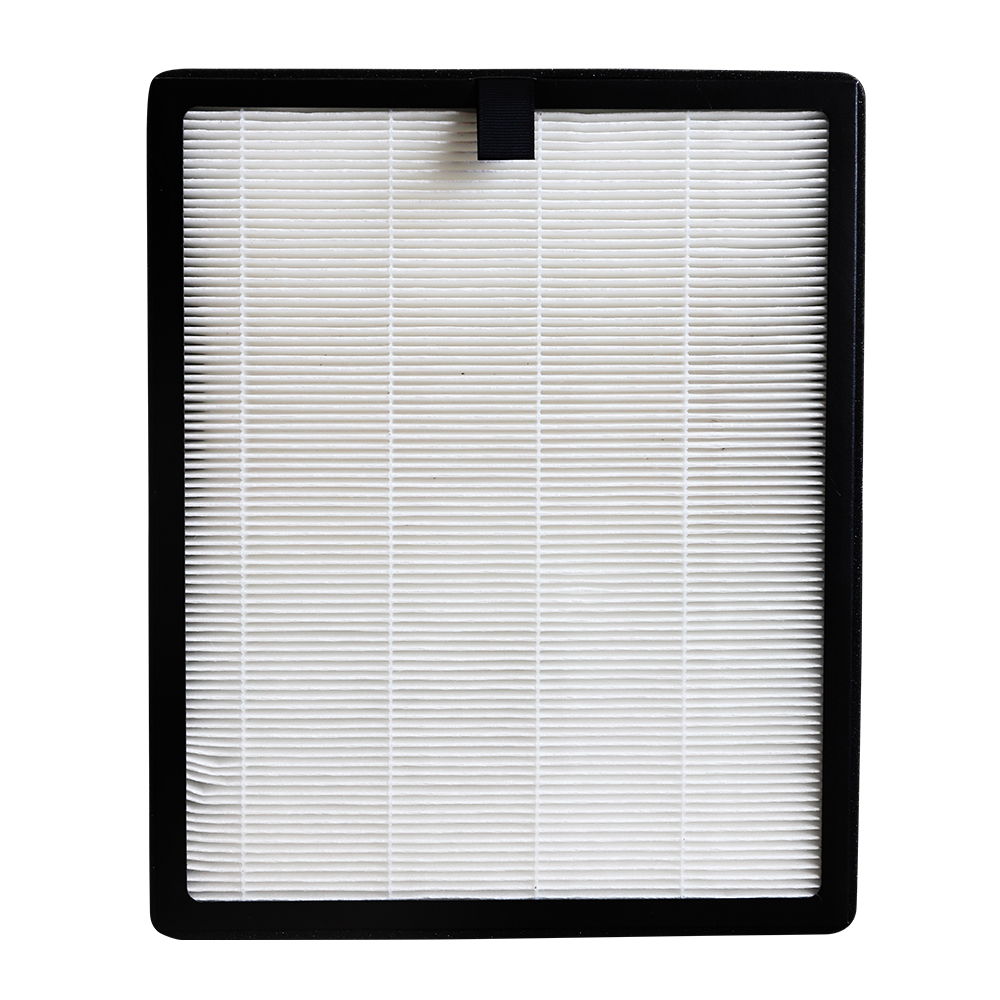 HEPA H13 Replacement Air Purifier FilterH13 replacement filter for air purifiers, rated to capture 99.95% of particles at 0.3 microns; customizable sizing and color options are available.View Product →
When Particle Filtration Is Not Enough
HEPA captures particles. It does not remove formaldehyde, cooking odors, or solvent vapors, and buyers who expect otherwise return the unit.
For gas-phase control, the useful specification is the mass of adsorbent, in grams, not the phrase "carbon layer." Impregnated activated carbon handles ammonia and amines; zeolite molecular sieve suits higher humidity; catalytic media can oxidize formaldehyde at room temperature without the spent-carbon disposal problem. For microbial load, UVC dose and lamp life matter more than lamp count. If the design uses ionization or plasma, request ozone emission data from a recognized test method such as UL 867 before approving the build.
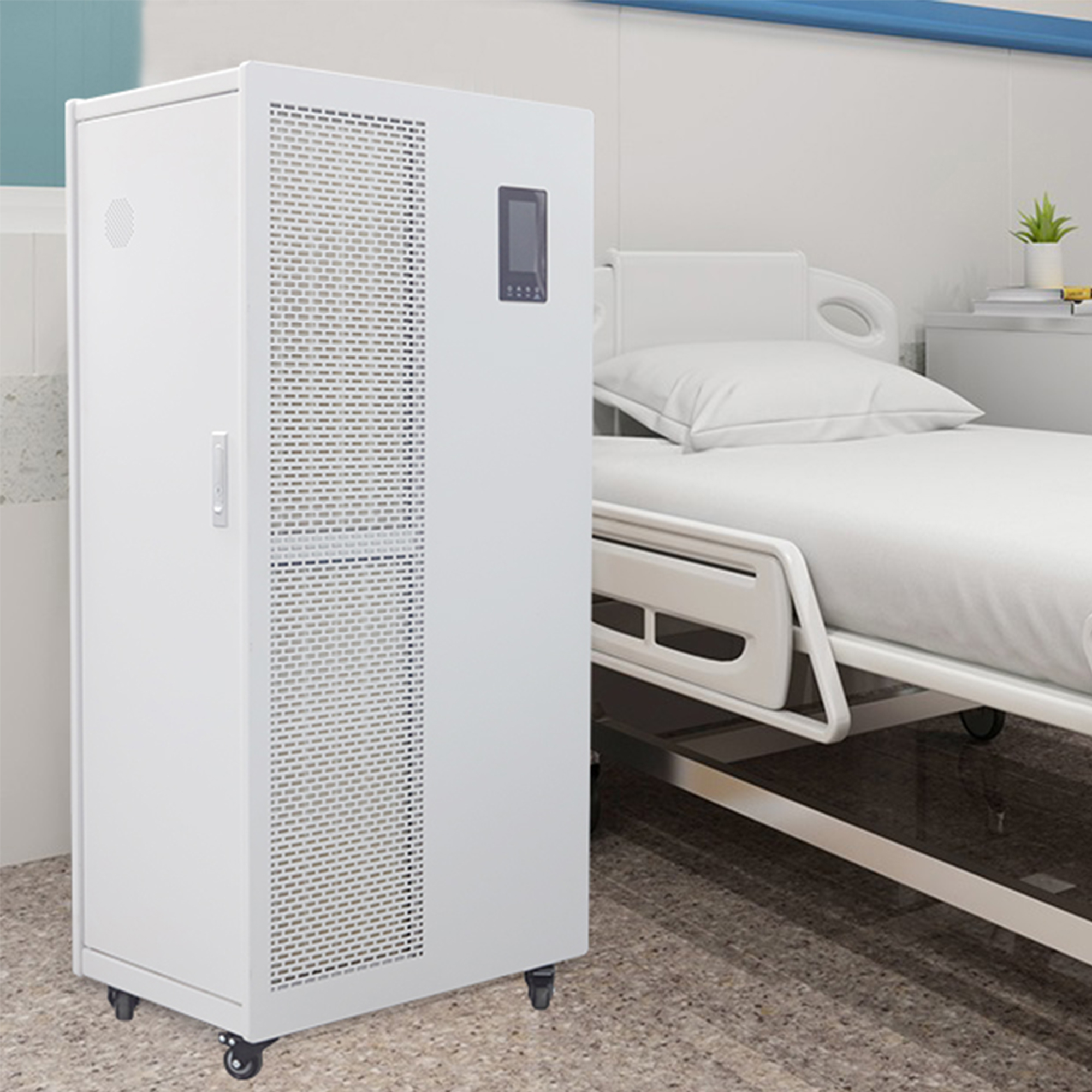
Where the target market includes clinics or wards, the gas-stage design should be reviewed alongside the particle stage — is the type of platform on which housing sealing and filter access are already engineered for that environment.
How to Audit a HEPA Air Purifier Supplier
A factory tour answers questions that catalogs cannot. Work through this list before placing a production order:
- Does the factory make its own filters, or buy them in? In-house pleating gives far more control over grade consistency.
- Is the manufacturing system certified to ISO 9001, and does the scope cover the specific product line you are buying?
- Are there finished-filter leak test records, CADR reports, and noise measurements for the exact configuration quoted?
- Can the supplier supply safety certification for your target market — CE or UKCA for Europe, ETL or equivalent for North America — on that model, not a sister model?
- How are tooling, control boards, and packaging handled for OEM and ODM programs?
- Is CKD or SKD shipment available if local assembly reduces your import duty?
Custom programs live or die on engineering communication: filter specification, fan curve, sensor calibration, firmware behavior, and packaging artwork all need written sign-off. A supplier with an OEM purification factory model should be able to show the same discipline across those documents as it does on the production line.
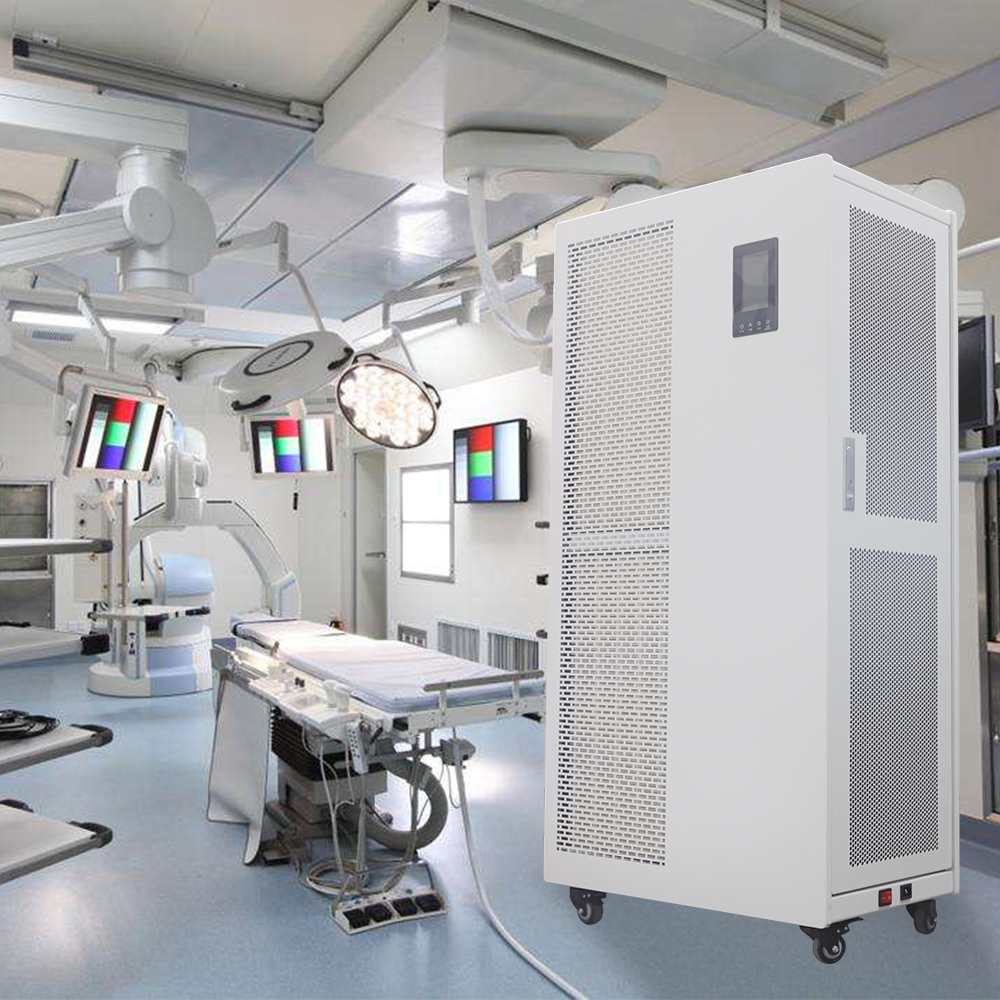
 YKX-2000 Wheeled Medical Air PurifierWheel-mounted medical purifier with five fan speeds, UV sterilization, and formaldehyde/TVOC removal; 165 W operation and 1200 m³/h listed CADR suit hospital air treatment.View Product →
Cost of Ownership and Filter Life
Two numbers dominate lifetime cost: replacement filter price and electricity consumption at the speed customers actually use.
Filter life is not a fixed figure. Dust loading, pre-filter quality, and runtime decide it, which is why a quoted 6 or 12 month interval is an estimate under assumed conditions. In a dusty workshop or a smoking environment, an H13 element may load in half that time. A well-designed pre-filter is the cheapest way to extend HEPA life, and a differential-pressure or filter-life indicator removes guesswork for the end user.
On energy, check power draw at the mid and low settings rather than the maximum, since those are the modes used overnight. An EC fan with a good static-pressure curve can hold rated CADR at lower wattage than a cheaper AC fan — a difference that shows up on the customer's electricity bill, not on the spec sheet.
Frequently Asked Questions
Q1. What does HEPA mean, and is H13 better than H14?
HEPA describes a filter performance class, not a material. Under EN 1822, H13 removes at least 99.95% of particles at the most penetrating particle size, while H14 removes at least 99.995%. H14 is better on paper, but it only pays off when the housing, gasket, and assembly are built to the same standard.
Q2. What CADR do I need for a given room?
Divide CADR in m³/h by the room volume in m³ to get air changes per hour. Aim for at least 4 ACH in homes and higher in clinical or high-occupancy spaces. Remember that published CADR is measured at maximum fan speed.
Q3. How often should the HEPA filter be replaced?
It depends on dust loading and pre-filter design. Many residential programs assume 6 to 12 months, but heavy-dust environments shorten that considerably. A pressure-drop or filter-life indicator is more reliable than a calendar reminder.
Q4. Do HEPA purifiers remove odors and VOCs?
No. HEPA media captures particles only. Odors, formaldehyde, and other gases require a separate stage: activated carbon, impregnated carbon, zeolite, or catalytic media. The adsorbent mass in grams is the specification worth asking for.
Q5. Can you manufacture HEPA air purifiers under our own brand?
Yes. OEM and ODM programs typically cover housing tooling, filter specification, control board and firmware, display design, packaging, and certification support. Sharing your target market, CADR requirement, and filter grade early shortens the sampling cycle.
Q6. What are the MOQ, lead time, and certification options?
All three depend on the model, filter grade, customization scope, and order volume, so they are confirmed in a written quotation rather than stated as fixed numbers. Safety certification for the exact configuration should be verified against your destination market before the order is released. Contact the manufacturer with your specification to receive a configuration and quote.