EN
EN
 English
 中文简体
中文简体
.png)
Content
- 1 Air Purifier Buying Guide: What to Look For Before You Choose
- 2 What Are Air Purifiers Good For
- 3 How HEPA Filtration and Electronic Air Purifiers Work
- 4 Pollutants a Home or Medical Air Purifier Can Remove
- 5 Air Purifier vs Air Cleaner: Clearing Up the Terminology
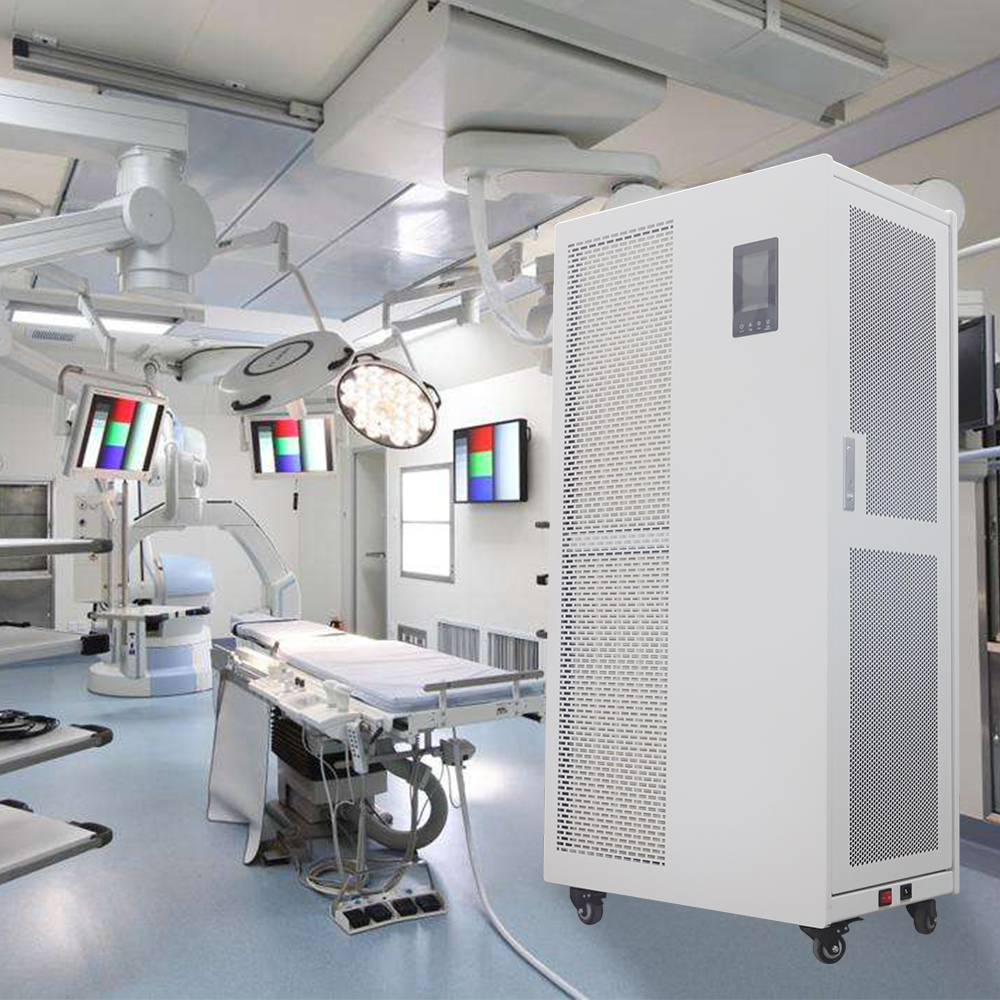
- 6 Medical Air Purifier vs Standard Home Air Purifier
- 7 CADR Ratings: Matching a Purifier to Room Size
- 8 How Quickly Does a Purifier Improve Room Air Quality
- 9 Choosing a Commercial Air Purifier by Industry
- 10 Odor Control and Filter Maintenance
- 11 Behind the Manufacturing: Ningbo Yinyu Purification Technology
- 12 Frequently Asked Questions About Air Purifiers
Air Purifier Buying Guide: What to Look For Before You Choose
The right air purifier depends on three factors above everything else: room size, the pollutants you need to remove, and how many hours a day the unit will run. A small bedroom unit will not keep up with a clinic waiting area, and a household air purifier built for dust and pollen is not the same specification as a medical air purifier built for continuous operation in a healthcare setting. Matching the purifier type to the actual environment is the single most useful step in this buying guide.
This guide walks through how air purifiers and HEPA filtration work, what a medical air purifier is built to handle differently from a standard household air filtration system for home use, how to read CADR ratings, and how to choose a commercial air purifier for offices, clinics, schools, or production floors.
What Are Air Purifiers Good For
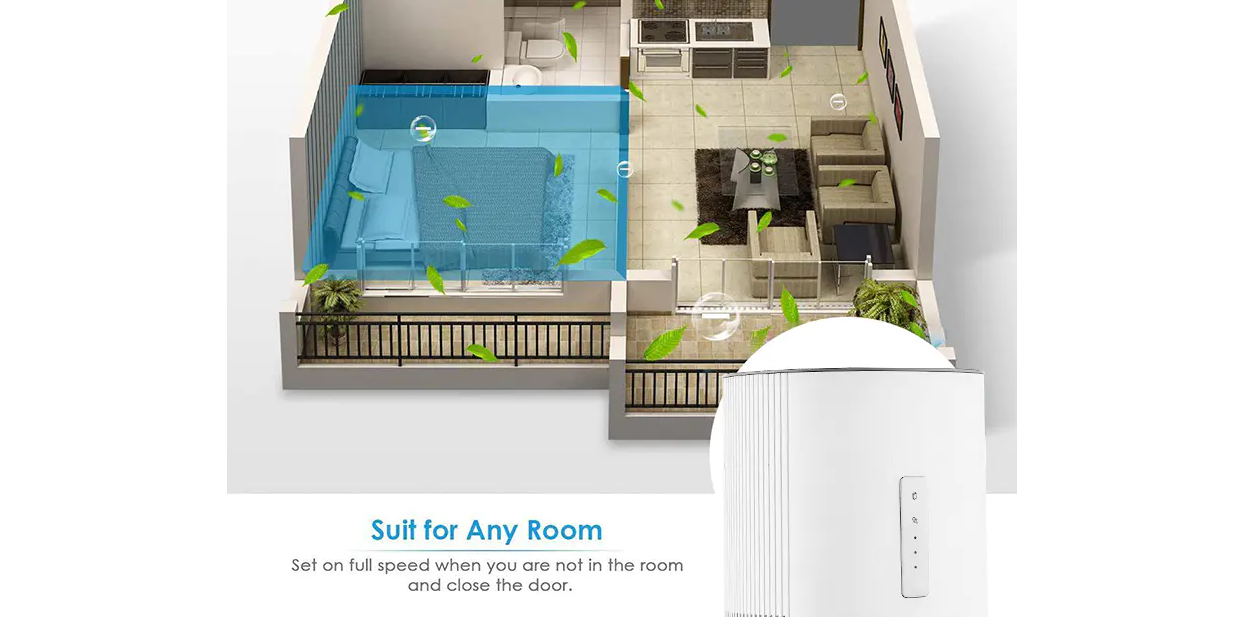
An air purifier pulls room air through a series of filters, captures airborne particles and, in many models, gases, then releases cleaner air back into the room. The purification of air happens continuously as the unit cycles the room volume multiple times per hour, which is why the size of the unit relative to the room matters more than any single feature on the spec sheet.
Typical Situations Where a Purifier Helps
- Homes near traffic corridors or industrial areas dealing with fine particulate matter
- Households with pets, where pet dander and hair circulate through shared air
- Seasonal allergy relief during high pollen periods
- Clinics, laboratories, and production floors that require consistent air quality control
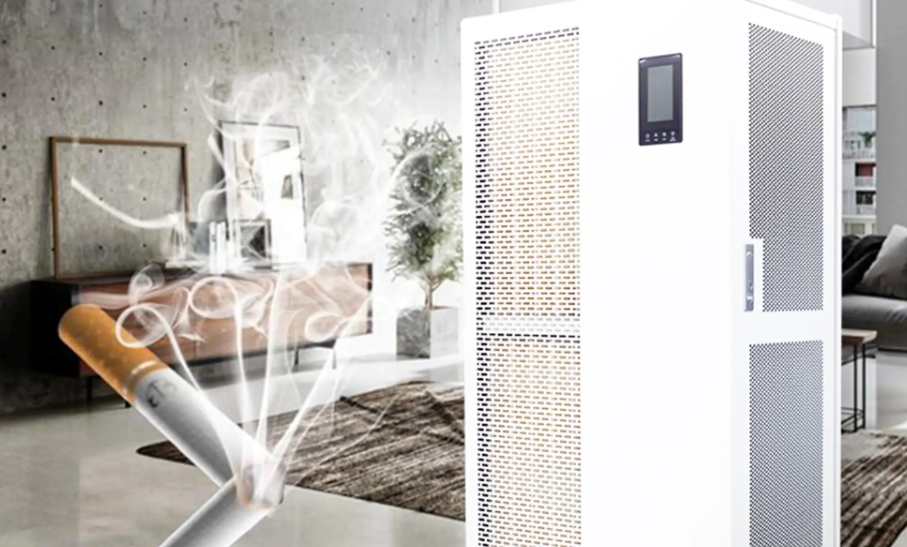
- Kitchens and living spaces where cooking smoke and lingering odors build up
Whether an air purifier is worth it for a specific household usually comes down to how sensitive occupants are to airborne particles and how often windows stay closed. In homes with limited natural ventilation, a room air filtration unit tends to make a more noticeable difference than in a well-ventilated space with frequent airflow.
How HEPA Filtration and Electronic Air Purifiers Work
A HEPA filter is built from a dense mat of fine fibers arranged to trap particles as air is forced through. Particles are captured through a combination of direct interception, impaction, and diffusion, which together allow a true HEPA filter to capture a very high percentage of particles at the most difficult-to-catch particle size range.
Electronic Air Purifier and Electronic Air Filter Technology
An electronic air purifier, sometimes described as an electronic air filter, uses an electrostatic charge to attract particles onto a collector plate rather than relying purely on a mechanical fiber mat. Some multi-stage units combine a pre-filter, a HEPA-grade filter, and an activated carbon layer in one system, giving broader coverage across particles and certain gases in a single pass.
Multi-stage filtration generally performs better across a wider pollutant range than a single-filter design, since each stage is built to target a different category of contaminant rather than asking one filter layer to do everything.
Pollutants a Home or Medical Air Purifier Can Remove
Filtration capability varies by pollutant type and by the specific filter stages built into the unit. The chart below shows a general pattern of removal effectiveness across common pollutant categories for a well-specified multi-stage purifier.
General removal effectiveness pattern by pollutant category for a multi-stage HEPA and carbon system
VOCs require an activated carbon stage to be addressed effectively, since a standard HEPA filter is built to capture particles rather than gas-phase compounds. Bacteria and virus reduction figures depend heavily on airflow speed, exposure time inside the filter media, and whether the unit includes a dedicated antimicrobial or UV stage, so these numbers vary more between models than particle-capture rates do.
Air Purifier vs Air Cleaner: Clearing Up the Terminology
The terms air purifier and air cleaner are often used interchangeably in casual conversation, but there is a practical distinction worth knowing when comparing a best home air filter system against a whole house air purification setup.
| Aspect | Standalone Air Purifier | Whole House Air Cleaner |
|---|---|---|
| Installation | Freestanding unit placed in a single room | Integrated into central HVAC ductwork |
| Coverage | One room or a defined coverage area | Entire home or building airflow path |
| Portability | Can be moved between rooms | Fixed within the duct system |
| Typical setting | Bedrooms, offices, clinics, small spaces | Whole house air purification for full-home coverage |
Medical Air Purifier vs Standard Home Air Purifier
A medical air purifier is generally engineered for a different duty cycle than a household air purifier. The comparison below looks at five practical measures: filtration efficiency, continuous operation capability, room coverage, pollutant range, and build durability under constant use.
Relative comparison between a household purifier and a medical air purifier across five operating measures
A medical air purifier is typically built to run continuously in occupied spaces such as clinics and treatment rooms, with filtration stages sized for sustained airflow rather than intermittent home use. This is why a medical purifier and a household air purifier for home are rarely direct substitutes even when their filter ratings look similar on paper.
CADR Ratings: Matching a Purifier to Room Size
CADR, or Clean Air Delivery Rate, measures how quickly a unit can reduce a specific pollutant in a given room size. A best air purifier for large room use needs a proportionally higher CADR figure than a compact bedroom unit, since the same air exchange rate has to cover far more cubic footage.
General relationship between room size category and the CADR rating typically required
A practical rule used by many buyers is to look for a CADR figure that suits roughly two-thirds of the actual room area, which allows the unit to cycle the room air several times per hour rather than running at maximum capacity constantly. This approach applies equally whether shopping for the best in home air purifier or evaluating an electronic air filter for a larger open-plan space.
How Quickly Does a Purifier Improve Room Air Quality
Particle concentration in a closed room typically drops in a predictable curve once a correctly sized purifier begins running, with the fastest improvement happening in the first cycle and diminishing returns as the room approaches its cleanest steady state.
General reduction pattern of airborne particle concentration after a correctly sized purifier begins running
This is also why a unit that appears to run continuously without ever fully cleaning a room is often undersized for that space rather than faulty, since a purifier rated for a smaller room simply cannot cycle a larger volume of air at the same rate.
Choosing a Commercial Air Purifier by Industry
Commercial and institutional settings each carry a different pollutant profile, which shapes how to choose a commercial air purifier for that specific environment. A clinic prioritizes continuous filtration and pollutant range, while a warehouse may prioritize dust load capacity and airflow volume over fine gas filtration.
| Industry | Primary Concern | Typical Priority |
|---|---|---|
| Healthcare | Airborne particles and pathogens | Continuous operation, high filtration efficiency |
| Electronics manufacturing | Fine dust affecting sensitive components | Consistent particle control |
| Food processing | Airborne contamination and odor control | Reliable filtration and odor management |
| Laboratories | Chemical vapors and fine particulates | Carbon filtration and consistent airflow |
| Warehouses | High dust load, large open volume | High airflow capacity |
| Schools | Shared air across occupied classrooms | Room coverage and low noise operation |
| Offices | General dust and stale air buildup | Whole house air purification style coverage |
| Hotels | Odor control between guest stays | Best air purifier for odor elimination features |
Odor Control and Filter Maintenance
A best air purifier for odor elimination generally relies on an activated carbon stage rather than a HEPA filter alone, since odor molecules are gas-phase compounds that pass through a particle filter without being trapped. Carbon media works by adsorbing these molecules onto its porous surface, and the carbon layer needs periodic replacement once it becomes saturated.
How Often HEPA Filters Should Be Replaced
Replacement timing depends on run hours, room dust load, and pre-filter maintenance, but most household air filtration system for home units call for a HEPA filter change on a routine schedule, with pre-filters cleaned or swapped more frequently between full HEPA changes. Commercial units running continuously in higher dust environments generally need shorter intervals between changes than a lightly used bedroom unit.
- Check and clean the pre-filter regularly to extend the life of the main HEPA stage
- Replace the activated carbon layer when odor control noticeably weakens
- Follow the manufacturer schedule for the HEPA filter rather than judging by appearance alone
- Keep vents and intake grilles clear of furniture or wall obstructions for even airflow
Behind the Manufacturing: Ningbo Yinyu Purification Technology
Ningbo Yinyu Purification Technology Co., Ltd. has operated since 2011 from Cixi City, Ningbo, a region long associated with household appliance manufacturing, positioned near the Hangzhou Bay Cross Sea Bridge for convenient logistics. The company integrates production and trade across household appliances, appliance parts, and medical equipment, including medical air purifier development and disinfection equipment manufacturing.
Two subsidiaries support this structure: Cixi Beilian Electric Appliance Co., Ltd. and Yinyu Medical Technology (Zhejiang) Co., Ltd., together covering product research and development, mold development, filter manufacturing, plastic injection molding, and finished product assembly under one integrated operation. This vertical setup allows tighter coordination between filter design and final unit assembly compared to sourcing components from separate outside suppliers.
The company maintains its own testing lab with inspection equipment used to verify filtration performance during production, and an annual production capacity of over 300 thousand units supports both smaller trial orders and larger recurring purchase volumes for OEM partners across the household appliance and medical equipment sectors.
Frequently Asked Questions About Air Purifiers
Q1What does an air purifier do
An air purifier pulls room air through filter stages to capture particles and certain gases, then releases cleaner air back into the space on a continuous cycle.
Q2How does a HEPA air purifier work
A HEPA filter uses a dense fiber mat that captures particles through interception, impaction, and diffusion as air passes through the filter media.
Q3What pollutants can an air purifier remove
Common targets include PM2.5, dust, pollen, smoke, VOCs when paired with activated carbon, pet dander, mold spores, and in some models bacteria and viruses under specific operating conditions.
Q4What is the difference between an air purifier and an air cleaner
An air purifier is typically a standalone unit for a single room, while an air cleaner is often integrated into central ductwork to treat air across an entire building.
Q5Can an air purifier remove odors
Yes, when the unit includes an activated carbon stage, which adsorbs odor-causing gas molecules that a HEPA filter alone is not built to capture.
Q6How do I choose a commercial air purifier
Match the unit to the room size, required run hours, and the primary pollutant concern for that setting, whether that is dust load, odor, or airborne particles.
Q7What CADR rating do I need
A general approach is choosing a CADR figure suited to roughly two-thirds of the room area so the unit can cycle the air several times per hour.
Q8How often should HEPA filters be replaced
Replacement intervals depend on run hours and dust load, with pre-filters cleaned more frequently and the main HEPA stage replaced on the manufacturer schedule.
Q9Which industries need commercial air purifiers
Healthcare, electronics manufacturing, food processing, laboratories, warehouses, schools, offices, and hotels commonly rely on commercial-grade air purification.
Q10Can air purifiers operate continuously
Many units are designed to run continuously, though units built specifically for medical or commercial continuous duty are generally better suited to nonstop operation than lighter home models.