EN
EN
 English
 中文简体
中文简体
.png)
Content
- 1 Medical Air Purifiers Can Remove Smoke Particles, But Performance Depends on Filtration Technology
- 2 Understanding Smoke Composition Indoors
- 3 How a Medical Air Purifier Removes Smoke
- 4 Comparison of Filtration Components for Smoke Removal
- 5 Limitations When Dealing with Heavy Smoke
- 6 Common FAQs About Medical Air Purifier and Smoke
Medical Air Purifiers Can Remove Smoke Particles, But Performance Depends on Filtration Technology
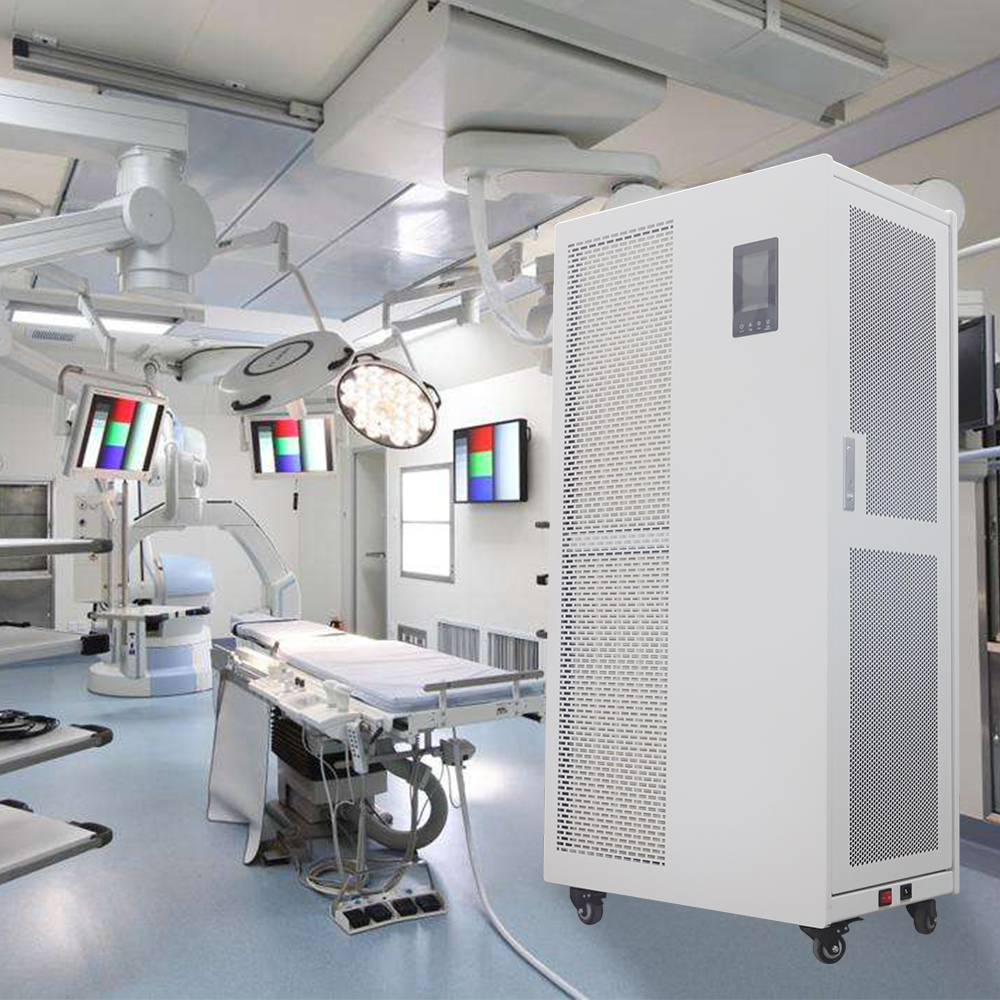
Yes, a Medical air purifier can effectively remove smoke particles from the air when equipped with true HEPA and activated carbon filtration. HEPA filters can capture 99.97% of particles as small as 0.3 microns, including smoke-related particulate matter (PM2.5). However, removing smoke odor requires a sufficient amount of activated carbon. Without carbon filtration, odors may remain even if visible particles are reduced.
Understanding Smoke Composition Indoors
Smoke is not a single pollutant. It contains a mixture of solid particles, liquid droplets, and gases. These include:
- Fine particulate matter (PM2.5 and PM1)
- Volatile organic compounds (VOCs)
- Carbon monoxide and other gases
Most wildfire and cigarette smoke particles measure between 0.1–1 micron, making high-efficiency filtration essential.
How a Medical Air Purifier Removes Smoke
HEPA Filtration for Particulate Removal
Medical-grade HEPA filters are designed to capture fine airborne particles, including smoke and soot. In controlled testing, HEPA systems can reduce indoor PM2.5 levels by 50–90% within one hour, depending on room size and airflow rate.
Activated Carbon for Odor and Gas Control
Activated carbon absorbs VOCs and smoke odors through adsorption. A purifier with at least 1–3 kg of carbon is generally more effective for persistent smoke smells compared to thin carbon sheets.
High Airflow and ACH Rate
Clean Air Delivery Rate (CADR) determines how quickly smoke is removed. For effective smoke control, achieving 5–8 air changes per hour (ACH) in the room is recommended.
Comparison of Filtration Components for Smoke Removal
| Component | Removes Particles | Removes Odor |
|---|---|---|
| True HEPA | Yes (99.97%) | No |
| Activated Carbon | Limited | Yes |
| UV-C | No | No |
Limitations When Dealing with Heavy Smoke
While a Medical air purifier is highly effective indoors, it cannot remove smoke entering continuously from open windows or poor building sealing. In wildfire conditions, combining air purification with sealed windows and HVAC filtration yields better results.
- Close windows and doors during heavy smoke events.
- Replace filters more frequently under high particle load.
- Ensure proper room coverage based on CADR rating.
In severe cases, filters may saturate quickly and require replacement within 3–6 months instead of standard 6–12 months.
Common FAQs About Medical Air Purifier and Smoke
Q1: Can a Medical air purifier remove cigarette smoke completely?
A: It can significantly reduce particles and odor, but complete removal depends on carbon capacity and room size.
Q2: Is HEPA alone enough for smoke?
A: HEPA removes particles but not odor. Activated carbon is necessary for smell reduction.
Q3: How fast can smoke be cleared from a room?
A: With adequate ACH (5–8), noticeable reduction may occur within 30–60 minutes.
Q4: Does UV-C help remove smoke?
A: UV-C disinfects microorganisms but does not remove smoke particles or odors.
Q5: How often should filters be replaced during wildfire season?
A: Possibly every 3–6 months depending on exposure levels.
Q6: Can a Medical air purifier protect sensitive patients from smoke exposure?
A: Yes, when properly sized and maintained, it can significantly lower indoor PM2.5 levels and improve air quality.